

Table of Contents
You spend two hours writing a detailed, helpful answer. You publish it, check back hours later, and see barely three impressions. It feels like shouting a great offer inside a busy Balogun market while wearing a mask that hides your mouth; people pass by, but no one hears you. You put in real work, but nobody sees it. That quiet feedback isn’t just annoying; it quietly stops your momentum before you even start.
Understanding How Low Quora Views Affect Growth is essential if you want your words to build actual traction. When your numbers remain low, your answers stay buried under thousands of newer posts. Your hard-earned wisdom fails to pull in email leads, website visitors, or new fans. Every quiet post is a missed link between you and thousands of people searching for solutions right now. Once you see why your content stays invisible, fixing your reach and converting silent readers into active followers becomes straightforward.
How Low Quora Views Affect Growth

When Quora content consistently suffers from restricted impression counts, the entire marketing pipeline stalls at the entry point. Social media platforms and question-and-answer engines operate on feedback loops; without initial viewer traction, the platform’s distribution engine never receives the signal to test your content against broader user segments.
According to platform distribution data compiled by Foundation Inc., organic reach on Q&A hubs is heavily weighted by early interaction speed and click-through rates. When your content fails to generate initial impressions, it creates a systemic barrier that starves your entire growth engine of new top-of-funnel prospects.
For digital creators, entrepreneurs, and content marketers, weak impression numbers represent far more than a simple vanity metric crisis. They directly suppress your profile’s domain authority within internal platform feeds, ensuring that subsequent posts start with an algorithmic disadvantage.
When your answers fail to reach readers, your brand fails to capitalize on intent-driven search traffic – the exact demographic most likely to convert into high-value leads or loyal subscribers. Understanding this dynamic is the first step toward transforming underperforming answers into predictable traffic sources.
| Reach Level | Algorithmic Status | Monthly Impression Range | Direct Impact on Lead Pipelines |
| Suppressed Reach | Low relevance flag; no digest inclusion | 0 – 500 views | Zero referral traffic; inactive profile links |
| Moderate Reach | Feed testing phase; niche targeted | 500 – 5,000 views | Occasional profile visits; trickling lead sign-ups |
| Viral Reach | High search indexing; topic digest priority | 5,000 – 100,000+ views | Consistent inbound traffic; compound follower growth |
Why Low Views Limit Audience Discovery
Quora operates as an engine driven by search intent. When people ask questions on Quora or search for answers through Google, high-performing Quora threads often rank near the top of Search Engine Result Pages (SERPs). Ahrefs data indicates that Quora ranks for over 90 million organic keywords on Google, making it one of the largest domain search hubs on the web. If your answers get low views, Quora’s algorithm assumes your content is either unhelpful or uninteresting to readers, effectively cutting off your access to this massive search volume.
As a result, your content isn’t recommended in user feeds or pushed to topic digests sent out via email to millions of registered subscribers. Low initial view counts keep your content invisible, preventing new readers who are actively seeking solutions in your niche from ever finding you. When algorithmically suppressed, your answer misses out on evergreen traffic;the compounding views that accrue over months and years as searchers query Google for answers to their problems.
Furthermore, Quora’s recommendation system relies on initial engagement signals to determine whether an answer merits inclusion in external indexing pools. When an answer receives low views during its initial testing window, the algorithm categorizes it as low-priority content.
This means Google crawlers rarely index the specific answer block, bypassing your response in favor of competing posts with higher interaction rates. Over time, missing these discovery windows denies your brand continuous exposure to high-intent searchers who are actively seeking solutions to their exact challenges.
Consider the cumulative loss when intent-driven users pass by your profile:
- Search Engine Exclusions: Answers with poor engagement metrics rarely secure the top slot on Quora threads indexed by Google, depriving you of passive SERP traffic.
- Email Digest Omission: Quora regularly curates top-performing answers for its personalized email digests. Low-view answers are filtered out, missing direct delivery to user inboxes.
- Feed Deprioritization: The platform’s internal recommendation engine prioritizes posts with high scroll-stop rates, relegating low-view posts to the bottom of the feed.
- Loss of Organic Backlinks: High-visibility answers are frequently cited by bloggers, journalists, and industry researchers, generating organic backlinks that low-visibility posts never receive.
How Poor Reach Slows Follower Growth
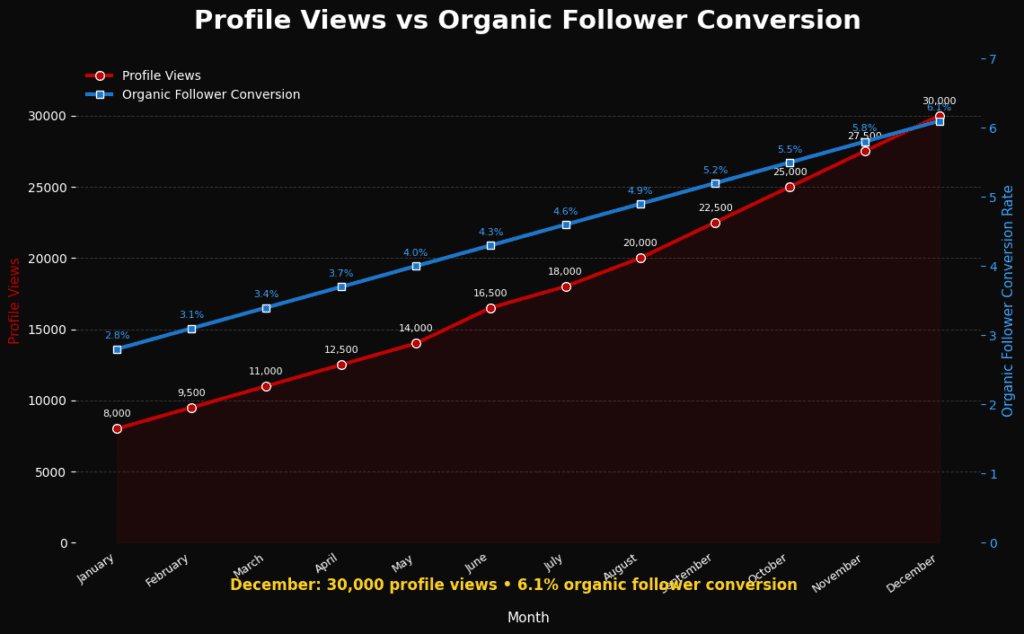
Audience accumulation on any content platform relies on high top-of-funnel impression numbers. Only a percentage of people who see your answer will read it entirely, and a smaller percentage will click your profile and hit “Follow.”
When your view count remains low, the conversion math works strictly against you:
- 10,000 Views → 500 Profile Visits → 50 New Followers
- 50 Views → 2 Profile Visits → 0 New Followers
Without strong reach, your ability to build a dedicated audience on Quora halts. You end up creating content in a closed vacuum rather than building an active audience base. In order to overcome these top-of-funnel bottlenecks, marketers frequently study strategies for growing social media audiences in Nigeria and worldwide, ensuring their content reaches critical distribution mass.
Building a sustainable follower engine requires consistent top-of-funnel exposure. As social media expert Gary Vaynerchuk notes,
“Attention is the asset. Without eyeballs on your core message, even world-class strategy remains completely invisible.”
Beyond raw math, low reach damages the psychological social proof required to turn casual skimmers into committed profile followers. Readers in fast-moving commercial hubs like Lagos or Abuja naturally look for signals of peer validation, such as high view counts, upvote totals, and active comment sections, before choosing to follow an author. When a user lands on a profile where answers average only a dozen views, they hesitate to invest their attention.
This lack of initial reach creates a self-reinforcing cycle: low visibility signals a lack of community endorsement, which in turn reduces profile conversion rates even when the writing itself is exceptionally insightful.
- The Impression Funnel: Every digital audience follows a strict conversion funnel. Low views restrict the top opening, making meaningful growth mathematically impossible regardless of post quality.
- Algorithmic Snowballing: High follower counts signal authority to social algorithms, creating a snowball effect where each new answer is shown to a wider initial test audience.
- Retention Dynamics: Readers are significantly more likely to follow creators who showcase an active, engaged community. Low view counts convey a lack of social validation, increasing reader bounce rates.
- Cross-Platform Spillover: Quora followers frequently cross over to YouTube, LinkedIn, or email lists. Stagnant Quora growth directly hinders cross-channel audience expansion.
What Low Quora Traffic Means For Businesses
For companies, digital agencies, and e-commerce brands, Quora serves as a valuable channel for referral traffic and high-intent customer acquisition. According to HubSpot’s State of Marketing Report, buyers who enter sales funnels via Q&A platforms possess a 30% higher conversion intent than passive social media scrollers because they are actively seeking solutions to specific problems.
When your Quora answers suffer from poor visibility, your commercial funnels experience immediate negative impacts:
- Fewer Clicks to Your Website: Your bio links and inline contextual links go unclicked, starving your landing pages of warm referral traffic.
- Wasted Content Creation Costs: Hours spent drafting responses yield zero pipeline value or organic traffic, increasing your cost-per-acquisition (CPA).
- Missed Lead Opportunities: Potential clients end up reading answers from your direct competitors instead, losing you valuable market share.
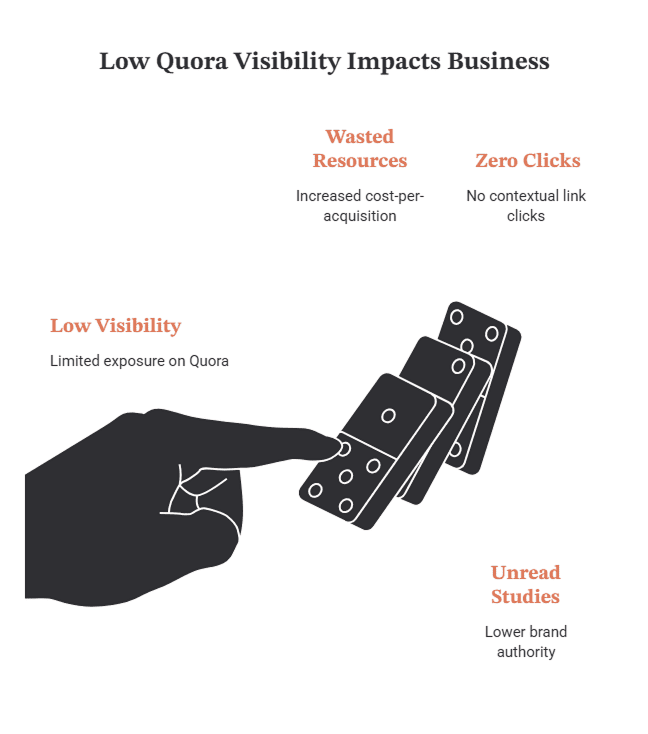
In addition to direct lead loss, weak Quora traffic inflates your overall customer acquisition costs by forcing your marketing team to rely almost entirely on paid media channels like Meta Ads or Google PPC. While paid acquisition offers immediate feedback, it stops delivering the moment your ad budget runs dry.
High-performing Quora answers, by contrast, function as long-term digital assets that generate organic referral traffic for months without recurring ad spend. When low reach smothers your Quora presence, your business forfeits this compounding traffic engine, leaving your client acquisition pipelines vulnerable to rising ad costs and shifting PPC rates.
When businesses fail to capitalize on search-intent platforms, they force their sales teams to rely heavily on expensive paid ad channels. Establishing steady organic referral channels mitigates customer acquisition risks and builds long-term brand equity across digital marketplaces.
Why Visibility Matters For Personal Brands
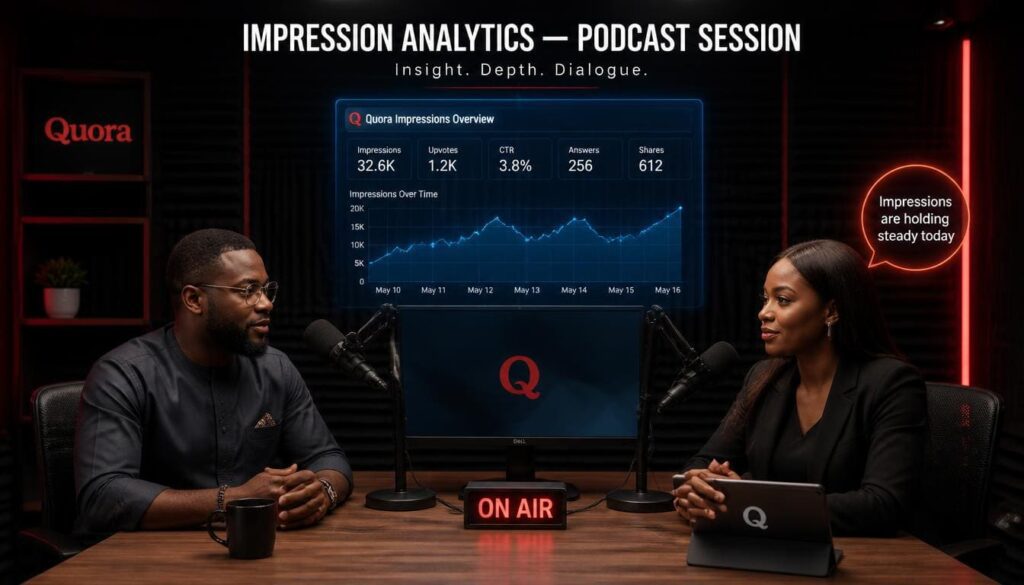
Personal branding relies heavily on perceived authority and social proof. When potential clients, employers, or collaborators visit your Quora profile and see answers posted months ago with only a handful of views, it creates a subtle impression of low influence or limited industry recognition.
High visibility acts as social proof. When your answers routinely gather thousands of views and upvotes, it signals expertise and industry authority, making it vastly easier to attract consulting work, speaking gigs, and professional partnerships.
This visibility gap directly impacts how quickly industry decision-makers trust your expertise. When a prospective corporate client or agency founder researches your background, they seek clear evidence that your insights command respect within your field. High-view Quora answers serve as published case studies of your domain knowledge, demonstrating that your ideas consistently engage real readers.
When poor platform distribution keeps your answers hidden, decision-makers cannot verify your authority, leading them to select competitors whose content displays stronger public engagement and visible market traction.
- Perceived Market Leadership: Industry decision-makers equate high view volume with market validation and expertise.
- Inbound Opportunity Magnetism: High-visibility creators naturally attract media interviews, podcast invitations, and joint venture proposals.
- Trust Velocity: Prospects convert faster when they discover answers with thousands of upvotes and views, reducing sales cycle duration.
- Career Trajectory Acceleration: Recruiters and executive search firms routinely review high-authority Quora profiles when sourcing domain experts.
Why Quora Answers Get Low Views

To solve weak reach, you must first diagnose the precise friction points throttling distribution. Quora’s ranking algorithm, much like Google’s Search algorithm, evaluates hundreds of real-time signals to determine whether an answer deserves premium feed placement or algorithmic suppression.
According to research published on Search Engine Journal, platform algorithms prioritize engagement velocity- how fast users react to a post immediately after publication; over sheer content length or creator seniority.
When an answer stalls at single-digit impressions, the breakdown typically traces back to content structure, question selection flaws, or timing mismatches. Content creators often mistake writing depth for content relevance, assuming that exhaustive essays will naturally perform well.
However, if the target question lacks organic search demand, or if the introductory hook fails to stop the scroll, the platform’s algorithm quickly deprioritizes the content. Integrating verified promotion methods, such as those available through Sizzle Social’s growth options, can help jumpstart initial engagement signals and signal quality to platform algorithms.
How Question Selection Affects Answer Visibility
Not all Quora questions are created equal. One of the primary reasons answers receive low reach is answering the wrong questions. Drafting a 2,000-word masterclass under a prompt that no one is searching for guarantees invisible content.
Common question selection mistakes include:
- Answering Dead Questions: Selecting questions that have low follower counts, zero active updates, and minimal monthly search volume.
- Overcrowded Questions: Responding to questions that already have 100+ answers, where your contribution gets buried at the bottom of the stack without initial promotion.
- Overly Niche Questions: Writing detailed responses to ultra-specific prompts that only two people on the platform care about.
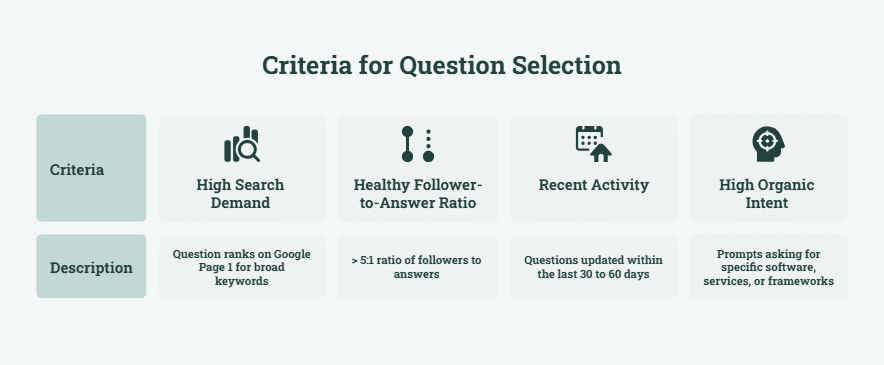
Selecting questions with high follower counts, active weekly updates, and strong Google search rankings is critical for visibility.
To consistently identify high-yielding prompts, creators must evaluate question velocity before writing a single word. Look for questions that demonstrate a steady stream of new followers relative to total existing responses.
A thread with 5,000 followers but only 10 existing answers offers an exceptional exposure window compared to a saturated thread with 500 answers and 200 followers. Targeting prompts indexed on Google’s first page ensures that your content catches evergreen external search traffic long after the initial platform feed distribution cools down.
Why Weak Answer Openings Lose Attention
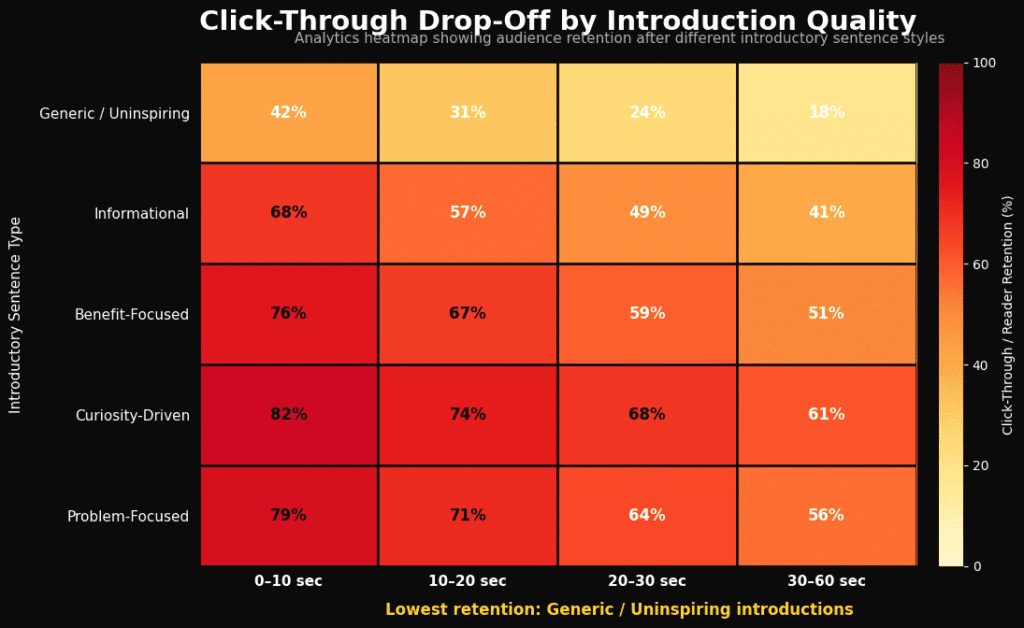
On Quora feeds, users only see the first two to three lines of your answer before deciding whether to click “More” or keep scrolling. If your opening lines are boring, repetitive, or overly academic, readers scroll past without engaging.
A weak opening line kills answer distribution. Quora tracks scroll-stop rates and click-through rates. If users constantly skip past your hook without expanding the answer, the algorithm stops serving your answer in main user feeds.
To maximize opening hook efficiency, contrast weak writing patterns with high-performing formats:
| Opening Style | Example Pattern | Algorithmic Result |
| Weak / Academic | “In this answer, I will discuss the five factors that influence organic digital growth…” | High scroll-past rate; low expansion |
| Boring / Generic | “Quora marketing is very important for businesses looking to get new customers online…” | Immediate drop-off; low dwell time |
| Strong / Story Hook | “I spent $5,000 on ads before discovering a free Quora strategy that drove 40,000 visitors…” | High click-through rate; immediate expansion |
| Data-Driven Hook | “83% of B2B marketers miss this single Quora settings adjustment; here is how we fixed it…” | High curiosity score; rapid engagement |
Crafting an effective opening hook requires understanding the cognitive psychological triggers that cause a reader to pause mid-scroll. Successful hooks leverage curiosity gaps, bold contrasting statements, or surprising real-world statistics that directly challenge common assumptions.
Instead of starting with passive definitions or long background introductions, open with a concrete outcome, a compelling personal story, or a counterintuitive lesson learned. When readers click “More” to expand your content, they send an immediate positive signal to Quora’s ranking system, telling the algorithm that your answer holds attention and deserves broader feed distribution.
What Poor Topic Relevance Does To Reach
Quora relies on topic categorization tags to deliver relevant content to users based on their interests. If your answer strays off-topic, or if you publish answers in topics completely disconnected from your profile’s primary core areas, your reach suffers significantly.
Posting low-relevance content confuses the algorithm regarding who your target audience should be, leading to lower impression counts across all your responses.
When you publish answers across wildly disparate categories – such as writing about cryptocurrency in the morning, high-fashion tailoring in the afternoon, and enterprise software at night – Quora’s algorithm struggles to assign a clear domain authority score to your profile.
The system functions best when it can group creators into distinct subject-matter clusters. Scattering your focus across unaligned topics dilutes your profile’s thematic relevance score, forcing the algorithm to test your content against unfocused user segments who are unlikely to upvote or share your insights.
- Profile Authority Fragmentation: Writing about cryptocurrency, gardening, and enterprise SaaS on the same profile dilutes topic authority scores.
- Misaligned Feed Distribution: Misclassified tags cause answers to appear in feeds of users who have no interest in the subject matter.
- Lower Upvote Ratios: Relevant readers are far more likely to upvote expert content; misaligned distribution leads to zero user engagement.
- Algorithmic Disconnect: When content distribution algorithms cannot categorize your domain, they default to restricted impression safety bounds.
How Inconsistent Activity Limits Discoverability
Publishing five answers in a single day and then going silent for three weeks hinders algorithmic reach. Quora rewards consistent content creators who regularly generate engagement and keep users active on the platform.
Inconsistent activity disrupts your momentum. Regular posting sends positive signals to the algorithm, ensuring your newly published answers get tested faster in user feeds and email digests.
This algorithmic preference for consistency stems from the platform’s goal to keep active users engaged with fresh, high-quality material. When a creator publishes on a predictable schedule, Quora’s distribution bots regularly dedicate initial feed impressions to test audience response. Conversely, extended periods of inactivity cause your profile’s baseline momentum score to decay.
When you finally post again after a long hiatus, the system treats your profile like an unverified account, subjecting your new content to stricter, smaller test pools before granting wider feed exposure.
- Posting Cadence Decay: Long breaks between posts cause the algorithm to reset your profile’s distribution status, requiring warm-up periods for new posts.
- Loss of Dwell Time Momentum: Consistent creators build cumulative reading hours, which Quora rewards with higher baseline impression allocations.
- Email Digest Exclusion: Inactive profiles are systematically removed from automated digest recommendations sent to topic subscribers.
- Distribution Testing Penalties: Profiles with sporadic activity face longer evaluation periods before answers are pushed to wide user feeds.
How to Turn Quora Views Into Growth
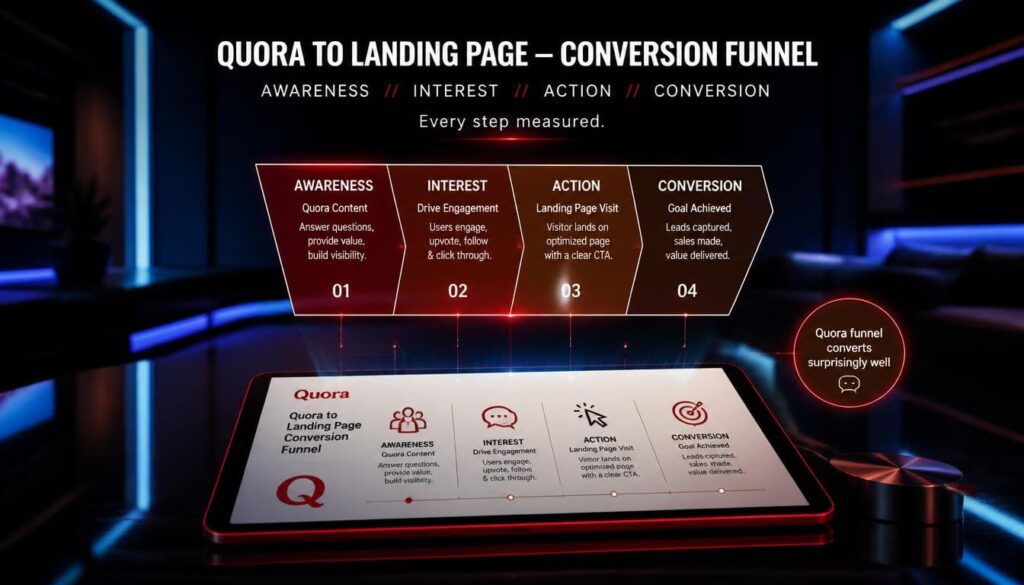
Achieving high view counts is only half the battle; the ultimate objective is turning passive visual attention into measurable business outcomes. A million views yield little value if they fail to generate email leads, product sales, or brand equity. According to digital marketing studies by MarketingProfs, high-performing Q&A campaigns convert organic views at rates up to 4x higher than standard banner advertising, provided the content includes clear, contextual conversion pathways.
Transforming quiet Quora answers into growth engines requires a structured distribution architecture. Content must seamlessly guide the reader from initial problem awareness down to specific resource acquisition. By pairing compelling storytelling with clear calls-to-action (CTAs), creators systematically convert casual readers into dedicated community members.
However, to ensure your social ecosystem operates efficiently across channels, smart creators often align their Quora activity with established multi-channel distribution setups, including Sizzle Social’s social growth platform.
What Converts Quora Readers Into Website Visitors
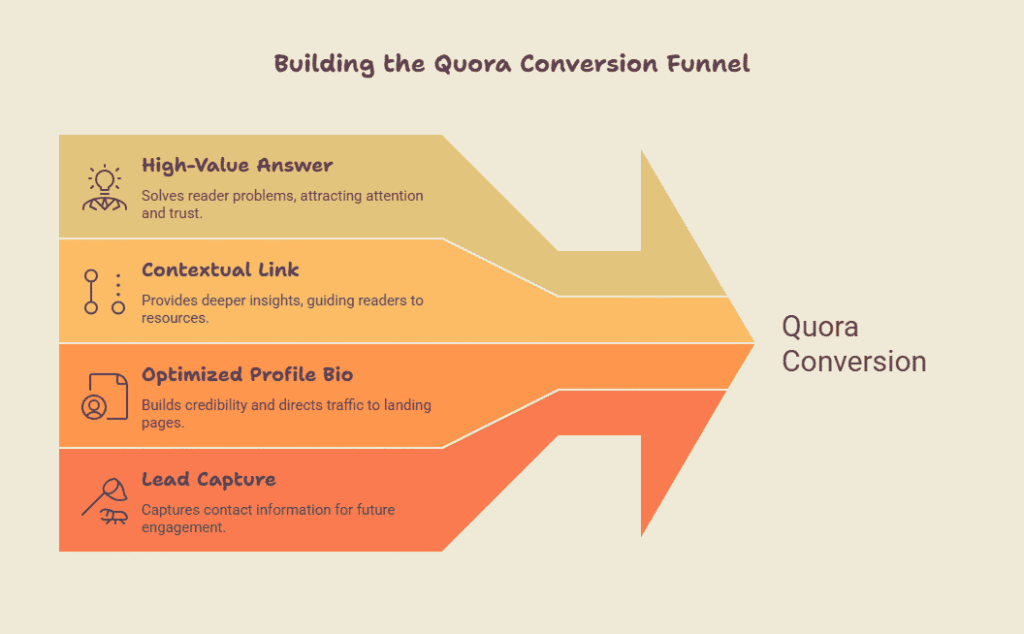
High view counts mean little if they don’t lead to meaningful actions. Converting casual readers into active website visitors requires strategic content design:
- Use Contextual Hyperlinks: Place links inside your answer naturally where readers seek deeper context, rather than dumping raw URL links at the bottom of the post.
- Provide High-Value Snippets: Share 80% of the solution directly in the answer, then invite readers to your site or landing page for the complete step-by-step framework or free downloadable resource.
- Optimize Your Bio: Write a clear, benefit-driven profile bio with a strong Call-To-Action (CTA) pointing to your main platform or lead magnet.
When inserting links, ensure they adhere to native platform patterns:
[Contextual Hyperlink Example]
“If you are looking to scale your short-form distribution across channels,
you can review our full guide on how content visibility impacts audience growth…”
Avoid transactional link dumping (e.g., “Click here to buy my course now!”), which triggers Quora’s spam filters and repels educated readers.
To maximize website referral traffic, position your outbound links as logical extensions of the help you have already provided. A reader should feel that clicking through to your site is the natural next step to solving their problem, rather than a sales trap.
Frame your contextual links around free value additions;such as detailed checklists, template spreadsheets, video breakdowns, or diagnostic tools;that build upon the concepts outlined in your answer. This value-bridge model transforms passive platform readers into warm website traffic ready to engage with your wider brand ecosystem.
How Businesses Can Turn Answers Into Leads
To turn answers into sales leads, treat Quora responses as helpful educational touchpoints rather than aggressive sales pitches. B2B buyers and consumers alike actively avoid pushy marketing, favoring transparent, value-first insights.
- Address Pain Points Directly: Write clear solutions showing you understand the prospective customer’s exact problem, breaking down complex processes into simple, actionable steps.
- Include Real Case Studies: Share screenshots, customer stories, or data demonstrating proven results. Authentic proof builds immediate credibility.
- Offer Next-Step Resources: Direct interested readers to a free tool, consultation link, or specialized guide on your website that complements the answer provided.
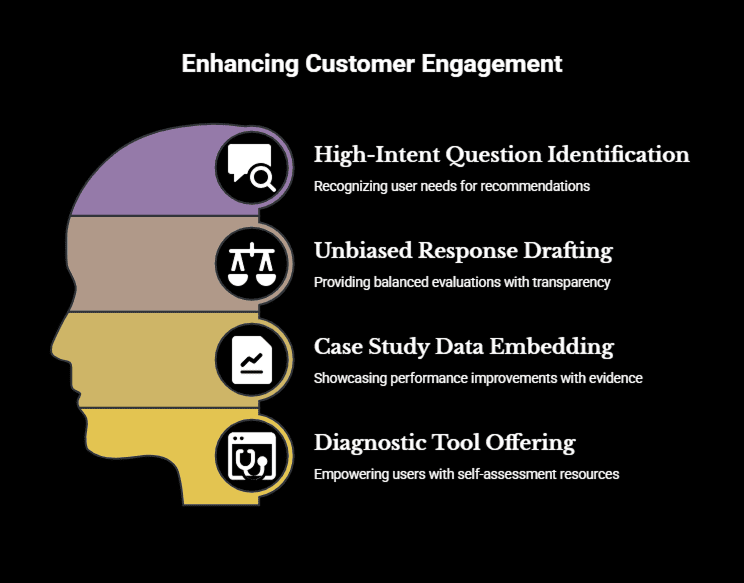
Successful business conversion on Quora hinges on demonstrating clear problem-solving competence before making any sales offer. When responding to industry questions, structure your content so that it answers the core prompt thoroughly while illustrating your team’s operational expertise. Incorporate specific client outcomes, practical frameworks, or step-by-step methodologies that highlight how your service solves complex operational issues.
Potential clients reading these detailed breakdowns will recognize your authority naturally, reaching out for customized business consultations without ever being subjected to high-pressure sales tactics.
Why Useful Answers Build Audience Trust
Modern consumers resist hard sales pitches, preferring helpful guidance. When your answers provide genuine clarity without holding back key insights, readers begin trusting your expertise.
As author Seth Godin notes, “Permission marketing is the privilege (not the right) of delivering anticipated, personal and relevant messages to people who actually want to get them.”
Trust accelerates conversions. A reader who gains real value from your answer is far more likely to subscribe to your newsletter, follow your profile, or purchase your recommendation down the road.
Building audience trust requires a commitment to radical helpfulness, providing thorough, actionable solutions that give readers immediate value before asking for anything in return. When an author consistently answers complex questions without hiding essential steps behind paywalls, readers feel respected.
This generosity establishes powerful brand goodwill. Over time, as users repeatedly encounter your insightful answers across various topic searches, your brand becomes their trusted authority, making future sales conversations significantly smoother and more successful.
- Frictionless Conversion: High-trust content removes buying hesitation, allowing readers to transition smoothly from prospect to paying customer.
- Long-Term Brand Equity: Readers remember who provided clarity during their research process, leading to direct brand searches months later.
- Community Advocacy: Satisfied readers frequently share helpful answers on LinkedIn, Twitter, and Slack communities, multiplying your audience reach.
- Higher Customer Lifetime Value (LTV): Clients acquired through educational content exhibit lower churn rates than those acquired via cold ads.
How to Connect Quora Content With Other Channels

Quora should not exist in isolation within your broader marketing ecosystem. Connecting your Quora strategy with your other media channels creates a compounding growth engine across all platforms:
- Repurpose Existing Content: Turn top-performing blog posts, LinkedIn insights, or short-form video scripts into detailed Quora answers.
- Cross-Promote Answers: Share high-performing Quora answers across Twitter/X, LinkedIn, or newsletter emails to boost initial upvote traction and view velocity.
- Embed Quora Content: Embed your best Quora responses into relevant blog posts on your site to reinforce authority, gain user trust, and build backlinks.
For creators looking to streamline multi-platform distribution, referencing dedicated tutorials on Sizzle Social’s knowledgebase provides clear blueprints for managing digital channels smoothly.
Integrating Quora into your broader content marketing machine maximizes the return on your creative efforts. A single high-performing Quora answer can easily serve as the baseline script for a YouTube video, the core topic for an email newsletter, or a multi-slide carousel post on LinkedIn.
Conversely, embedding top Quora answers directly into your website’s blog posts enriches user dwell time while providing social proof. This cross-pollination ensures that every piece of insights you produce works continuously across multiple platforms to drive organic reach.
How To Measure Quora Answer Performance
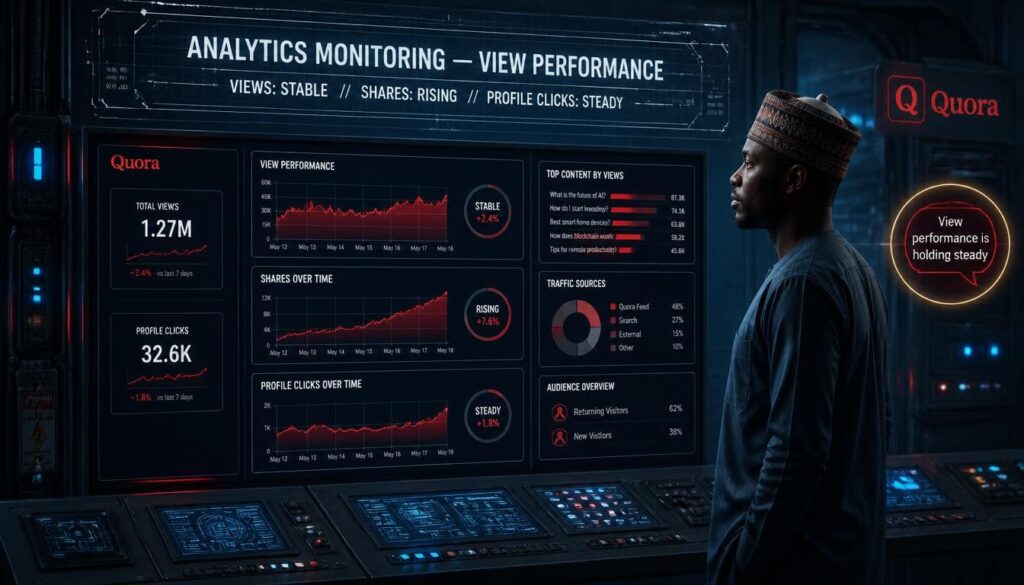
You cannot optimize what you do not measure. Content strategy without analytics tracking is merely guesswork. To transform underperforming answers into high-yield lead channels, creators must regularly evaluate performance metrics using both native Quora analytics and external attribution tools like Google Analytics.
According to data management insights from MarTech, marketing campaigns that leverage weekly performance tracking iterations achieve 2.5x higher ROI than static content initiatives.
By analyzing key performance metrics, such as impression velocity, upvote ratios, and profile click-through rates;you can easily pinpoint exactly where readers disengage.
This data allows you to double down on winning topic categories, refine underperforming hooks, and continuously optimize your distribution engine for maximum ROI. Tracking analytics alongside established digital tools like Sizzle Social’s main platform ensures your overall marketing strategy stays data-backed and efficient.
What Quora Metrics Should You Monitor
To refine your strategy, track key performance indicators (KPIs) available inside your Quora Partner or Creator Analytics dashboard:
| Metric | What It Measures | Strategic Focus Area | Optimization Goal |
| Views / Impressions | Content reach & algorithmic distribution | Question selection & opening hooks | Top-of-funnel impression scale |
| Upvotes | Reader satisfaction & content quality | Formatting, practical depth, & imagery | > 3% Upvote-to-view ratio |
| Shares / Re-shares | Viral potential & perceived utility | Unique frameworks & actionable lists | Expanded off-platform reach |
| Profile Clicks | Reader interest in brand authority | Bio CTAs & contextual link placement | High-intent website referral traffic |
Regularly logging these metrics into a spreadsheet allows you to spot performance patterns early, ensuring you invest creative energy only into topics that drive measurable business results.
Establishing a consistent, weekly metrics tracking routine helps you spot performance shifts before they impact your lead generation pipelines. Monitor the relationship between raw impressions and profile visits to evaluate how effectively your answers encourage readers to explore your brand.
If an answer generates thousands of views but fails to deliver profile clicks, it indicates that while your hook and content were engaging, your ending call-to-action or profile bio lacks clarity. Tracking these numbers systematically ensures your content strategy stays focused on real business growth rather than vanity metrics.
Why Upvotes And Shares Reveal Content Quality
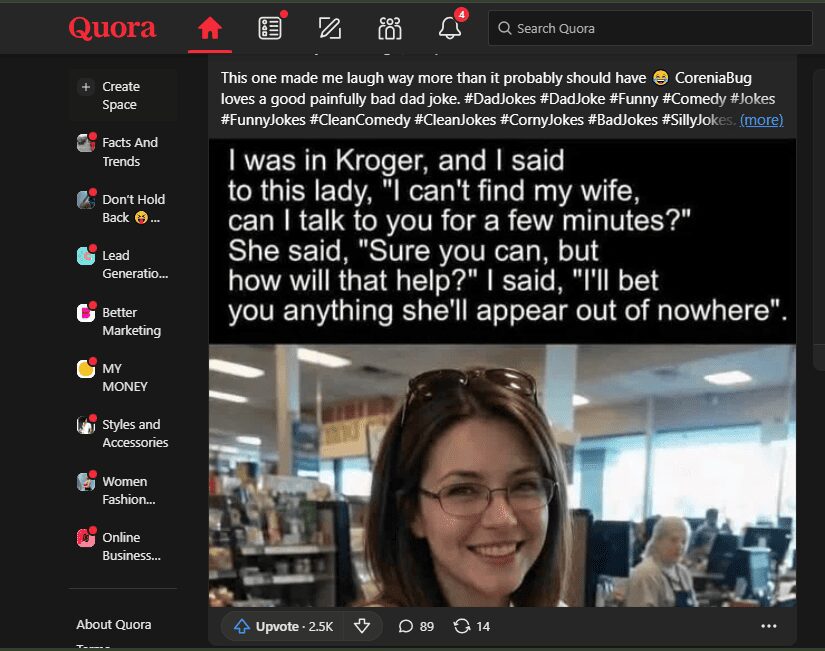
Views indicate that your content reached feeds; upvotes and shares show that your content resonated deeply. High upvote-to-view ratios signal to Quora that your content is valuable, prompting the platform to boost your answer across related topic feeds and email digests.
- Algorithmic Triggers: A surge in early upvotes signals relevance, accelerating the post’s transition from test feeds to main platform recommendations.
- Social Proof Validation: High upvote counts act as digital trust signals, encouraging new readers to consume the full post and click author links.
- Viral Reach Amplification: Shares extend your reach outside Quora, driving referral traffic from external blogs, social platforms, and private messaging groups.
- Long-Term Content Decay Reduction: Answers with high engagement ratios maintain top search placement longer than posts with low upvote counts.
Upvotes and shares serve as qualitative indicators that validate whether your writing solves real reader problems. While impression counts reflect algorithmic feed placement, upvotes represent deliberate user approval, indicating that your answer provided genuine value. When readers share your post on third-party channels or private communities, they extend your reach into new, highly relevant networks.
Quora’s algorithm tracks these interaction markers carefully, rewarding content that achieves strong engagement ratios with sustained search ranking priority and long-term feed distribution.
How To Identify High-Performing Topics
Regularly review your performance analytics to spot patterns among your top 10% highest-viewed answers. Identifying structural commonalities allows you to replicate success predictably across new prompts:
- Identify Winning Topics: Determine which specific sub-industries or niche topics consistently generate organic search traffic for your profile.
- Evaluate Formatting Formats: Compare whether answers with step-by-step bullet points, custom infographics, or short personal stories deliver higher upvote ratios.
- Analyze Content Length: Check whether concise 300-word answers outperform comprehensive 1,500-word guides within your target niche.
Topic Audit Process:
1. Export 90-day Quora analytics data into a spreadsheet.
2. Sort answers by view volume, upvote count, and profile click-throughs.
3. Tag top 10% performers by topic category, word count, and image usage.
4. Eliminate low-performing topic categories from future content calendars.
Analyzing your top-performing topics allows you to build a focused, repeatable content creation playbook aligned with what your target audience wants to read. Group your highest-performing answers by core theme, tone, formatting style, and target length to uncover recurring elements.
You may discover that your audience prefers structured, step-by-step tutorials over broad opinion pieces, or that visual data charts consistently double your upvote ratios. Documenting these winning formats helps you optimize future content production, ensuring every new post targets high-yield topics with proven conversion potential.
When To Change Your Quora Content Strategy
If your content analytics show flatlined views over a 30-day period despite consistent posting, adjust your approach immediately. Continuing an underperforming strategy only wastes creative resources and lowers profile authority.
- Pivot Question Criteria: Shift focus away from saturated broad questions to specific long-tail prompts with high search intent and low answer competition.
- Revamp Visual Formatting: Introduce bold section headers, concise bullet points, and original diagrams to eliminate intimidating text walls.
- Refine Your Hook: Experiment with curiosity-driven opening lines, bold personal statements, or shocking statistics to capture reader attention instantly.
Recognizing when to pivot your content approach prevents wasted creative energy and protects your overall account health. Set regular 30-day performance reviews to evaluate whether your publishing output aligns with your target traffic goals.
If views remain flat despite consistent posting, adjust key elements systematically; rewrite your opening hooks, switch to lower-competition long-tail questions, or incorporate visual diagrams. Iterating based on performance feedback keeps your strategy agile, helping you turn underperforming answers into reliable drivers of search traffic and profile growth.
What Are Your Low Quora Views Really Costing?
Low Quora views cost far more than vanity metrics; they represent missed visibility, lost customer acquisition, and wasted creative effort. When your answers struggle for reach, your authority remains hidden, leaving prospective leads to connect with competitors who optimize for reach more effectively.
However, low views are simply a signal that your strategy needs adjustment. By refining your question selection, crafting compelling opening hooks, maintaining consistency, and setting up clear conversion pathways, you can transform low-performing answers into consistent drivers of audience discovery, traffic, and brand authority.
Taking action on these insights guarantees that your hard-earned wisdom reaches the readers who need it most. Aligning your platform presence with dedicated distribution networks, such as Sizzle Social, ensures your content gains the early momentum necessary to dominate search results, convert silent readers, and scale your personal or corporate brand predictably.
Frequently Asked Questions
When Quora content consistently suffers from restricted impression counts, the entire marketing pipeline stalls at the entry point. Social media platforms and question and answer engines operate on feedback loops. Without initial viewer traction, the platform’s distribution engine never receives the signal to test your content against broader user segments. According to platform distribution data compiled by Foundation Inc, organic reach on question and answer hubs is heavily weighted by early interaction speed and click through rates. When your content fails to generate initial impressions, it creates a systemic barrier that starves your entire growth engine of new top of funnel prospects. For digital creators, entrepreneurs, and content marketers, weak impression numbers represent far more than a simple vanity metric crisis. They directly suppress your profile’s domain authority within internal platform feeds, ensuring that subsequent posts start with an algorithmic disadvantage. When your answers fail to reach readers, your brand fails to capitalize on intent driven search traffic, which is the exact demographic most likely to convert into high value leads or loyal subscribers. Understanding this dynamic is the first step toward transforming underperforming answers into predictable traffic sources. Sizzle Social offers promotional tools that can help jumpstart the initial engagement signals your answers need.
Quora operates as an engine driven by search intent. When people ask questions on Quora or search for answers through Google, high performing Quora threads often rank near the top of search engine result pages. Ahrefs data indicates that Quora ranks for over ninety million organic keywords on Google, making it one of the largest domain search hubs on the web. If your answers get low views, Quora’s algorithm assumes your content is either unhelpful or uninteresting to readers, effectively cutting off your access to this massive search volume. As a result, your content is not recommended in user feeds or pushed to topic digests sent out via email to millions of registered subscribers. Low initial view counts keep your content invisible, preventing new readers who are actively seeking solutions in your niche from ever finding you. When algorithmically suppressed, your answer misses out on evergreen traffic, which is the compounding views that accrue over months and years as searchers query Google for answers to their problems. Furthermore, Quora’s recommendation system relies on initial engagement signals to determine whether an answer merits inclusion in external indexing pools. When an answer receives low views during its initial testing window, the algorithm categorizes it as low priority content. This means Google crawlers rarely index the specific answer block, bypassing your response in favor of competing posts with higher interaction rates.
Audience accumulation on any content platform relies on high top of funnel impression numbers. Only a percentage of people who see your answer will read it entirely, and a smaller percentage will click your profile and hit follow. When your view count remains low, the conversion math works strictly against you. Ten thousand views might produce five hundred profile visits and fifty new followers. Fifty views might produce only two profile visits and zero new followers. Without strong reach, your ability to build a dedicated audience on Quora halts. You end up creating content in a closed vacuum rather than building an active audience base. Building a sustainable follower engine requires consistent top of funnel exposure. As social media expert Gary Vaynerchuk notes, attention is the asset, and without eyeballs on your core message, even world class strategy remains completely invisible. Beyond raw math, low reach damages the psychological social proof required to turn casual skimmers into committed profile followers. Readers in fast moving commercial hubs like Lagos or Abuja naturally look for signals of peer validation, such as high view counts, upvote totals, and active comment sections, before choosing to follow an author. When a user lands on a profile where answers average only a dozen views, they hesitate to invest their attention. This lack of initial reach creates a self reinforcing cycle where low visibility signals a lack of community endorsement, which in turn reduces profile conversion rates.
For companies, digital agencies, and e commerce brands, Quora serves as a valuable channel for referral traffic and high intent customer acquisition. According to HubSpot’s State of Marketing Report, buyers who enter sales funnels via question and answer platforms possess a thirty percent higher conversion intent than passive social media scrollers because they are actively seeking solutions to specific problems. When your Quora answers suffer from poor visibility, your commercial funnels experience immediate negative impacts. Fewer clicks to your website means your bio links and inline contextual links go unclicked, starving your landing pages of warm referral traffic. Wasted content creation costs mean hours spent drafting responses yield zero pipeline value or organic traffic, increasing your cost per acquisition. Missed lead opportunities mean potential clients end up reading answers from your direct competitors instead, losing you valuable market share. In addition to direct lead loss, weak Quora traffic inflates your overall customer acquisition costs by forcing your marketing team to rely almost entirely on paid media channels like Meta Ads or Google PPC. While paid acquisition offers immediate feedback, it stops delivering the moment your ad budget runs dry. High performing Quora answers, by contrast, function as long term digital assets that generate organic referral traffic for months without recurring ad spend. When low reach smothers your Quora presence, your business forfeits this compounding traffic engine.
Personal branding relies heavily on perceived authority and social proof. When potential clients, employers, or collaborators visit your Quora profile and see answers posted months ago with only a handful of views, it creates a subtle impression of low influence or limited industry recognition. High visibility acts as social proof. When your answers routinely gather thousands of views and upvotes, it signals expertise and industry authority, making it vastly easier to attract consulting work, speaking gigs, and professional partnerships. This visibility gap directly impacts how quickly industry decision makers trust your expertise. When a prospective corporate client or agency founder researches your background, they seek clear evidence that your insights command respect within your field. High view Quora answers serve as published case studies of your domain knowledge, demonstrating that your ideas consistently engage real readers. When poor platform distribution keeps your answers hidden, decision makers cannot verify your authority, leading them to select competitors whose content displays stronger public engagement and visible market traction. Perceived market leadership matters because industry decision makers equate high view volume with market validation and expertise. Inbound opportunity magnetism means high visibility creators naturally attract media interviews, podcast invitations, and joint venture proposals. Trust velocity means prospects convert faster when they discover answers with thousands of upvotes and views, reducing sales cycle duration. Career trajectory acceleration means recruiters and executive search firms routinely review high authority Quora profiles when sourcing domain experts.
To solve weak reach, you must first diagnose the precise friction points throttling distribution. Quora’s ranking algorithm, much like Google’s search algorithm, evaluates hundreds of real time signals to determine whether an answer deserves premium feed placement or algorithmic suppression. According to research published on Search Engine Journal, platform algorithms prioritize engagement velocity, which is how fast users react to a post immediately after publication, over sheer content length or creator seniority. When an answer stalls at single digit impressions, the breakdown typically traces back to content structure, question selection flaws, or timing mismatches. Content creators often mistake writing depth for content relevance, assuming that exhaustive essays will naturally perform well. However, if the target question lacks organic search demand, or if the introductory hook fails to stop the scroll, the platform’s algorithm quickly deprioritizes the content. Integrating verified promotion methods, such as those available through Sizzle Social’s growth options, can help jumpstart initial engagement signals and signal quality to platform algorithms. Diagnosing these issues systematically allows creators to fix the underlying problems rather than simply publishing more content into the same broken distribution pattern.
Not all Quora questions are created equal. One of the primary reasons answers receive low reach is answering the wrong questions. Drafting a two thousand word masterclass under a prompt that no one is searching for guarantees invisible content. Common question selection mistakes include answering dead questions, which means selecting questions that have low follower counts, zero active updates, and minimal monthly search volume. Overcrowded questions are another mistake, since responding to questions that already have over one hundred answers means your contribution gets buried at the bottom of the stack without initial promotion. Overly niche questions involve writing detailed responses to ultra specific prompts that only two people on the platform care about. Selecting questions with high follower counts, active weekly updates, and strong Google search rankings is critical for visibility. To consistently identify high yielding prompts, creators must evaluate question velocity before writing a single word. Look for questions that demonstrate a steady stream of new followers relative to total existing responses. A thread with five thousand followers but only ten existing answers offers an exceptional exposure window compared to a saturated thread with five hundred answers and two hundred followers. Targeting prompts indexed on Google’s first page ensures that your content catches evergreen external search traffic long after the initial platform feed distribution cools down.
On Quora feeds, users only see the first two to three lines of your answer before deciding whether to click more or keep scrolling. If your opening lines are boring, repetitive, or overly academic, readers scroll past without engaging. A weak opening line kills answer distribution. Quora tracks scroll stop rates and click through rates. If users constantly skip past your hook without expanding the answer, the algorithm stops serving your answer in main user feeds. Weak or academic openings follow patterns such as stating that the answer will discuss five factors that influence organic digital growth, which produces a high scroll past rate and low expansion. Boring or generic openings say that Quora marketing is very important for businesses looking to get new customers online, which causes immediate drop off and low dwell time. Strong story hooks say something like spending five thousand dollars on ads before discovering a free Quora strategy that drove forty thousand visitors, which produces a high click through rate and immediate expansion. Data driven hooks say something like eighty three percent of B2B marketers miss this single Quora settings adjustment, which produces a high curiosity score and rapid engagement. Crafting an effective opening hook requires understanding the cognitive psychological triggers that cause a reader to pause mid scroll. Successful hooks leverage curiosity gaps, bold contrasting statements, or surprising real world statistics that directly challenge common assumptions.
Quora relies on topic categorization tags to deliver relevant content to users based on their interests. If your answer strays off topic, or if you publish answers in topics completely disconnected from your profile’s primary core areas, your reach suffers significantly. Posting low relevance content confuses the algorithm regarding who your target audience should be, leading to lower impression counts across all your responses. When you publish answers across wildly disparate categories, such as writing about cryptocurrency in the morning, high fashion tailoring in the afternoon, and enterprise software at night, Quora’s algorithm struggles to assign a clear domain authority score to your profile. The system functions best when it can group creators into distinct subject matter clusters. Scattering your focus across unaligned topics dilutes your profile’s thematic relevance score, forcing the algorithm to test your content against unfocused user segments who are unlikely to upvote or share your insights. Profile authority fragmentation occurs when writing about cryptocurrency, gardening, and enterprise SaaS on the same profile dilutes topic authority scores. Misaligned feed distribution means misclassified tags cause answers to appear in feeds of users who have no interest in the subject matter. Lower upvote ratios happen because relevant readers are far more likely to upvote expert content, while misaligned distribution leads to zero user engagement. Algorithmic disconnect means that when content distribution algorithms cannot categorize your domain, they default to restricted impression safety bounds.
Publishing five answers in a single day and then going silent for three weeks hinders algorithmic reach. Quora rewards consistent content creators who regularly generate engagement and keep users active on the platform. Inconsistent activity disrupts your momentum. Regular posting sends positive signals to the algorithm, ensuring your newly published answers get tested faster in user feeds and email digests. This algorithmic preference for consistency stems from the platform’s goal to keep active users engaged with fresh high quality material. When a creator publishes on a predictable schedule, Quora’s distribution bots regularly dedicate initial feed impressions to test audience response. Conversely, extended periods of inactivity cause your profile’s baseline momentum score to decay. When you finally post again after a long hiatus, the system treats your profile like an unverified account, subjecting your new content to stricter smaller test pools before granting wider feed exposure. Posting cadence decay means long breaks between posts cause the algorithm to reset your profile’s distribution status, requiring warm up periods for new posts. Loss of dwell time momentum means consistent creators build cumulative reading hours, which Quora rewards with higher baseline impression allocations. Email digest exclusion means inactive profiles are systematically removed from automated digest recommendations sent to topic subscribers. Distribution testing penalties mean profiles with sporadic activity face longer evaluation periods before answers are pushed to wide user feeds.
Achieving high view counts is only half the battle. The ultimate objective is turning passive visual attention into measurable business outcomes. A million views yield little value if they fail to generate email leads, product sales, or brand equity. According to digital marketing studies by MarketingProfs, high performing question and answer campaigns convert organic views at rates up to four times higher than standard banner advertising, provided the content includes clear contextual conversion pathways. Transforming quiet Quora answers into growth engines requires a structured distribution architecture. Content must seamlessly guide the reader from initial problem awareness down to specific resource acquisition. By pairing compelling storytelling with clear calls to action, creators systematically convert casual readers into dedicated community members. However, to ensure your social ecosystem operates efficiently across channels, smart creators often align their Quora activity with established multi channel distribution setups, including Sizzle Social’s social growth platform. The Quora conversion funnel moves from a high value answer that solves eighty percent of the reader’s problem, to a contextual link or call to action offering a deep dive framework or tool, to an optimized profile bio with social proof and a direct landing page, and finally to lead capture or conversion through an email subscriber or product sale.
High view counts mean little if they do not lead to meaningful actions. Converting casual readers into active website visitors requires strategic content design. Use contextual hyperlinks by placing links inside your answer naturally where readers seek deeper context, rather than dumping raw URL links at the bottom of the post. Provide high value snippets by sharing eighty percent of the solution directly in the answer, then invite readers to your site or landing page for the complete step by step framework or free downloadable resource. Optimize your bio by writing a clear benefit driven profile bio with a strong call to action pointing to your main platform or lead magnet. When inserting links, ensure they adhere to native platform patterns. For example, you might write that if someone is looking to scale their short form distribution across channels, they can review your full guide on how content visibility impacts audience growth. Avoid transactional link dumping, such as telling people to click here to buy your course now, which triggers Quora’s spam filters and repels educated readers. To maximize website referral traffic, position your outbound links as logical extensions of the help you have already provided. A reader should feel that clicking through to your site is the natural next step to solving their problem, rather than a sales trap. Frame your contextual links around free value additions such as detailed checklists, template spreadsheets, video breakdowns, or diagnostic tools that build upon the concepts outlined in your answer.
To turn answers into sales leads, treat Quora responses as helpful educational touchpoints rather than aggressive sales pitches. B2B buyers and consumers alike actively avoid pushy marketing, favoring transparent value first insights. Address pain points directly by writing clear solutions showing you understand the prospective customer’s exact problem, breaking down complex processes into simple actionable steps. Include real case studies by sharing screenshots, customer stories, or data demonstrating proven results, because authentic proof builds immediate credibility. Offer next step resources by directing interested readers to a free tool, consultation link, or specialized guide on your website that complements the answer provided. A lead generation blueprint starts with identifying high intent questions asking for product or service recommendations. Next, draft an unbiased response evaluating options and placing your solution transparently. Then embed verified case study data showing three to five times performance improvements. Finally, offer an ungated diagnostic tool or checklist hosted on your domain. Successful business conversion on Quora hinges on demonstrating clear problem solving competence before making any sales offer. When responding to industry questions, structure your content so that it answers the core prompt thoroughly while illustrating your team’s operational expertise. Incorporate specific client outcomes, practical frameworks, or step by step methodologies that highlight how your service solves complex operational issues.
Modern consumers resist hard sales pitches, preferring helpful guidance. When your answers provide genuine clarity without holding back key insights, readers begin trusting your expertise. As author Seth Godin notes, permission marketing is the privilege, not the right, of delivering anticipated personal and relevant messages to people who actually want to get them. Trust accelerates conversions. A reader who gains real value from your answer is far more likely to subscribe to your newsletter, follow your profile, or purchase your recommendation down the road. Building audience trust requires a commitment to radical helpfulness, providing thorough actionable solutions that give readers immediate value before asking for anything in return. When an author consistently answers complex questions without hiding essential steps behind paywalls, readers feel respected. This generosity establishes powerful brand goodwill. Over time, as users repeatedly encounter your insightful answers across various topic searches, your brand becomes their trusted authority, making future sales conversations significantly smoother and more successful. Frictionless conversion means high trust content removes buying hesitation, allowing readers to transition smoothly from prospect to paying customer. Long term brand equity means readers remember who provided clarity during their research process, leading to direct brand searches months later. Community advocacy means satisfied readers frequently share helpful answers on LinkedIn, Twitter, and Slack communities, multiplying your audience reach. Higher customer lifetime value means clients acquired through educational content exhibit lower churn rates than those acquired via cold ads.
Quora should not exist in isolation within your broader marketing ecosystem. Connecting your Quora strategy with your other media channels creates a compounding growth engine across all platforms. Repurpose existing content by turning top performing blog posts, LinkedIn insights, or short form video scripts into detailed Quora answers. Cross promote answers by sharing high performing Quora answers across Twitter, LinkedIn, or newsletter emails to boost initial upvote traction and view velocity. Embed Quora content by placing your best Quora responses into relevant blog posts on your site to reinforce authority, gain user trust, and build backlinks. For creators looking to streamline multi platform distribution, referencing dedicated tutorials on Sizzle Social’s knowledgebase provides clear blueprints for managing digital channels smoothly. You cannot optimize what you do not measure. Content strategy without analytics tracking is merely guesswork. To transform underperforming answers into high yield lead channels, creators must regularly evaluate performance metrics using both native Quora analytics and external attribution tools like Google Analytics. According to data management insights from MarTech, marketing campaigns that leverage weekly performance tracking iterations achieve two point five times higher return on investment than static content initiatives. Track key performance indicators including views and impressions, which measure content reach and algorithmic distribution. Monitor upvotes, which measure reader satisfaction and content quality, with a goal of more than three percent upvote to view ratio. Track shares and re shares, which measure viral potential and perceived utility. Monitor profile clicks, which measure reader interest in brand authority and high intent website referral traffic. If an answer generates thousands of views but fails to deliver profile clicks, it indicates that while your hook and content were engaging, your ending call to action or profile bio lacks clarity.