
Table of Contents
A skilled tailor in Aba can stitch the cleanest senator suit in the market, but if he locks his shop doors and sits quietly inside, nobody will ever buy it. The same thing happens in music studios across Surulere, Ikeja, and Port Harcourt every single evening. Brilliant beatmakers craft incredible melodies and booming basslines, yet their bank accounts remain flat and their phones stay dry. Talent is everywhere, but making a real living from your art requires a complete shift in strategy. Knowing the major music producer growth mistakes in Nigeria can save you years of endless frustration, empty promises, and unpaid labor.
Building a lasting career in Afrobeats, Amapiano, or street-pop is not just about having FL Studio open on your laptop until 4 AM. It is about running a real business, positioning your brand properly, and making sure the right artists actually hear your work.
Many talented sound creators get trapped in bad habits that hold them back from earning what they truly deserve. If you want your sound tags to open doors across the music industry, you must first eliminate the fatal blunders that keep promising beatmakers stuck in the background.
8 Growth Mistakes Nigerian Music Producers Should Avoid
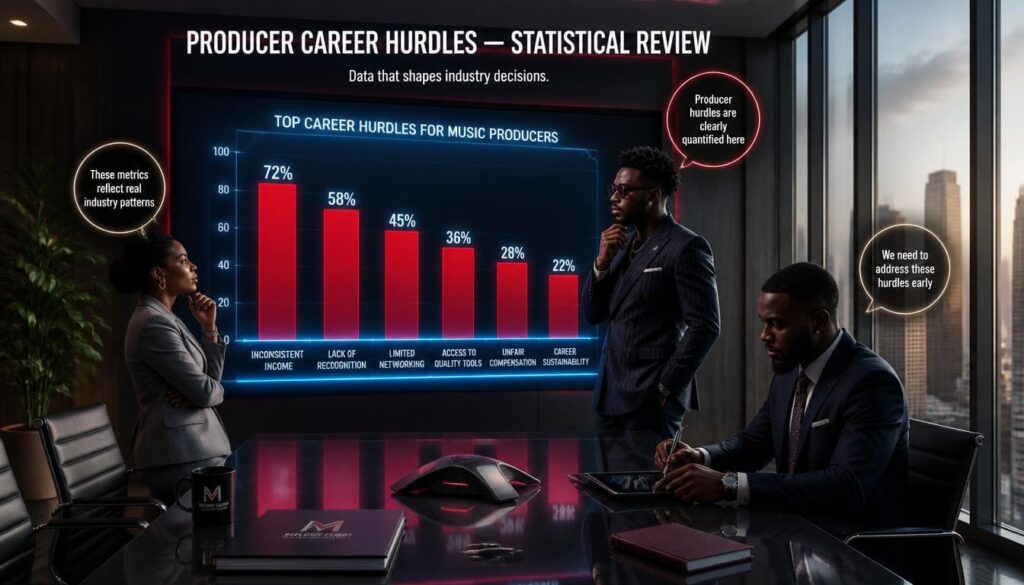
Navigating the Nigerian entertainment ecosystem requires a sharp understanding of both creative excellence and commercial execution. According to the IFPI Global Music Report, Sub-Saharan Africa remains one of the fastest-growing music regions in the world, largely driven by Nigeria’s vibrant Afrobeats export. However, while global streaming revenue expands exponentially, thousands of local producers struggle to secure basic livelihoods.
The discrepancy lies in business literacy: beatmakers routinely dedicate thousands of hours to honing their mixing techniques while devoting zero time to understanding intellectual property, promotional funnels, or client acquisition.
To transition from an underpaid bedroom beatmaker to a high-earning music executive, you must first recognize that technical skill accounts for only 20% of commercial success; the remaining 80% is determined by visibility, positioning, and contractual protection. Research by PwC Entertainment & Media Outlook highlights that digital music monetization in emerging markets relies heavily on direct-to-fan engagement and digital asset distribution.
Producers who rely solely on word-of-mouth recommendations in local studio hubs like Ojuelegba or Alaba find themselves outpaced by younger sound creators who leverage digital distribution networks and automated marketing systems.
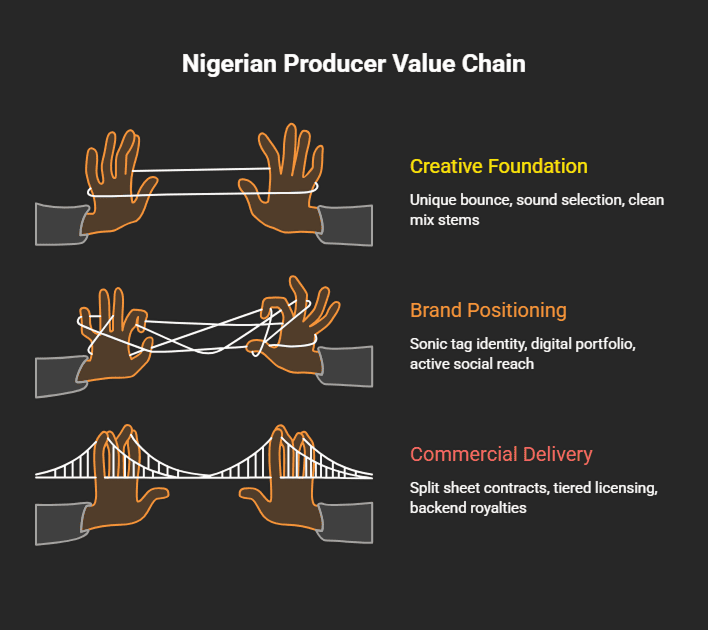
Avoiding common music producer growth mistakes in Nigeria demands an intentional audit of your current daily workflow. When you eliminate operational blind spots, stop treating your studio as a hobby lounge, and treat your catalog as a scalable yield-generating asset, your trajectory changes completely. Let us examine the eight primary growth hurdles holding Nigerian sound creators back today.
1. Producing Without A Clear Brand Identity
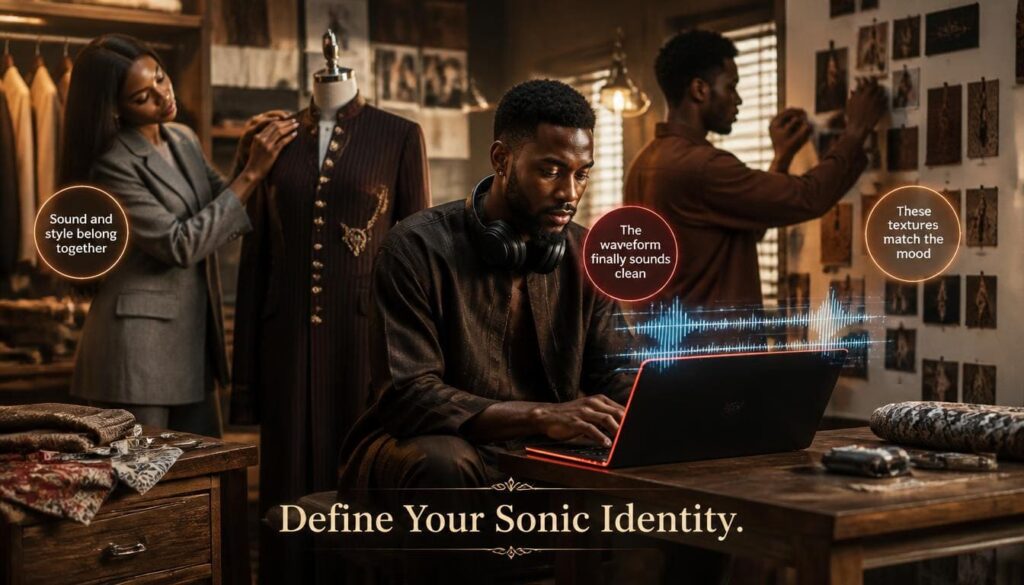
Behind every hit record in West Africa, there is usually a producer whose brand is just as recognizable as the artist singing on the hook. When people hear a signature sound tag at the beginning of a track, they instantly assign value to that song. Without a distinct brand identity, you are just another anonymous beat supplier in a crowded market. A strong brand tells artists and record labels who you are, what sound you master, and why your touch is worth paying for. Establishing a distinct presence requires integrating visual storytelling, structured social proof, and seamless web distribution into your release cycle.
Thousands of producers use the exact same drum kits, loop packs, and virtual instruments every day. If your beats sound like everything else playing on the radio, you give clients zero reason to choose you over someone charging half your price. Developing a signature bounce, unique percussion pattern, or specific melodic style makes your catalog distinct. When artists want a specific vibe that only you can deliver, your price becomes non-negotiable. Building this unique sonic fingerprint involves experimenting with custom analog synth layers, recording local African percussion instruments, or processing vocal chops in unconventional ways rather than relying on generic stock presets.
Why a recognizable producer identity matters
Behind every hit record in West Africa, there is usually a producer whose brand is just as recognizable as the artist singing on the hook. When people hear a signature sound tag at the beginning of a track, they instantly assign value to that song. Without a distinct brand identity, you are just another anonymous beat supplier in a crowded market.
A strong brand tells artists and record labels who you are, what sound you master, and why your touch is worth paying for. Establishing a distinct presence requires integrating visual storytelling, structured social proof, and seamless web distribution into your release cycle.
How a unique sound can separate you from competitors
Thousands of producers use the exact same drum kits, loop packs, and virtual instruments every day. If your beats sound like everything else playing on the radio, you give clients zero reason to choose you over someone charging half your price. Developing a signature bounce, unique percussion pattern, or specific melodic style makes your catalog distinct. When artists want a specific vibe that only you can deliver, your price becomes non-negotiable.
Building this unique sonic fingerprint involves experimenting with custom analog synth layers, recording local African percussion instruments, or processing vocal chops in unconventional ways rather than relying on generic stock presets. Beyond just the initial auditory appeal, cultivating a unique sonic footprint requires discipline in sound selection and mixing standards.
| Branding Pillar | Amateur Producer Approach | Professional Brand Producer Approach |
| Sonic Tag | Generic downloaded audio voice tag | Custom-recorded, trademarked, instantly recognizable tag |
| Catalog Presentation | Scattered MP3 links over WhatsApp | Structured digital portfolio hosted on a custom site |
| Visual Aesthetics | Default FL Studio screenshots | High-definition studio portraiture and brand assets |
| Market Positioning | “I make all types of beats cheap” | “I produce chart-topping Afro-fusion soundscapes” |
What makes a professional producer portfolio convincing
Sending an artist ten raw MP3 files named “Afrobeats Beat 102” over WhatsApp instantly signals amateur work. A convincing portfolio is organized, accessible, and presented professionally. A sleek link hub, an active website, or an organized digital audio catalog allows potential clients to audition beats easily.
Highlighting your best credits, clean audio masters, and clear contact information reassures artists that they are dealing with a serious professional. Grouping your catalog into thematic playlists, such as “Club Bangers,” “Afro-R&B Grooves,” or “Street Anthems” enables singers and A&Rs to locate their desired sound profile in seconds without wading through clutter.
To elevate your industry authority, showcase verified social proof alongside your audio previews. Music executives and independent artists are far more likely to invest in producers who demonstrate an established digital footprint.
By building an active creator page and leveraging structured growth frameworks, such as the Instagram Growth Platform on Sizzle Social, you can project the credibility required to land major label production placements.
2. Relying Only On Talent To Get Clients
A cold bottle of water on a hot afternoon in Onitsha market will not sell itself if it is hidden deep inside a closed cooler. Excellent mixing, complex chord progressions, and hard-hitting 808s are useless if no one hears them. Talent gets you into the room, but marketing gets you the meeting in the first place. You must actively put your work in front of people who need music production services rather than waiting for discovery to happen by luck.
How to promote your producer brand online
Effective promotion is about demonstrating your process and sharing your passion. Posting short breakdown videos of how you created a beat, showing behind-the-scenes studio sessions, and sharing video clips of artists recording on your tracks builds immediate interest. Share customer reviews, post beat remakes of trending songs, and regularly showcase your work across modern digital channels to remain top of mind.
Rather than sitting back after posting, execute personalized outbound pitches: identify rising vocalists on streaming platforms, study their vocal register, and send them a tailored 15-second beat snippet accompanied by a polite, professional message explaining why your sound fits their upcoming project.
Many beatmakers make the grave mistake of posting random audio clips without a clear call to action or a direct link to a listening portal.
Consistently publishing high-value content across multiple digital networks ensures that when an independent artist or record label executive is actively searching for fresh production talent, your brand is the most visible and professional option in their feed.
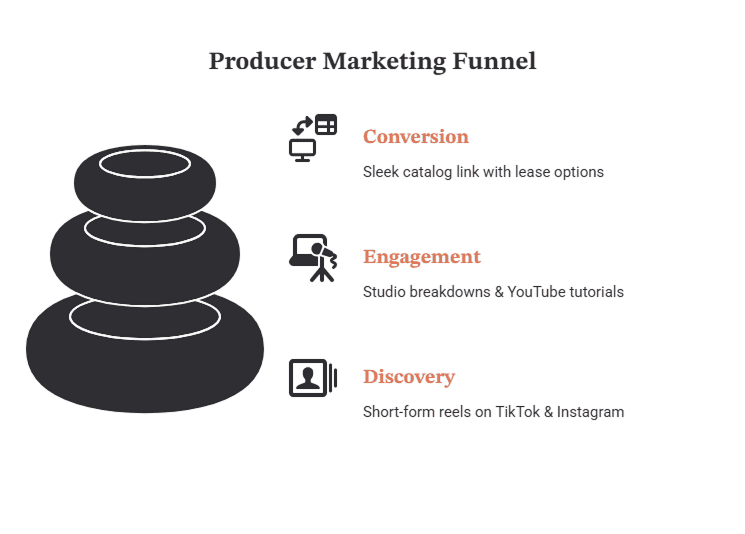
Where Nigerian artists can discover new producers
Up-and-coming vocalists and established recording artists constantly scan specific digital spaces for fresh instrumentals. Audio streaming platforms, short-form video feeds, and dedicated music community groups are major hubs for talent discovery. According to digital audience data published by DataReportal, short-form video content driving social discovery has grown over 35% year-on-year in Nigeria.
“Marketing is not an accessory to music production; it is the engine that drives creative sustainability in the digital era.”
Afrobeats Business Insights
Participating in online producer challenges, tagging rising acts in beat videos, and engaging actively in music discussions will place your catalog right where decision-makers are looking. Establishing an active presence on video-first platforms ensures your sound reaches creators across Lagos, Abuja, London, and Atlanta simultaneously. Utilizing automated distribution and promotion tools via YouTube Growth Services can significantly accelerate your channel’s visibility, driving consistent inbound inquiries from independent artists worldwide.
3. Giving Away Too Much Work For Free
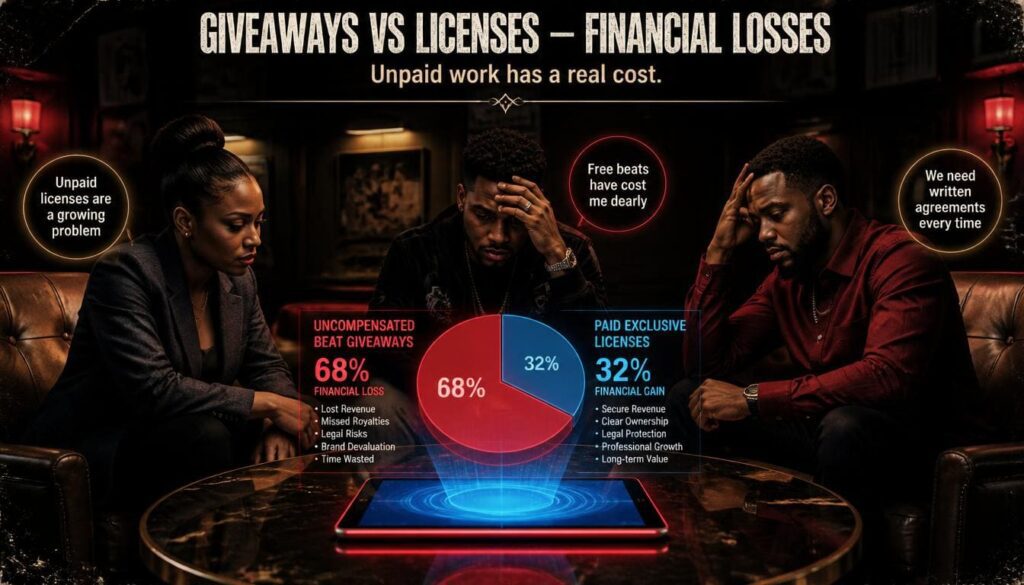
Handing out free instrumentals to every artist who promises “exposure” destroys your market value. When you train your network to expect your hard work for free, they will resist paying when you finally try to charge them. Respecting your time, equipment costs, and creative energy sets the baseline for how the music industry treats you. Exposure does not pay studio rent, replace broken studio monitors, or buy power generator fuel.
How to set fair prices for production services
Pricing your services requires understanding your current market value while leaving room to grow. Calculate your operational costs, evaluate your level of experience, and inspect what peers at your tier charge. Offer tiered pricing models, such as basic beat leases, premium multi-track stems, and exclusive rights packages. This structure allows artists with different budgets to work with you without forcing you to compromise your earnings.
Protect your creative boundary by offering watermarked preview tracks for vocal writing sessions while requiring a formal deposit before releasing un-tagged, high-resolution session stems. Establishing clear financial boundaries protects your mental energy and ensures you can reinvest back into your studio workspace.
hen you undervalue your craft, you not only hurt your own earning potential but also degrade the economic standing of the broader creative community around you. Clients who pay fair prices are significantly more invested in the success of the final record, treating the collaboration with professional seriousness.
- Standard MP3 Lease: Low upfront cost, non-exclusive rights, limited stream quota for rising indie acts.
- WAV + Stems Lease: Moderate price, includes unmixed trackout stems for professional studio sessions.
- Exclusive Rights Package: Premium price point, complete transfer of production ownership, unlimited commercial usage.
- Custom Production & Arrangement: Full executive production fee plus guaranteed publishing split points.
When free collaborations can actually make sense
Strategic free work can be beneficial, but only under strict, intentional conditions. Collaborating for free makes sense when working with an exceptionally talented artist who has a proven budget for promotion, strong label backing, or a massive audience.
Always ensure that any non-paid collaboration is backed by proper split sheets so that future performance royalties, publishing rights, and backend revenue remain protected.
Establishing clear “value anchor” pricing; publishing a standard rate sheet even when discounting services;ensures collaborators understand the exact commercial value being granted. Learn how streaming placement strategies work by referencing guides on Audiomack discovery methods for artists to maximize backend returns.
4. Ignoring Social Media Audience Growth
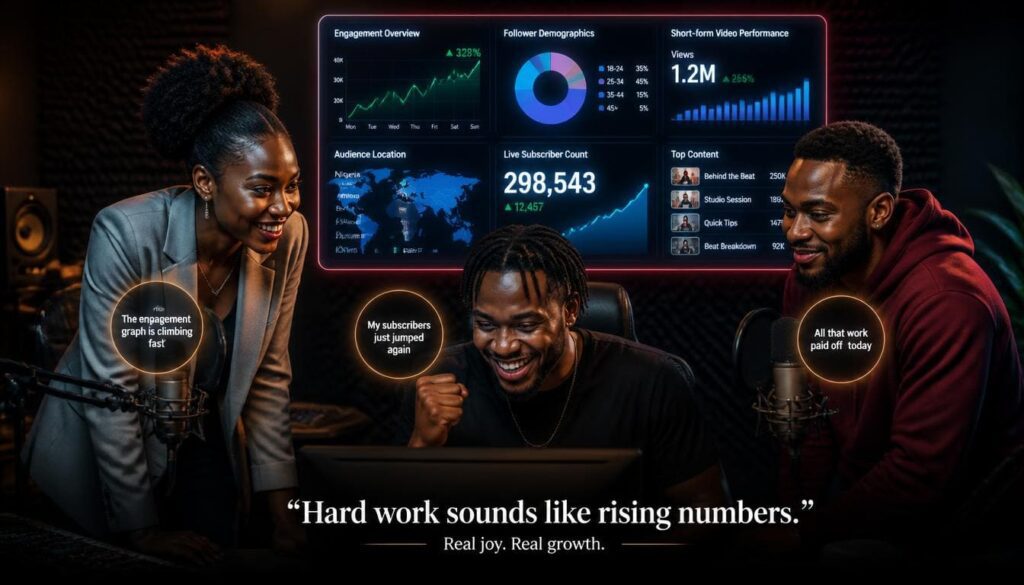
An active online profile acts as your modern business card, storefront, and resume combined into one. Record executives, talent managers, and artists routinely review a beatmaker’s digital footprint before initiating contact.
A blank or outdated profile creates doubt about your work ethic and current relevance. Maintaining a vibrant digital presence signals that you are active, serious, and ready for business opportunities.
How to create content around beats and production
Content creation for beatmakers does not have to be complicated or expensive. Film your laptop screen while playing a fresh melody, record your natural reactions during a studio session, or explain a simple production trick you used on a recent mix. Audiences love authenticity, raw emotion, and educational insights. Showing your personality makes you relatable and memorable.
Transform repetitive studio moments into structured content series, such as “Building an Afrobeats Hit in 10 Minutes” or “Sampling Classic Highlife Records,” which give viewers a recurring reason to follow your journey and share your videos. Documenting your daily creative routine demystifies the beatmaking process for aspiring fans and establishes profound trust with potential clients.
When artists watch you construct a complex drum pattern or manipulate vocal chops from scratch, they witness your technical proficiency firsthand before ever stepping foot into your physical recording studio. This transparency bridges the psychological gap between online creator and client, turning passive social media scrollers into engaged buyers who eagerly anticipate your next musical release or beat tape drop.
What Nigerian music audiences are likely to engage with
Music lovers in West Africa respond strongly to energy, humor, and cultural references. Creating content around viral street trends, remaking nostalgic classic tracks with a modern Amapiano twist, or posting funny studio banter generates high interaction. Industry statistics from Statista’s African Media Report indicate that social media adoption among Nigerian youth exceeds 80% on mobile devices, making digital channels the primary engine for music discovery.
Tapping into popular culture while showcasing your musical skill creates viral momentum that draws both listeners and potential clients to your brand. Frequently duetting with singers, responding to comments with video beat improvisations, and hosting live breakdown sessions builds a community that champions your releases. To accelerate this flywheel, creators frequently use scalable growth tools like the TikTok Growth Platform on Sizzle Social to amplify their sound breakdowns to broader African and global audiences.
5. Failing To Build Industry Relationships
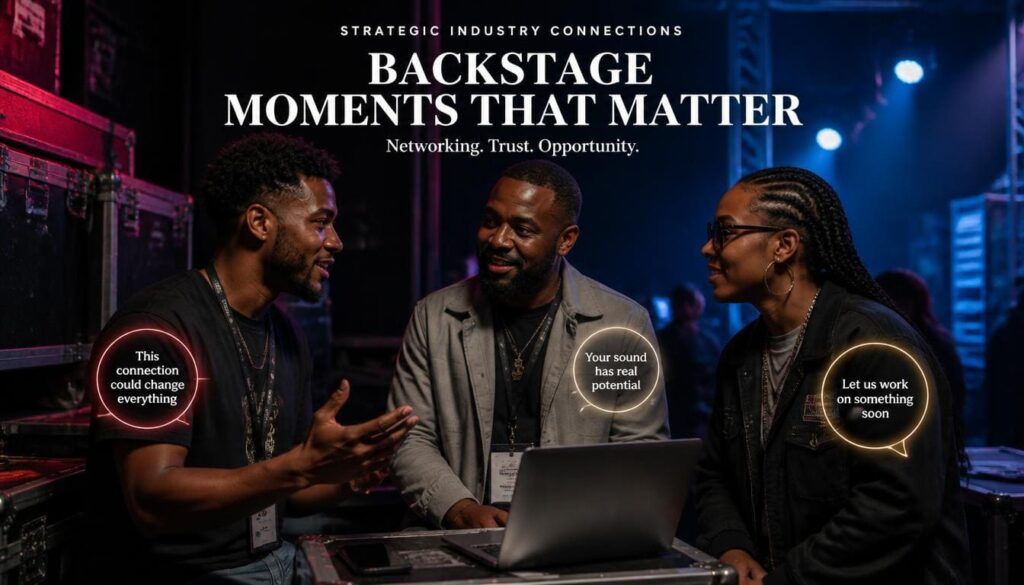
Spamming unsolicited beat links into the direct messages of top artists or A&Rs is the fastest way to get blocked. Music is a deeply personal, relationship-driven business built on trust and mutual respect. People prefer working with individuals they like, respect, and enjoy being around in a studio environment. Focus on building genuine human connections first before pitching your business services.
Attending local album listening parties, music conferences, studio sessions, and live shows provides natural networking opportunities. Support other creators by commenting meaningfully on their projects, sharing their releases, and celebrating their wins. When you reach out privately, show appreciation for their specific work rather than sending generic copy-pasted broadcast messages. Adopt a service-first networking model: offer to clean up audio stems for a rising artist, share custom DJ edits with club DJs, or co-produce tracks with peer beatmakers to expand your network organically.
Real industry advancement happens organically when you shift your mindset from extracting value to providing genuine assistance to those around you. Whenever you enter a creative space, look for ways to solve existing friction points;whether that means offering fresh drum loops to a stressed songwriter, helping an indie label engineer mix vocal tracks, or sharing promotional resources with a peer.
True networking is rooted in building a dependable reputation for reliability, emotional intelligence, and musical excellence. Over time, these selfless professional relationships compound into high-value creative opportunities, organic referrals, and lucrative studio placements that cold outreach and aggressive sales pitches could never achieve.
- Attend Industry Hubs: Be present at listening parties in Lekki, Ikeja, and Abuja.
- Offer Genuine Value: Provide feedback on an artist’s latest single before asking them to listen to your beats.
- Host Joint Producer Sessions: Partner with fellow beatmakers to co-produce tracks and share network access.
- Engage Industry DJs: DJs break records early; build relationships with club and radio DJs by giving them early access to exclusive edits.
What makes collaborations lead to longer-term opportunities
Punctuality, a positive attitude, and professional communication turn one-off sessions into long-term partnerships. Being easy to work with, open to creative feedback, and reliable with project deadlines sets you apart from unreliable competitors.
Delivering neatly organized project folders with clearly labeled trackout stems, providing quick revisions, and showing genuine enthusiasm for an artist’s vision turns single beat sales into ongoing production retainers with record labels and artist management teams.
6. Neglecting Contracts And Beat Licensing
Handshake deals and verbal promises frequently break down the moment a song becomes popular or starts earning serious money. Disputes over who owns what percentage of a hit track can tie up royalties in legal battles for years. Protecting your creative assets with written documentation prevents misunderstandings, preserves friendships, and ensures everyone gets paid fairly.
How beat licensing protects both producers and artists
Beat licensing agreements clearly define how an instrumental can be used, where it can be distributed, and how revenue will be split. A lease agreement allows multiple artists to use a beat under specific streaming limits, while an exclusive contract transfers full ownership rights to a single buyer. Official resources from the World Intellectual Property Organization (WIPO) demonstrate that legally registered sound recordings yield up to 40% higher long-term backend royalties compared to un-registered master assets.
Utilizing automated digital storefronts allows you to execute licensing contracts frictionlessly, instantly delivering agreements alongside audio downloads upon purchase. Establishing clear legal frameworks demonstrates professional maturity and reassures major record labels and independent artists that you take your business operations seriously.
Far too many talented sound creators lose out on millions of naira in mechanical royalties and streaming payouts simply because they failed to sign basic publishing split sheets before releasing tracks to digital distributors.
What producers should clarify before delivering a beat
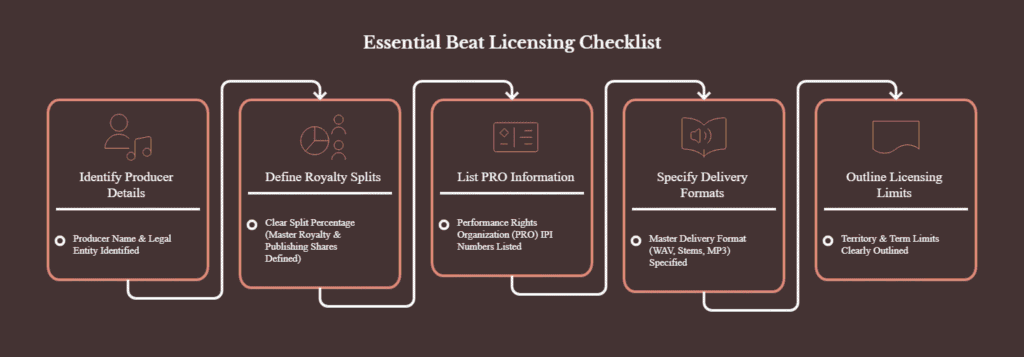
Before transferring high-resolution audio stems or master files to a client, agree on key financial and credit terms in writing. Clarify the upfront production fee, master royalty percentages, publishing splits, performance rights organization (PRO) registration details (such as MCSN or BMI/ASCAP), and exact tag placement.
| Contract Element | Standard Producer Split | Function / Protection |
| Production Fee | Fixed upfront payment | Covers immediate studio labor and creation costs |
| Master Royalties | 3% – 5% of PPD / 50% sound recording | Ensures recurring earnings from digital streams |
| Publishing Splits | 50% Composer share | Protects songwriter/melodic composition rights |
| Producer Tag | Required on all versions | Preserves brand awareness and marketing footprint |
Executing split sheets inside the studio session before bouncing final stems eliminates awkward post-release disputes, guaranteeing that performance rights organizations distribute song placement royalties directly to your bank account whenever your music plays on radio, television, or streaming networks.
7. Spending Money On Promotion Without A Strategy

Throwing money at random promo pages or running digital ads without a clear, data-driven plan is a fast way to drain hard-earned capital. High impression numbers and thousands of casual views mean nothing if the people watching are not part of your actual target audience.
Paid promotion only delivers a return on investment when it directs genuinely interested traffic to a well-prepared offer, a clean and professional portfolio, and a seamless purchasing process.
The Hidden Dangers of Unfocused Ad Spend
- Vanity Metrics Trap: Accumulating thousands of empty views or random likes from accounts outside your niche creates a false sense of security while yielding zero actual client conversions.
- Algorithmic Confusion: Directing untargeted traffic to your music profiles or social pages confuses recommendation engines, making it harder for platforms to identify and pitch your content to true fans.
- Capital Exhaustion: Burning budget on unverified promo networks leaves you with empty pockets and no repeatable customer acquisition system when it is time to push your next major release.
How to identify the right audience before promoting
Targeting everyone means targeting no one. Determine the exact type of artist who fits your sound, whether they are rising street-hop acts, mainstream Afro-pop vocalists, or gospel performers. Learn where these artists hang out online, what budget range they operate in, and what problems they face with their current music.
Tailoring your promotional campaigns specifically to these needs increases your conversion rate. When configuring social ad campaigns, isolate specific music hubs like Lagos, Port Harcourt, Accra, or London, targeting users interested in music production software, songwriting, and indie artist distribution. Pouring capital into digital marketing campaigns without a firmly established listener persona is equivalent to burning money in an open room.
Before launching any paid ad placement, you must thoroughly map out where your target demographic spends their digital hours, what specific sonic challenges keep them awake at night, and how your unique production style solves those exact problems.
What metrics can reveal whether promotion is working
Look beyond vanity metrics like simple post likes or video views when evaluating ad performance. Track actionable numbers such as profile visits, link clicks, direct message inquiries, email signups, and actual beat sales.
Continuously run split tests between different video concepts, such as testing a high-energy studio reaction video against an instructional mixing breakdown reel, to identify which ad creative produces the lowest cost-per-lead. If an ad campaign generates high views but zero inquiries, your creative video might be entertaining, but your call to action or offer needs immediate adjustment. You can discover optimal campaign distribution methods by reading about music growth strategies on Sizzle Social.
8. Focusing On Short-Term Attention Instead Of Growth
A massive follower count does not automatically equal a healthy bank balance. Many online creators build large, passive audiences that double as entertainment seekers rather than paying customers. A beatmaker with two thousand dedicated artist followers who regularly buy licenses will build a far more profitable business than someone with fifty thousand passive fans who never buy a single track.
Converting casual listeners into long-term clients requires active communication and value creation. Collect email addresses or phone contacts by offering free sample packs, beat previews, or helpful mixing tips. Follow up regularly with your community, offer special discounts to repeat buyers, and check in on artists working on new projects to build sustainable, recurring revenue. Establishing owned communication channels ensures that social platform algorithm changes never sever access to your client base.
Chasing fleeting viral moments or obsessing over daily follower spikes often blinds independent beatmakers to the foundational work required to build a resilient, enduring career. While a trending meme video might bring in hundreds of thousands of temporary views overnight, those casual observers rarely translate into paying beat lessees or loyal collaborative partners.
True career sustainability comes from cultivating deep, meaningful connections with a core audience of dedicated independent artists who genuinely value your artistic output and return to your studio catalog month after month.
By prioritizing owned media assets, such as direct mailing lists and organized client databases over fickle social algorithms, you protect your business from sudden platform shifts and secure a predictable, long-term revenue stream.
Why consistency matters for a sustainable producer career
Building a career in the music industry is a marathon, not a sprint. One viral video or single placement will not sustain you for ten years if you lack the structure to follow it up. Consistent output, continuous skill development, reliable customer service, and persistent networking create the foundation for long-term career longevity and financial security.
Developing a manageable weekly production and release schedule prevents creative burnout, ensuring your digital storefront stays refreshed with high-quality beats month after month. Expand your knowledge on leveraging digital ecosystem tools by exploring the Sizzle Social Blog for actionable social growth insights.
How To Fix These Producer Growth Mistakes

Correcting structural errors in your music production business requires a deliberate pivot from unstructured hustle to disciplined commercial management. Many creators spend years trapped in low-income cycles simply because they treat their work as an informal trade rather than an enterprise.
To position yourself for high-value client acquisitions, international sync licensing, and sustained streaming royalties, you must implement systematic solutions that streamline your client acquisition, legally protect your output, and elevate your visual and sonic presentation.
Data from the Nigerian Bureau of Statistics (NBS) shows that creative industry SMEs that formalize their administrative structures experience higher operational stability and access to capital compared to informal operators. By establishing standard operating procedures for your beat distribution, client communications, and social promotion, you ensure that every project you finish contributes directly to your long-term equity.
Below is a structured tactical blueprint designed to eliminate these growth bottlenecks permanently.
1. Build A Recognizable Producer Brand
Take time to define your unique sonic identity, visual presentation, and brand message. Create a memorable audio tag, invest in professional graphic cover art for your beat tapes, and package your online catalog cleanly. Presenting yourself as a high-value business owner immediately changes how clients perceive and compensate your work.
Establish a signature aesthetic across all digital channels. When an artist visits your profile, your bio should clearly state your production niche, major achievements, and a direct link to audition your beat catalog. Conduct a thorough audit across all active channels; update cover photos, remove low-quality audio uploads, and publish professional studio portraiture to present a polished corporate identity.
Articulating your sonic philosophy clearly in your bio builds immediate trust with record executives seeking dependable talent. Strengthening your overall web presence through platforms like Sizzle Social provides the social validation needed to convert casual visitors into paying clients.
2. Create A Consistent Content Strategy
Establish a realistic content creation schedule that fits your daily studio routine without causing burnout. Document your beat-making process, share educational remakes, highlight client projects, and post consistently across your main channels. Focus on providing value, entertaining your community, and showing off your musical capabilities every single week.
Batch-record content during your regular studio sessions. Instead of creating separate time for content creation, simply mount a smartphone on a tripod while you compose melodies or mix drums. Edit these raw clips into 30-second high-energy reels showcasing the progression from a blank DAW screen to a finished bounce.
Review video engagement weekly to see which production breakdowns yield the most client inquiries, doubling down on winning formats while eliminating unengaging video styles. Amplifying your top-performing reels using structured promotional tools like Facebook Growth Services enables you to expand your reach to recording artists across diverse geographical regions.
3. Develop Clear Pricing And Licensing
Draft standard contract templates and beat licensing agreements for all your production services. Define clear terms for beat leases, exclusive rights, mixing charges, and custom production projects. Post your base pricing transparently or have a professional rate card ready to send immediately when prospective clients inquire about your services.
Ensure every transaction includes a written split sheet outlining publishing percentages (typically 50/50 between writer and producer) and performance rights registrations. Deploying an automated digital beat store streamlines sales by collecting payments and delivering signed licensing contracts instantly without manual effort.
When negotiating high-tier custom production deals, offer structured payment installment plans (such as 50% upfront deposit and 50% upon final stem delivery) and bundle post-production services like vocal tuning or stem mixing to increase overall transaction value while maintaining firm baseline rates. Having a pre-configured PDF rate card ready to send via WhatsApp or email signals to prospective buyers that you operate as a professional corporate entity, reducing low-ball negotiations.
What Will You Change Before Your Next Beat Drops?
Taking your production career to the next level requires more than just making great music; it demands business discipline, strategic marketing, and professional relationship management. Every major producer who commands top fees across the African music scene once had to make a conscious choice to stop acting like an amateur beatmaker and start operating like a structured music executive. The difference between struggling in obscurity and achieving sustainable financial independence comes down to execution.
Review your current routine, identify which of these growth traps have been holding you back, and fix them immediately. Update your digital portfolio, formalize your beat licensing contracts, build an active audience across key social platforms, and stop giving away your value for free. Your next instrumental drop could be the master key to your breakthrough; make sure your business structure is ready to capture its full commercial potential.
Frequently Asked Questions
Navigating the Nigerian entertainment ecosystem requires a sharp understanding of both creative excellence and commercial execution. According to the IFPI Global Music Report, Sub Saharan Africa remains one of the fastest growing music regions in the world, largely driven by Nigeria’s vibrant Afrobeats export. However, while global streaming revenue expands exponentially, thousands of local producers struggle to secure basic livelihoods. The discrepancy lies in business literacy. Beatmakers routinely dedicate thousands of hours to honing their mixing techniques while devoting zero time to understanding intellectual property, promotional funnels, or client acquisition. To transition from an underpaid bedroom beatmaker to a high earning music executive, you must first recognize that technical skill accounts for only twenty percent of commercial success. The remaining eighty percent is determined by visibility, positioning, and contractual protection. Research by PwC Entertainment and Media Outlook highlights that digital music monetization in emerging markets relies heavily on direct to fan engagement and digital asset distribution. Producers who rely solely on word of mouth recommendations in local studio hubs like Ojuelegba or Alaba find themselves outpaced by younger sound creators who leverage digital distribution networks and automated marketing systems. Avoiding common music producer growth mistakes in Nigeria demands an intentional audit of your current daily workflow.
Behind every hit record in West Africa, there is usually a producer whose brand is just as recognizable as the artist singing on the hook. When people hear a signature sound tag at the beginning of a track, they instantly assign value to that song. Without a distinct brand identity, you are just another anonymous beat supplier in a crowded market. A strong brand tells artists and record labels who you are, what sound you master, and why your touch is worth paying for. Establishing a distinct presence requires integrating visual storytelling, structured social proof, and seamless web distribution into your release cycle. Thousands of producers use the exact same drum kits, loop packs, and virtual instruments every day. If your beats sound like everything else playing on the radio, you give clients zero reason to choose you over someone charging half your price. Developing a signature bounce, unique percussion pattern, or specific melodic style makes your catalog distinct. When artists want a specific vibe that only you can deliver, your price becomes non negotiable. Building this unique sonic fingerprint involves experimenting with custom analog synth layers, recording local African percussion instruments, or processing vocal chops in unconventional ways rather than relying on generic stock presets. A custom recorded trademarked sound tag, a structured digital portfolio hosted on a custom site, high definition studio portraiture, and clear market positioning all separate professional brand producers from amateurs.
A cold bottle of water on a hot afternoon in Onitsha market will not sell itself if it is hidden deep inside a closed cooler. Excellent mixing, complex chord progressions, and hard hitting 808s are useless if no one hears them. Talent gets you into the room, but marketing gets you the meeting in the first place. You must actively put your work in front of people who need music production services rather than waiting for discovery to happen by luck. Effective promotion is about demonstrating your process and sharing your passion. Posting short breakdown videos of how you created a beat, showing behind the scenes studio sessions, and sharing video clips of artists recording on your tracks builds immediate interest. Share customer reviews, post beat remakes of trending songs, and regularly showcase your work across modern digital channels to remain top of mind. Rather than sitting back after posting, execute personalized outbound pitches. Identify rising vocalists on streaming platforms, study their vocal register, and send them a tailored fifteen second beat snippet accompanied by a polite professional message explaining why your sound fits their upcoming project. Many beatmakers make the grave mistake of posting random audio clips without a clear call to action or a direct link to a listening portal. Consistently publishing high value content across multiple digital networks ensures that when an independent artist or record label executive is actively searching for fresh production talent, your brand is the most visible and professional option in their feed.
Handing out free instrumentals to every artist who promises exposure destroys your market value. When you train your network to expect your hard work for free, they will resist paying when you finally try to charge them. Respecting your time, equipment costs, and creative energy sets the baseline for how the music industry treats you. Exposure does not pay studio rent, replace broken studio monitors, or buy power generator fuel. Pricing your services requires understanding your current market value while leaving room to grow. Calculate your operational costs, evaluate your level of experience, and inspect what peers at your tier charge. Offer tiered pricing models such as basic beat leases, premium multi track stems, and exclusive rights packages. This structure allows artists with different budgets to work with you without forcing you to compromise your earnings. Protect your creative boundary by offering watermarked preview tracks for vocal writing sessions while requiring a formal deposit before releasing untagged high resolution session stems. Establishing clear financial boundaries protects your mental energy and ensures you can reinvest back into your studio workspace. When you undervalue your craft, you not only hurt your own earning potential but also degrade the economic standing of the broader creative community around you. Strategic free work can be beneficial, but only under strict intentional conditions, such as working with an exceptionally talented artist who has a proven budget for promotion, strong label backing, or a massive audience. Always ensure any non paid collaboration is backed by proper split sheets.
An active online profile acts as your modern business card, storefront, and resume combined into one. Record executives, talent managers, and artists routinely review a beatmaker’s digital footprint before initiating contact. A blank or outdated profile creates doubt about your work ethic and current relevance. Maintaining a vibrant digital presence signals that you are active, serious, and ready for business opportunities. Content creation for beatmakers does not have to be complicated or expensive. Film your laptop screen while playing a fresh melody, record your natural reactions during a studio session, or explain a simple production trick you used on a recent mix. Audiences love authenticity, raw emotion, and educational insights. Showing your personality makes you relatable and memorable. Transform repetitive studio moments into structured content series such as building an Afrobeats hit in ten minutes or sampling classic highlife records, which give viewers a recurring reason to follow your journey and share your videos. Documenting your daily creative routine demystifies the beatmaking process for aspiring fans and establishes profound trust with potential clients. When artists watch you construct a complex drum pattern or manipulate vocal chops from scratch, they witness your technical proficiency firsthand before ever stepping foot into your physical recording studio. Music lovers in West Africa respond strongly to energy, humor, and cultural references. Creating content around viral street trends, remaking nostalgic classic tracks with a modern Amapiano twist, or posting funny studio banter generates high interaction. Amplifying your sound breakdowns through growth platforms such as those offered by Sizzle Social helps reach broader African and global audiences.
Spamming unsolicited beat links into the direct messages of top artists or A and R representatives is the fastest way to get blocked. Music is a deeply personal relationship driven business built on trust and mutual respect. People prefer working with individuals they like, respect, and enjoy being around in a studio environment. Focus on building genuine human connections first before pitching your business services. Attending local album listening parties, music conferences, studio sessions, and live shows provides natural networking opportunities. Support other creators by commenting meaningfully on their projects, sharing their releases, and celebrating their wins. When you reach out privately, show appreciation for their specific work rather than sending generic copy pasted broadcast messages. Adopt a service first networking model. Offer to clean up audio stems for a rising artist, share custom DJ edits with club DJs, or co produce tracks with peer beatmakers to expand your network organically. Real industry advancement happens organically when you shift your mindset from extracting value to providing genuine assistance to those around you. Whenever you enter a creative space, look for ways to solve existing friction points, whether that means offering fresh drum loops to a stressed songwriter, helping an indie label engineer mix vocal tracks, or sharing promotional resources with a peer. Punctuality, a positive attitude, and professional communication turn one off sessions into long term partnerships. Being easy to work with, open to creative feedback, and reliable with project deadlines sets you apart from unreliable competitors. Delivering neatly organized project folders with clearly labeled trackout stems, providing quick revisions, and showing genuine enthusiasm for an artist’s vision turns single beat sales into ongoing production retainers with record labels and artist management teams.
Handshake deals and verbal promises frequently break down the moment a song becomes popular or starts earning serious money. Disputes over who owns what percentage of a hit track can tie up royalties in legal battles for years. Protecting your creative assets with written documentation prevents misunderstandings, preserves friendships, and ensures everyone gets paid fairly. Beat licensing agreements clearly define how an instrumental can be used, where it can be distributed, and how revenue will be split. A lease agreement allows multiple artists to use a beat under specific streaming limits, while an exclusive contract transfers full ownership rights to a single buyer. Official resources from the World Intellectual Property Organization demonstrate that legally registered sound recordings yield up to forty percent higher long term backend royalties compared to unregistered master assets. Before transferring high resolution audio stems or master files to a client, agree on key financial and credit terms in writing. Clarify the upfront production fee, master royalty percentages, publishing splits, performance rights organization registration details such as MCSN or BMI and ASCAP, and exact tag placement. Executing split sheets inside the studio session before bouncing final stems eliminates awkward post release disputes, guaranteeing that performance rights organizations distribute song placement royalties directly to your bank account whenever your music plays on radio, television, or streaming networks. Essential licensing elements include identifying your producer name and legal entity, defining clear split percentages for master royalty and publishing shares, listing performance rights organization IPI numbers, specifying master delivery format, and outlining territory and term limits clearly.
Correcting structural errors in your music production business requires a deliberate pivot from unstructured hustle to disciplined commercial management. Many creators spend years trapped in low income cycles simply because they treat their work as an informal trade rather than an enterprise. To position yourself for high value client acquisitions, international sync licensing, and sustained streaming royalties, you must implement systematic solutions that streamline your client acquisition, legally protect your output, and elevate your visual and sonic presentation. Data from the Nigerian Bureau of Statistics shows that creative industry small and medium enterprises that formalize their administrative structures experience higher operational stability and access to capital compared to informal operators. By establishing standard operating procedures for your beat distribution, client communications, and social promotion, you ensure that every project you finish contributes directly to your long term equity. Start by building a recognizable producer brand. Take time to define your unique sonic identity, visual presentation, and brand message. Create a memorable audio tag, invest in professional graphic cover art for your beat tapes, and package your online catalog cleanly. Presenting yourself as a high value business owner immediately changes how clients perceive and compensate your work. Establish a signature aesthetic across all digital channels. When an artist visits your profile, your bio should clearly state your production niche, major achievements, and a direct link to audition your beat catalog. Conduct a thorough audit across all active channels, updating cover photos, removing low quality audio uploads, and publishing professional studio portraiture to present a polished corporate identity. Articulating your sonic philosophy clearly in your bio builds immediate trust with record executives seeking dependable talent. Strengthening your overall web presence through platforms like Sizzle Social provides the social validation needed to convert casual visitors into paying clients.
Throwing money at random promo pages or running digital ads without a clear data driven plan is a fast way to drain hard earned capital. High impression numbers and thousands of casual views mean nothing if the people watching are not part of your actual target audience. Paid promotion only delivers a return on investment when it directs genuinely interested traffic to a well prepared offer, a clean and professional portfolio, and a seamless purchasing process. Several hidden dangers come with unfocused ad spend. The vanity metrics trap means accumulating thousands of empty views or random likes from accounts outside your niche creates a false sense of security while yielding zero actual client conversions. Algorithmic confusion occurs when directing untargeted traffic to your music profiles or social pages confuses recommendation engines, making it harder for platforms to identify and pitch your content to true fans. Capital exhaustion happens when burning budget on unverified promo networks leaves you with empty pockets and no repeatable customer acquisition system when it is time to push your next major release. Targeting everyone means targeting no one. Determine the exact type of artist who fits your sound, whether they are rising street hop acts, mainstream Afro pop vocalists, or gospel performers. Learn where these artists hang out online, what budget range they operate in, and what problems they face with their current music. Tailoring your promotional campaigns specifically to these needs increases your conversion rate. When configuring social ad campaigns, isolate specific music hubs like Lagos, Port Harcourt, Accra, or London, targeting users interested in music production software, songwriting, and indie artist distribution.
Look beyond vanity metrics like simple post likes or video views when evaluating ad performance. Track actionable numbers such as profile visits, link clicks, direct message inquiries, email signups, and actual beat sales. The core formula to monitor is customer acquisition cost, which is calculated by dividing total promotional ad spend by total new paying clients acquired. Continuously run split tests between different video concepts, such as testing a high energy studio reaction video against an instructional mixing breakdown reel, to identify which ad creative produces the lowest cost per lead. If an ad campaign generates high views but zero inquiries, your creative video might be entertaining, but your call to action or offer needs immediate adjustment. You can discover optimal campaign distribution methods by reading about music growth strategies on platforms such as Sizzle Social. Many producers make the mistake of judging campaign success purely by how many people saw the content rather than how many people took a meaningful action afterward. A video with ten thousand views and zero inquiries is far less valuable than a video with five hundred views and twenty direct messages from artists asking about your rates. Tracking the deeper funnel metrics allows you to reallocate budget toward creative concepts that actually generate paying clients, and it also helps you identify which platforms and audience segments deliver the highest quality leads. Over time, this data driven approach turns promotion from a guessing game into a repeatable client acquisition system.
A massive follower count does not automatically equal a healthy bank balance. Many online creators build large passive audiences that double as entertainment seekers rather than paying customers. A beatmaker with two thousand dedicated artist followers who regularly buy licenses will build a far more profitable business than someone with fifty thousand passive fans who never buy a single track. Converting casual listeners into long term clients requires active communication and value creation. Collect email addresses or phone contacts by offering free sample packs, beat previews, or helpful mixing tips. Follow up regularly with your community, offer special discounts to repeat buyers, and check in on artists working on new projects to build sustainable recurring revenue. Establishing owned communication channels ensures that social platform algorithm changes never sever access to your client base. Chasing fleeting viral moments or obsessing over daily follower spikes often blinds independent beatmakers to the foundational work required to build a resilient enduring career. While a trending meme video might bring in hundreds of thousands of temporary views overnight, those casual observers rarely translate into paying beat lessees or loyal collaborative partners. True career sustainability comes from cultivating deep meaningful connections with a core audience of dedicated independent artists who genuinely value your artistic output and return to your studio catalog month after month. By prioritizing owned media assets such as direct mailing lists and organized client databases over fickle social algorithms, you protect your business from sudden platform shifts and secure a predictable long term revenue stream.
Building a career in the music industry is a marathon, not a sprint. One viral video or single placement will not sustain you for ten years if you lack the structure to follow it up. Consistent output, continuous skill development, reliable customer service, and persistent networking create the foundation for long term career longevity and financial security. Developing a manageable weekly production and release schedule prevents creative burnout, ensuring your digital storefront stays refreshed with high quality beats month after month. Producers who publish sporadically often lose momentum with their audience and with platform algorithms. When you release music and content on a predictable schedule, your existing clients know when to expect new material, and new listeners have more opportunities to discover your work. Consistency also builds trust with artists and labels, because it demonstrates that you operate like a reliable business rather than someone who only works when inspiration strikes. Expand your knowledge on leveraging digital ecosystem tools by exploring resources such as the Sizzle Social Blog for actionable social growth insights. A producer who consistently shows up with quality work, communicates professionally, and delivers on time will naturally outlast more talented producers who lack discipline. Over months and years, this steady approach compounds into a recognizable brand, a loyal client base, and a catalog that continues earning royalties long after each release.
Take time to define your unique sonic identity, visual presentation, and brand message. Create a memorable audio tag, invest in professional graphic cover art for your beat tapes, and package your online catalog cleanly. Presenting yourself as a high value business owner immediately changes how clients perceive and compensate your work. Establish a signature aesthetic across all digital channels. When an artist visits your profile, your bio should clearly state your production niche, major achievements, and a direct link to audition your beat catalog. Conduct a thorough audit across all active channels, updating cover photos, removing low quality audio uploads, and publishing professional studio portraiture to present a polished corporate identity. Articulating your sonic philosophy clearly in your bio builds immediate trust with record executives seeking dependable talent. A recognizable brand also includes a consistent tone in how you communicate with clients, from your WhatsApp responses to your email signatures and contract documents. Small details such as a professional logo, a clean link hub, and a consistent color palette across your social pages signal that you take your craft seriously. Strengthening your overall web presence through platforms like Sizzle Social provides the social validation needed to convert casual visitors into paying clients. When your brand communicates clarity, quality, and reliability, artists and labels are far more likely to choose you over equally talented producers who present themselves as amateurs.
Establish a realistic content creation schedule that fits your daily studio routine without causing burnout. Document your beat making process, share educational remakes, highlight client projects, and post consistently across your main channels. Focus on providing value, entertaining your community, and showing off your musical capabilities every single week. Batch record content during your regular studio sessions. Instead of creating separate time for content creation, simply mount a smartphone on a tripod while you compose melodies or mix drums. Edit these raw clips into thirty second high energy reels showcasing the progression from a blank DAW screen to a finished bounce. Review video engagement weekly to see which production breakdowns yield the most client inquiries, doubling down on winning formats while eliminating unengaging video styles. Amplifying your top performing reels using structured promotional tools such as Facebook growth services enables you to expand your reach to recording artists across diverse geographical regions. A sustainable content strategy also means setting boundaries around how much time you spend on social media versus actual music production. Many producers fall into the trap of spending hours editing content while neglecting their core craft. The most effective approach is to dedicate specific days to batch filming and editing, then schedule posts in advance so your feed stays active even during intense studio weeks. This structure keeps your brand visible without exhausting your creative energy, and it ensures that your content consistently reflects the quality of your production work.
Before transferring high resolution audio stems or master files to a client, agree on key financial and credit terms in writing. Clarify the upfront production fee, master royalty percentages, publishing splits, performance rights organization registration details such as MCSN or BMI and ASCAP, and exact tag placement. Standard producer splits typically include a fixed upfront payment covering immediate studio labor and creation costs. Master royalties usually range from three to five percent of paid phonographic distribution or fifty percent of sound recording revenue, ensuring recurring earnings from digital streams. Publishing splits typically follow a fifty percent composer share, protecting songwriter and melodic composition rights. The producer tag should be required on all versions to preserve brand awareness and marketing footprint. Executing split sheets inside the studio session before bouncing final stems eliminates awkward post release disputes, guaranteeing that performance rights organizations distribute song placement royalties directly to your bank account whenever your music plays on radio, television, or streaming networks. Taking your production career to the next level requires more than just making great music. It demands business discipline, strategic marketing, and professional relationship management. Every major producer who commands top fees across the African music scene once had to make a conscious choice to stop acting like an amateur beatmaker and start operating like a structured music executive. The difference between struggling in obscurity and achieving sustainable financial independence comes down to execution. Review your current routine, identify which of these growth traps have been holding you back, and fix them immediately. Update your digital portfolio, formalize your beat licensing contracts, build an active audience across key social platforms, and stop giving away your value for free. Your next instrumental drop could be the master key to your breakthrough, so make sure your business structure is ready to capture its full commercial potential.