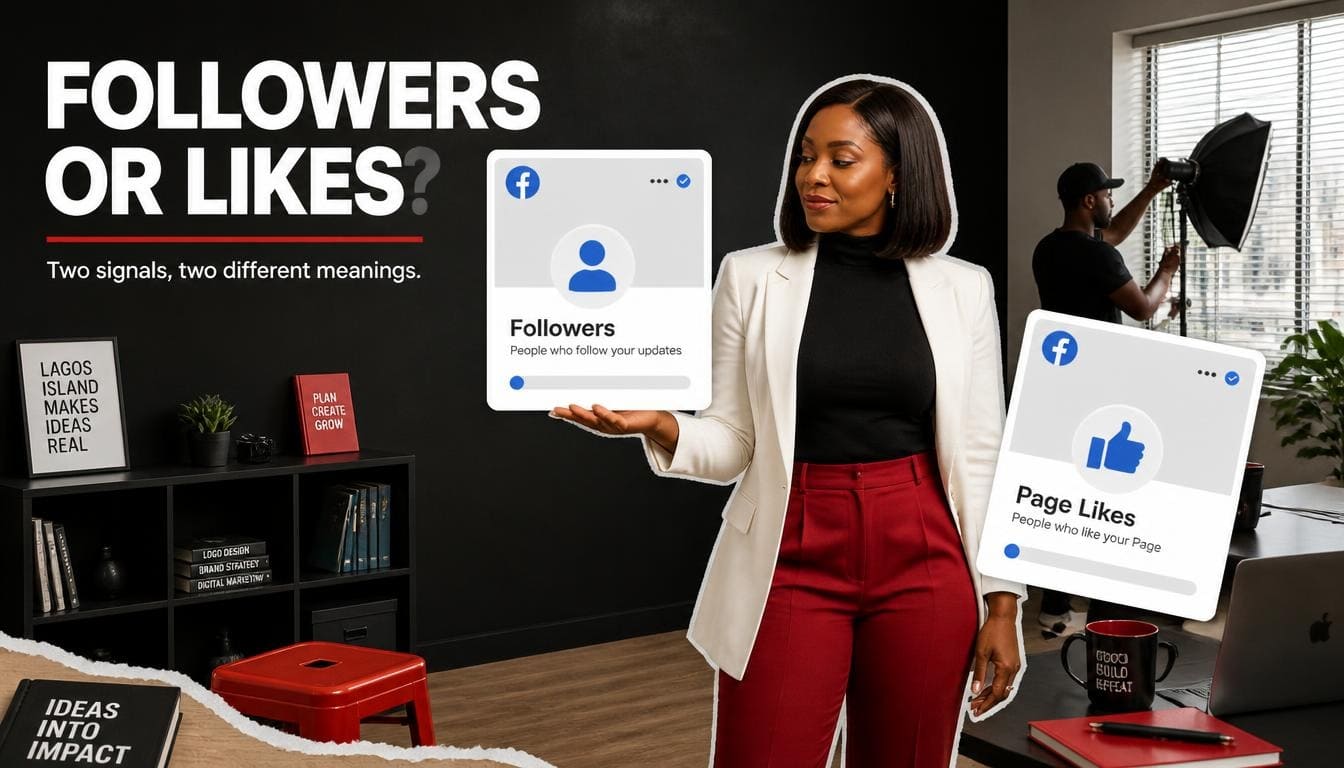
Ada runs a small bakery in Ibadan. Her Facebook page shows 2,400 likes, but her follower count reads 2,950. She frowns at the screen. Which number counts? Which one should she chase? Her cousin says likes. Her friend says, followers. Neither can explain why.
That confusion is common, and it sits at the heart of the Facebook page followers vs page likes debate. Both numbers sit on your page. Both look like a sign of support. Yet they work in different ways, and they do different jobs for your business.
A like is a public sign of approval. A follow is a request to see your posts in the feed. One shapes how your page looks. The other shapes who sees your content. Page owners in Lagos, Abuja, Kano, and Port Harcourt often spend money on the wrong one because nobody explained the gap.
This guide fixes that. You will learn what each number means, how they compare, which one deserves your effort first, and how to measure real progress beyond both. Read on, and you will know exactly where to place your next naira and your next hour.
What is the Difference Between Facebook Page Followers vs Page Likes
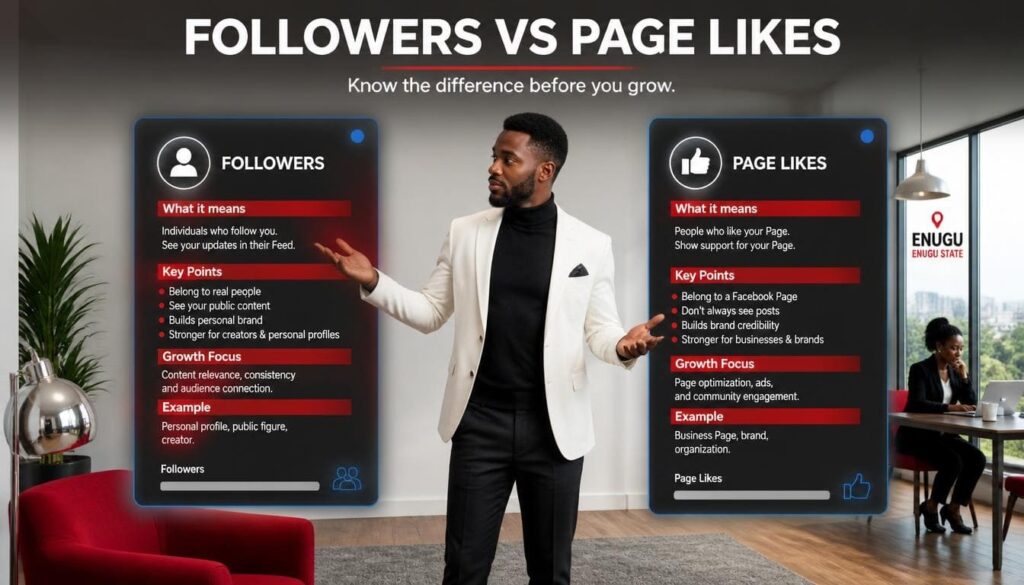
Most page owners treat likes and followers as twins. They are closer to cousins. They grew up in the same family, they look alike from a distance, and they often show up together, but each has its own personality and its own job.
For years, the two actions were tied together. Someone clicked the Like button on your page, and Facebook usually made them a follower at the same moment. That habit taught owners to think of the two numbers as one. Then Facebook began to change how Pages work. Meta has moved the spotlight toward followers, and many Pages now show the follower count more prominently than the like count.
The exact labels, buttons, and numbers you see may differ from another owner’s, because Meta updates its tools often and rolls out changes in stages. Always trust the screen in your own account over any guide, including this one.
This matters because the old advice you find online may no longer match what you see. A blog written years ago may tell you to “get more likes” as if that were the only goal. Today, the question is more precise. Do you want more people to see your posts, or more people to see public proof that your page is liked? Those are two different aims.
Think of a shop in Aba. A customer can walk in, nod at the owner and say “nice shop.” That is a like. Another customer can leave a phone number and say “call me when new stock arrives.” That is a follow. The first person shows approval. The second person asks for updates. A smart shop owner wants both, but knows the second person is more likely to return.
What Are Facebook Page Followers And How Do They Work?
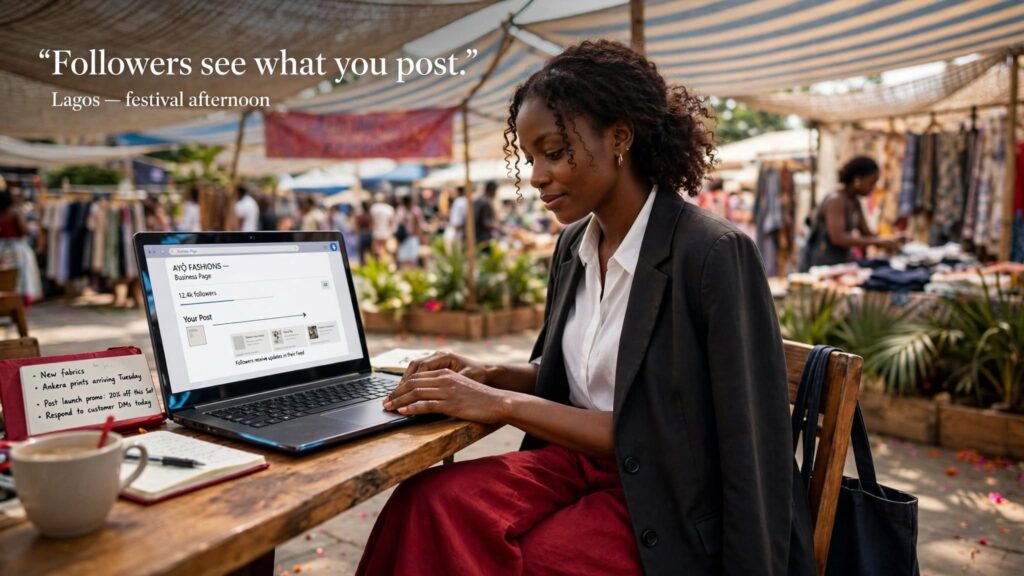
A Facebook page follower is a person who has chosen to see your page’s updates in their feed. When someone follows your page, your public posts can appear alongside posts from their friends and other pages. Following is the action that connects your content to a person’s daily scroll.
Here is how it works in simple steps.
- A person finds your page through a search, a shared post, an ad, a friend’s tag or a link.
- They tap Follow.
- Facebook adds them to your follower count.
- Your future posts become eligible to appear in their feed.
Notice the words “eligible to appear.” A follow does not guarantee that the person will see every post. Facebook decides what to show based on many signals, such as how often the person reacts to your content, how fresh the post is, and how much time they spend on the app. A follower who never reacts may rarely see your posts. A follower who comments often will see more.
Followers also differ from friends. A friend connection on a personal profile is two-way and private in nature. A follow on a Page is one-way and public. The person follows you, and you do not need to follow them back. That is why a business page can have thousands of followers without any friend requests at all.
Followers have three practical uses for a business.
- Distribution. They give your posts a base audience that can see your updates without paid promotion.
- Credibility. A solid follower count helps a new visitor trust the page.
- Reach for announcements. Sales, events, and new products can reach people who already said they want updates.
Consider a tailor in Kaduna who posts new ankara designs every Friday. Her followers are people who asked to see those designs. When she posts, a share of them will notice, react and sometimes send a message. That chain from follow to feed to enquiry is the main reason followers matter.
Followers also come with limits. A large follower count can hide a quiet audience. If many followers joined through a contest, a swap, a bought package or a random push, they may never react to your posts. They inflate the number without helping the business. This is why smart owners look at followers together with reach and engagement, and never in isolation.
Finally, remember that anyone can unfollow at any time. Follower counts rise and fall. A small, steady drop is normal. A sharp drop deserves a look at what changed, such as a burst of low-quality content, too many posts in a day or a clean-up by the platform.
What Are Facebook Page Likes And What Do They Mean?
A Facebook page like is a public sign that a person supports or enjoys your page. It is a form of social proof. When a visitor lands on your page and sees a long list of people who liked it, the page feels established and trusted.
In the past, a like carried more weight because it also made the person a follower. That link made likes the headline number on every page. Over time, Meta shifted the emphasis, and the follower number moved forward. Many pages now show followers first, and the like count may be shown less prominently or in some views only. Whether you can still see page likes, and where you see them, can depend on your account, your region, and your app version.
What does a like mean in practice? It means three things.
- Approval. The person is saying, in public, that they like what the page stands for.
- Association. Some people like pages to connect their own profile to a brand, a church, a school or an artist.
- A starting signal. A like can be a first step toward deeper interest, such as following, messaging or buying.
A like does not mean that the person will see your posts, buy your product or share your content. That is a common mistake. A page can collect thousands of likes through giveaways and still earn almost no sales, because the people who liked it only wanted the prize.
It also helps to separate page likes from post likes. A page like is a connection to the whole page. A post like, or reaction, is a response to one piece of content. Post reactions are usually a stronger sign of live interest, since they happen at the moment someone sees and enjoys a specific post. When people ask whether “likes” matter, they sometimes mean one and sometimes mean the other, so be clear about which you mean.
Here is a quick table to keep the terms straight.
| Term | What it is | Where it appears | What it tells you |
| Page like | Support for the whole page | Page profile, some insight views | Public approval |
| Page follow | Request to see updates in the feed | Page profile, insights | Interest in future posts |
| Post reaction | Response to one post | Under each post | Live interest in that content |
| Comment | Written response | Under each post | Strong interest and discussion |
| Share | Reposting your content | On other profiles | Willingness to recommend |
A final point on meaning. Likes tend to reflect past decisions. A person may have liked your page three years ago and never thought of it since. Followers and post reactions tend to reflect current behaviour. That is a useful way to read the two numbers side by side.
Do Facebook Page Followers Automatically Become Page Likes?

Not always, and not in every case. The old habit of treating the two as one still lingers, which is why this question comes up so often. Here is the honest answer.
In the past, tapping Like on a page usually made the person a follower as well. So likes often led to follows. The reverse was not as reliable. A person could follow a page without liking it, for example, by choosing to follow from a post that appeared in their feed. This is one reason many pages had more followers than likes.
Today, the connection depends on how the person reached your page and on the current design of Facebook. Meta has adjusted buttons, labels, and counts over time. For many pages, the follow action is now the main action, and the follower count is the main number. That means a person who follows your page does not necessarily show up as a like in the way they once did.
You may also notice odd results that seem to contradict each other. Here are common causes.
- Older likes remain. Likes from earlier years may still sit on your page, even if some of those people later unfollowed.
- Unfollows. A person can like your page and then unfollow it to stop seeing posts. The like stays, and the follow disappears.
- Different actions. A person who follows from a shared post may never visit your page and never tap like.
- Campaign settings. An ad that aims for page likes may bring followers instead, depending on how Facebook currently processes the action.
- Display changes. Meta may show only one of the numbers in some views.
If your page has more likes than followers, it usually means many people liked it and later unfollowed, or the older like count was never matched with follows. If your page has more followers than likes, it usually means many people followed through posts and ads without ever tapping like.
What should you do with this information? Do not worry about matching the two numbers. Focus on what each one tells you. A gap is a cue to ask better questions. Are your followers active? Are your older likes still interested? Are you getting real reactions on recent posts?
A simple check helps. Open your Page Insights and look at the follower trend over the last 30 days. Then compare it with your post reactions in the same period. If followers rise but reactions stay flat, you may be attracting the wrong audience. If followers stay flat but reactions rise, your content is working for the audience you have.
Are Facebook Page Likes Still Relevant For Businesses?
Yes, but in a smaller and more specific way than before. Page likes still serve as social proof, and some owners, clients and partners still glance at them. But they no longer sit at the centre of how Facebook shows your content. The follower count has taken a bigger role.
Here is where likes still have value.
- First impressions. A visitor who sees many people supporting your page may feel more confident about your business.
- Community identity. Churches, schools, clubs and artists often use likes to show how many people back them.
- Historic proof. Older pages with large like counts carry years of earned support.
- Ad context. In some ad tools, objectives and labels still refer to likes, even if the results appear as followers. The wording in Ads Manager may change, so read each option carefully before you spend.
Here is where likes matter less.
- Reach. The feed is shaped mainly by follows and by how people react to posts, not by the raw like count.
- Sales. A like on its own does not send a customer to your shop.
- Content success. A page with many likes and low reactions is weaker than a page with fewer likes and strong reactions.
Consider a small furniture business in Enugu. The owner has 6,000 likes from a giveaway three years ago, but her posts now earn only a handful of reactions. A competitor has 1,200 followers who comment on every new chair design. Which page is healthier? The second one. The first owner holds a number. The second holds an audience.
So should businesses ignore likes? No. They should treat likes as a supporting number rather than a goal. If you see them on your page, enjoy the credibility they give. If your page no longer shows them in the same way, do not panic. The role they once played has moved to other signals.
What to Compare Between Facebook Page Followers And Page Likes
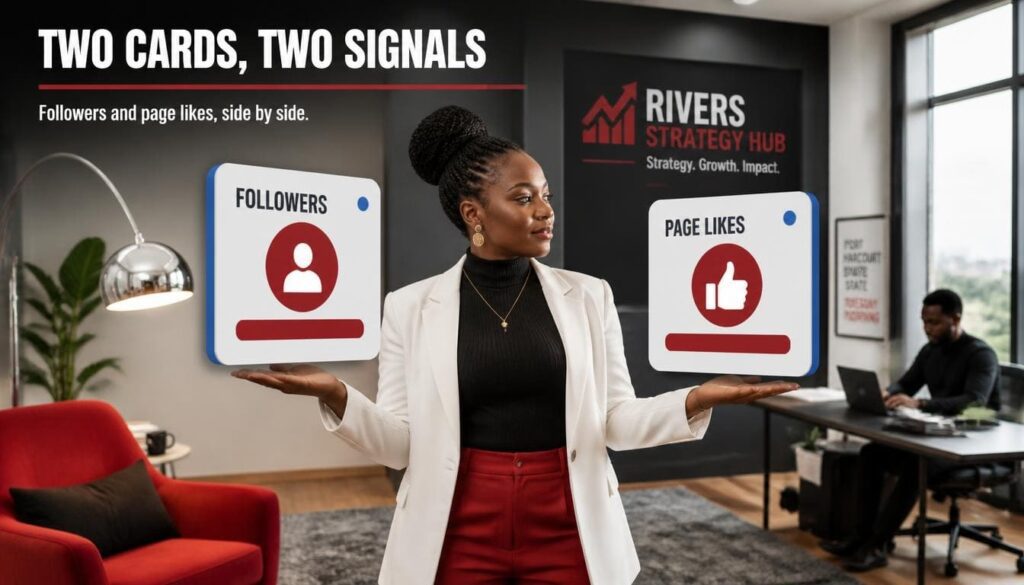
Once you know what each term means, the next step is to compare them across the areas that matter to a business. A comparison turns vague opinion into practical choices. Without it, many owners spend money on the number that looks bigger rather than the one that does more work.
Start with the idea of purpose. Every metric on your page should answer a question. Followers answer the question “Who has asked to hear from us?” Likes answer the question “Who has shown public support?” Reactions answer “Who enjoyed this post?” Messages answer “Who wants to buy or ask something?” When you match each number to its question, the whole page becomes easier to read.
Think of a market day in Onitsha. A trader may notice three kinds of people. Some walk past and smile. Some stop and look at the goods. Some write down the trader’s number and return later. All three are useful, but only the last two are likely to become customers. Followers resemble the people who ask for updates. Likes resemble the smiling passers-by. Neither group is worthless, but they are not equal.
It also helps to compare along several lines at once. A metric may look weak in reach and strong in credibility, or the opposite. If you judge it on one line only, you may miss its real value. So in this section, you will compare followers and likes across four areas: audience growth and brand visibility, page credibility, organic reach and engagement, and which one better reflects your real audience.
Keep a fair mind while you read. Some of what follows depends on how Facebook currently handles each action, and that can change. The reasoning, however, stays steady. A number that reaches people and sparks action is worth more than a number that only decorates a page. Use that rule as your guide, and you will rarely go wrong.
Compare Their Roles In Audience Growth And Brand Visibility
Followers and likes both help a page become known, but they work at different stages of the journey.
Followers are the stronger tool for audience building. When a person follows your page, your future posts can appear in their feed. That means every follower is a recurring chance to be seen, without extra ad spending. Over months, a steady follower base builds a repeat audience that learns your style, your products and your voice.
Likes are the stronger tool for public visibility of support. They show a visitor that others have already backed the page. This can make a new visitor feel safer. But a like does not by itself put your posts in anyone’s feed.
Here is how the two compare across typical goals.
| Goal | Followers | Likes |
| Show new posts to the same people again | Strong | Weak |
| Build a repeat audience | Strong | Weak |
| Show public approval | Medium | Strong |
| Help strangers trust the page | Medium to strong | Medium to strong |
| Support announcements and offers | Strong | Weak |
| Reflect long-term brand history | Medium | Strong |
Think of a gospel singer in Jos who releases a new song every month. Followers matter most for her, because each release can reach people who asked to hear from her. Likes still help, since a visitor who sees a well-supported page may be more willing to listen. But the follower is the person who will actually see the next song in their feed.
Now think of a new restaurant in Port Harcourt. A stranger searches for it and lands on the page. A decent number of supporters and a few recent posts with reactions create a quick sense of trust. For this first moment, likes and followers both help, because the visitor is judging the page in seconds.
Brand visibility depends on more than counts. It depends on how often your posts appear, how well they perform and whether people share them. A follower who reacts often will see more of your content than a follower who never does. In the same way, a liker who never engages again may as well be invisible.
Examine How Followers And Likes Affect Page Credibility
Credibility is the feeling a visitor gets when they decide whether your page is real, active and worth their time. Followers and likes both play a part, but they send slightly different signals.
A follower count tells a visitor how many people want updates from the page. A healthy count can suggest that the page has an audience. A very low count on an old business can raise a question: if the business is so good, why do so few people follow it?
A like count, where it appears, tells the visitor how many people have shown public support. It can add to the sense of being established, especially for older pages with long histories.
That last check matters most. If a page has 20,000 followers but each post gets five reactions, the mismatch is obvious. A visitor may decide that the audience is not real. A page with 2,000 followers and steady comments feels more honest.
This is why credibility is never about size alone. It is about consistency. Numbers that fit the activity on the page create trust. Numbers that do not fit create doubt.
Brands and partners are even sharper judges. A marketer in Lagos who wants to work with a creator will often compare followers with typical post reactions before making an offer. A big gap suggests a weak audience. Banks, event organisers and sponsors may do the same.
Here is a practical way to protect your page’s credibility.
- Post on a steady schedule so the page never looks abandoned.
- Reply to comments and messages quickly.
- Keep your follower count and reaction levels in a believable balance.
- Avoid sudden jumps that have no explanation.
- Share real photos of your work, products and team.
There is one more honest point. Because buying or collecting followers for the sake of a number can break platform rules and can create low-quality audiences, it is a risky way to build credibility. Credibility built on real people lasts longer than credibility built on a number that may drop.
In short, both followers and likes can support credibility, but only when they sit alongside real activity. A page that looks alive will always beat a page that only looks large.
Compare Their Impact On Organic Reach And Engagement
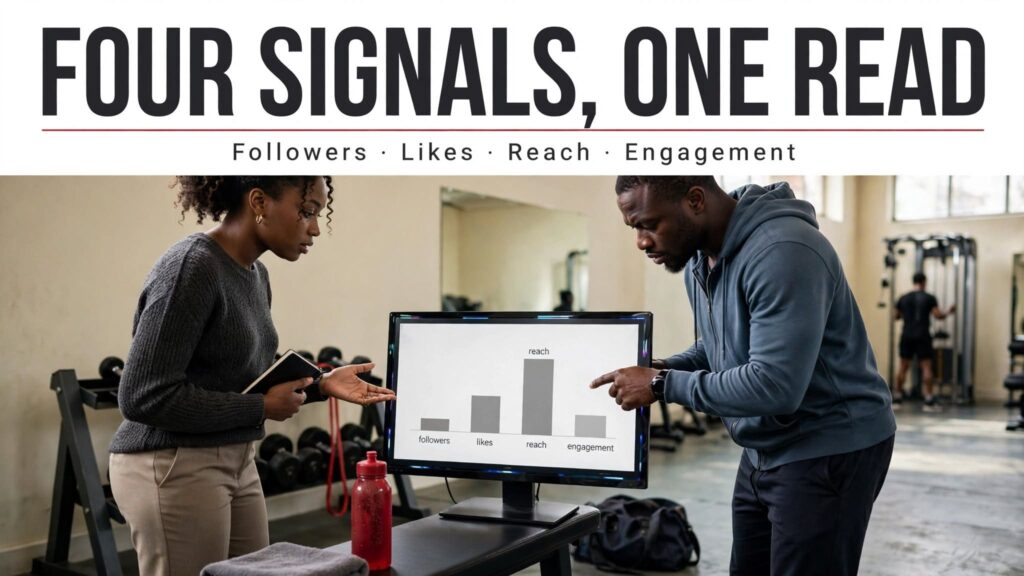
Organic reach is the number of people who see your posts without paid promotion. This is the area where followers and likes differ most.
Followers have a direct link to reach. Because a follow places your page in a person’s feed system, your posts have a chance to appear for that person. Whether they actually appear depends on how the person has interacted with your content before and on Facebook’s own ranking.
Likes have a weaker direct link. A page like, by itself, does not guarantee any appearance in the feed. A person who liked your page and then unfollowed will not see your posts in the same way. In that case, the like remains as a trace of past approval but has little effect on reach.
Engagement connects the two. When people react, comment and share, Facebook reads the post as interesting and may show it to more people. So the quality of your followers matters more than the raw number. Fifty active followers can create more reach than five hundred silent ones.
Here is a simple comparison.
| Factor | Followers | Likes |
| Chance to appear in feed | Higher | Lower |
| Link to new post visibility | Direct | Indirect |
| Effect on engagement rate | Strong when active | Weak on its own |
| Effect of inactive accounts | Can lower engagement rate | Little effect on reach |
| Best use | Reach and repeat audience | Support and reputation |
Look at two pages. A bakery in Abuja has 3,000 followers, and about 150 people react to each cake photo. A competitor has 30,000 followers, and about 60 people react to each photo. The first page has a much stronger bond with its audience. Facebook will likely treat its posts as more interesting, which helps its reach.
You can work out a simple engagement rate. Add the reactions, comments and shares on a post, divide by the number of people reached, and multiply by 100. If you do not have reach, divide by your follower count for a rough guide. Compare the rate across posts and across weeks. A rising rate means your content connects.
Remember that reach depends on interest, and money cannot fully replace it. You can add followers, but only content that people enjoy will bring them back. Treat followers as a door and engagement as the reason people walk through it.
Which Metric Better Reflects Your Facebook Page Audience?
If you must pick one number to describe your audience, followers usually give the better picture, and engagement gives the best picture of all. Here is why.
A follower represents a current choice. The person decided to receive your updates, and they can reverse that choice at any time. That makes the follower count a living measure. It moves up and down as people react to your content.
A like represents a choice that may be old. A page can hold likes from years ago, long after interest has faded. That makes the like count more of a record than a pulse.
Still, neither number alone describes your audience well. The better picture comes from a few numbers read together.
| Question | Best metric to check |
| How many people want my updates? | Followers |
| How many people publicly support my page? | Likes, where shown |
| How many people see my posts? | Reach |
| How many people react to my posts? | Reactions, comments, shares |
| How many people take action? | Messages, link clicks, orders |
| Where does my audience live? | Audience insights |
Take a boutique owner in Lagos. She has 8,000 followers, yet her posts get a few reactions. When she opens her audience insights, she sees that many followers live in other countries and speak other languages. Her real customers sit in a few Lagos neighbourhoods. The follower count looked impressive, but it did not reflect her market. Once she saw this, she shifted her effort to local content and a small local ad. Her engagement rose, and so did her enquiries.
That story shows the real lesson. The best measure of your audience is the group of people who actually respond to you. Count them by their actions, not by their labels.
Here is a short routine to find your true audience.
- Open your page insights and note your followers, reach and reactions.
- Check your top locations, age ranges and active times.
- Compare these with the customers you want.
- Look at which posts earned the most reactions and messages.
- Adjust your content to match the people who respond.
If the match is poor, you may need to change your content, your targeting or the way you attract followers. If the match is strong, keep going and refine. With these comparisons in hand, you can now decide what to focus on first, which is the question of the next section.
How to Decide What to Grow First On Facebook
Time and money are limited, and every page owner has to choose. Do you put effort into followers, into likes or into something else entirely? The answer depends on your business, your stage and your goal. There is no single rule for everyone, but there are clear patterns that make the choice easier.
Start with the plain fact that growth should serve a purpose. A bigger number is only useful if it brings the right people closer to your business. A florist in Abuja needs local buyers. A comedian in Lagos needs viewers who share clips. A church in Jos needs members who read announcements. Each has a different need, so each should weigh followers and likes differently.
Think of planting a farm. You do not plant everything at once. You choose the crop that suits your soil, your season and your market. In the same way, you choose the audience metric that suits your page, your content and your customers. If you plant the wrong crop, you may spend months and harvest little.
There are three questions that help you decide.
- What do you want people to do? Read posts, send messages, buy, attend or share.
- Who is your page for? Local customers, a fan base or a community.
- What stage is your page at? Brand new, steady or well established.
These questions point toward the right focus. A new page that needs trust may use the first weeks to collect real supporters and show activity. A mature page that already looks credible may focus on reach and engagement. A business that depends on local sales may care more about the right followers than the biggest number.
In this section, you will see when followers should come first, when likes matter more, which metric helps new pages gain credibility, and what Nigerian businesses should focus on. Each part includes simple steps so that you can apply it to your own page.
Keep one idea in mind as you read. The aim is not to win a numbers contest. The aim is to attract people who will notice your posts, trust your page and take action. Followers and likes are tools for that purpose. Use the tool that fits the job, and keep checking whether it is working.
When Should Businesses Prioritise Facebook Page Followers?

Prioritise followers when your main goal is to reach people repeatedly with your content. Because followers connect your posts to a person’s feed, they suit any business that depends on regular updates.
Here are the situations where followers should come first.
- You post often. If you share new products, offers, tips or videos every week, you need a base of people who will see them.
- You sell through content. Fashion, food, beauty, real estate, entertainment and education all rely on a steady flow of posts.
- You run events. Concerts, church programmes, workshops and sales need an audience that sees your announcements in time.
- You plan to run ads later. A warm follower base can improve how your ads perform, because people already know you.
- You want repeat customers. Followers who see your posts regularly are more likely to remember you when they need your service.
Take a real estate agent in Abuja. She lists new properties every few days. Followers who live in the city and look for homes will see each listing and may message her. Likes would show support, but followers give her the repeat exposure she needs.
Here is a simple plan for growing the right followers.
- Define your ideal follower. Write down where they live, what they like and what they buy.
- Post content for that person. Use clear photos, short videos and useful tips.
- Invite real contacts. Ask customers, friends and staff to follow the page.
- Add your page link everywhere. Put it on invoices, WhatsApp status, shop signs and business cards.
- Reply fast. Quick replies show that the page is alive.
- Run small local ads. Test a small budget aimed at your target area and check results.
Be careful with shortcuts. Giveaways, follow swaps and bought packages can inflate the number with people who do not care about your business. A follower who never reacts adds a number but not much else. It can even lower your engagement rate and make your page look weaker to visitors. If you ever try a paid shortcut, test a small order, check profile quality and understand that platform rules on artificial engagement can apply.
Also watch your follower quality. Open a sample of recent followers. Do they look like real people in your area? Do they interact with your posts? If the answer is no, adjust your approach.
In short, put followers first when your business needs to be seen again and again by the same people. That is the heart of what followers do best.
When Do Facebook Page Likes Matter More?
Likes matter more when public support is the main thing a visitor needs to see, or when your tools and campaigns still use likes as the main label. They are less central than before, but they still have a place.
Here are situations where likes carry extra weight.
- Community pages. Churches, schools, clubs and associations often use likes to show how many people back them.
- Brand identity. A visible show of support can help a brand look established.
- Older pages. Pages with long histories may hold large like counts that still impress visitors.
- Certain campaigns. Some ad tools or older guides still refer to page likes as an objective. Check the exact wording in Ads Manager, because Meta may convert the result into followers.
- Partner checks. Some sponsors or partners still glance at the like count as a quick sign of support.
For example, a small school in Kano wants parents to trust its page before an admission season. A visible base of supporters can reassure a parent who has never heard of the school. The school should still post regularly, but the public support is part of the first impression.
When likes are your focus, keep these points in mind.
- Check what you can see. Your page may show likes, followers or both. Plan around the numbers that appear in your own account.
- Aim for real support. A like from a real parent, customer or fan is worth more than a like from a random account.
- Keep the page active. A high like count with no recent posts looks neglected.
- Read campaign labels carefully. If an ad promises likes, check whether it delivers likes, followers or both.
- Do not chase the number alone. A like is a starting signal, not a finish line.
It also helps to remember what likes cannot do. They do not guarantee that a person sees your posts. They do not guarantee sales. They do not replace engagement. A page can hold thousands of likes and still struggle if the content is weak.
So likes matter more when your goal is public proof of support, and when your audience judges you by reputation. For almost every other goal, treat likes as a helpful extra and keep your main focus on followers and engagement.
Which Metric Helps New Business Pages Build Credibility?
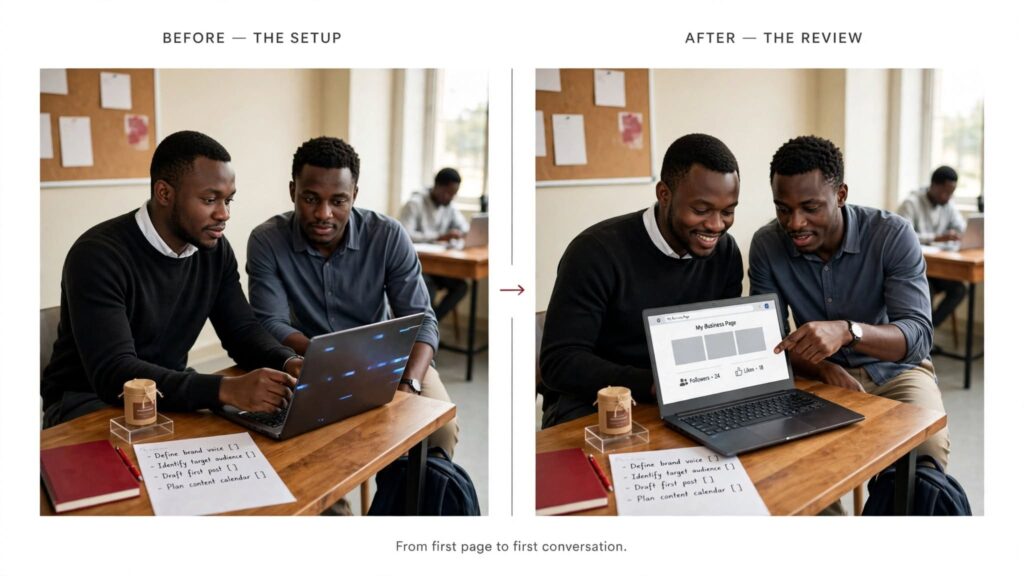
For a brand new page, credibility is the first hurdle. A visitor lands on an empty page, sees almost no followers and wonders whether the business is real. The best answer is to build a small but believable base of real people and real activity, not to chase a big number overnight.
Both followers and likes can help, but a new page gains most from a mix of followers, recent posts and early reactions. A stranger who sees a modest number of supporters, some fresh posts and a few comments will feel safer than a stranger who sees a huge number and no life on the page.
Here is a simple starting plan for a new page.
- Complete your profile. Add a clear logo, cover photo, short description, phone number, address and opening hours.
- Post at least five good items before you promote. Include photos of products, a short video and a clear offer.
- Invite your first 100 supporters. Ask friends, family, staff and early customers to follow and react.
- Ask for simple reviews or comments. A few honest comments make the page feel alive.
- Reply to every message. Fast replies build trust.
- Keep a steady schedule. Three posts a week is better than ten posts in one day and then silence.
Take a new hair studio in Warri. The owner opens a page with 12 followers. She posts clear photos of her work, asks her first clients to follow and share, and replies to every message. Within a few weeks, the page shows a few hundred followers, regular comments and tagged photos. A new visitor sees a living page and feels more willing to book.
Here is a short table that matches common new-page problems with the best first move.
| Problem | Best first move |
| Page looks empty | Post five quality items before promoting |
| Almost no followers | Invite real contacts and customers |
| No reactions | Ask simple questions and reply to comments |
| Visitors do not trust the page | Add contact details, real photos and reviews |
| Unsure about numbers | Track followers, reach and reactions weekly |
Be careful with fast fixes. A sudden jump from 20 followers to 5,000 with no activity can look odd, and it may attract questions from visitors and from the platform. A steady, believable climb is safer and more useful.
New pages should also avoid comparing themselves to large competitors. A fresh page with 300 active followers can serve a local business well. What counts is that the people on the page are the right people and that the page looks alive.
So for a new page, no single metric wins. Credibility comes from a small, real audience, regular posts and quick replies. Followers carry the most weight for reach, likes add a little support, and activity ties it all together.
Should Nigerian Businesses Focus On Followers Or Likes?
For most Nigerian businesses, followers should come first, because the goal is usually to be seen repeatedly by people who live near the business or who buy from it. But the choice also depends on the kind of business, so use the guide below.
Local conditions shape the answer. Most users browse on mobile phones. Data is costly, so people watch short, clear content and skip heavy posts. Many customers also move from Facebook to WhatsApp for a chat, which means a page that sends people to a quick message often wins. In many markets, trust is personal, so a page that replies fast and shows real photos earns more than a page that only shows numbers.
Here is how different businesses may choose.
| Business type | Better focus | Reason |
| Fashion vendor | Followers | Repeat exposure to new designs |
| Food business | Followers | Daily or weekly menu updates |
| Real estate agent | Followers | Regular listings for local buyers |
| Church or community group | Followers, with likes as support | Announcements and public support |
| Musician | Followers | Releases and show announcements |
| School or institution | Both | Public trust and regular notices |
| Service provider, such as a cleaner or electrician | Followers and reviews | Local trust and enquiries |
Take a caterer in Port Harcourt. She posts menu photos every week and takes orders through WhatsApp. Followers see her menus, react to dishes, and send messages. A like count adds some comfort for a new visitor, but the repeat exposure from followers does the real work.
Here is a simple plan for a Nigerian business page.
- Choose your local audience. Pick your city, area or customer group.
- Post in clear, simple language. Keep captions short and easy to read on a phone.
- Add a WhatsApp link or number. Make it simple to place an order or ask a question.
- Ask customers to follow. Add your page link to receipts, status updates and shop signs.
- Reply within hours. Speed builds trust.
- Track results weekly. Note followers, reach, reactions and messages.
Avoid two traps. The first is chasing the largest number to match a competitor. A competitor’s large following may be spread across the world and may not buy from them either. The second is spending on a package without checking quality. If you ever use paid support, start small, check profiles and remember that platform rules apply.
Finally, tie your page to a real business goal. If the goal is orders, count messages and sales. If the goal is event attendance, count RSVPs. If the goal is brand awareness, count reach and shares. Followers and likes help, but the business result is the real test.
How to Measure Facebook Page Growth Beyond Likes And Followers
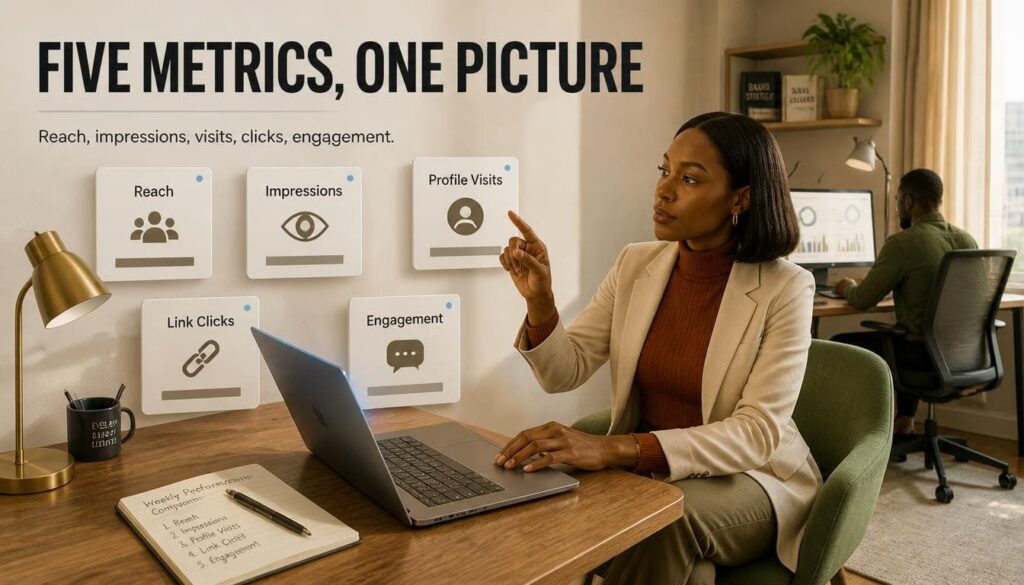
Followers and likes are easy to see, which is exactly why they can mislead. They tell you how many people connected with your page at some point. They do not tell you how many people read your posts, trust your brand or spend money with you. To measure real progress, you need to look deeper.
Think of a restaurant owner in Lagos who counts only the people who walk through the door. She might feel pleased when the number rises. But if most visitors leave without ordering, the restaurant is still in trouble. The better count includes how many people sat down, how many orders were placed, and how many came back. Page measurement works the same way.
A good measurement plan tracks four layers.
- Visibility. How many people see your content? This includes reach and impressions.
- Interest. How many people react, comment, share or watch? This is engagement.
- Intent. How many people visit your profile, click links or ask questions? This shows early buying signals.
- Outcome. How many people become customers, members or attendees? This is the real result.
Followers and likes sit near the top of that ladder. They matter, but they do not prove the lower layers. A page can have many followers and weak intent. A page can have few followers and strong outcomes.
Measurement also gives you control. When you know which posts bring messages and which bring silence, you can repeat what works and drop what does not. That saves money, time and effort. Over a few months, even a simple weekly record will show patterns that no guess can match.
You do not need paid software to start. Facebook gives page owners built-in tools, including Page Insights and Meta Business Suite. A notebook or a simple spreadsheet will do for records. The only requirement is consistency. Measure the same things in the same way, at the same time each week.
In this section, you will learn how to track reach, impressions and engagement, how to measure profile visits, link clicks and enquiries, how to use Meta Business Suite to review your page, and why a high follower count does not always mean strong engagement. By the end, you will have a simple routine to judge your page with facts instead of hopes.
A quick reminder: menus, names and charts inside Meta’s tools change often. If something looks different from the description below, look for the closest option in your own account.
Track Reach, Impressions And Audience Engagement
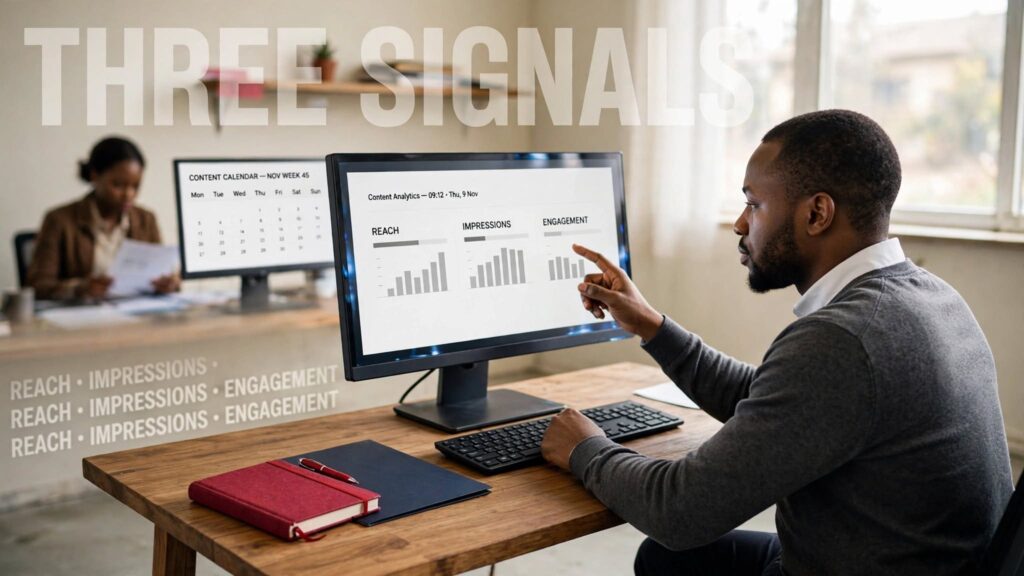
Reach, impressions and engagement are the first three numbers to check each week. They show how far your content travels and how people respond.
Reach is the number of unique people who saw your content. If one person sees your post three times, reach counts them once.
Impressions (sometimes called views in newer menus) count how many times your content was displayed, including repeat views by the same person. Impressions are usually higher than reach.
Engagement is the sum of actions people take on your content, such as reactions, comments, shares, saves and link clicks.
Here is a quick guide to reading them.
| Metric | What it tells you | Healthy sign | Warning sign |
| Reach | How many people saw your post | Holds steady or rises | Falls week after week |
| Impressions or views | How often content was shown | Rises with good posts | Flat despite more posts |
| Reactions | Quick interest | Steady on most posts | Almost none |
| Comments | Deeper interest | A few real replies | Only spam or none |
| Shares | Willingness to recommend | Occasional shares | Never shared |
| Engagement rate | Share of viewers who act | Stable or rising | Falling after follower jumps |
To work out a basic engagement rate, add reactions, comments and shares on a post, divide by that post’s reach, and multiply by 100. For example, if a post reached 1,000 people and earned 60 reactions, comments and shares, the rate is 6 percent. This is an example only. Your own numbers will differ, and there is no single “good” rate for every page.
Here is a short example. A beauty vendor in Abuja finds that her short videos reach twice as many people as her still photos, and her Friday evening posts earn more comments than her Monday posts. She shifts to more videos and posts them on Friday evenings. After a month, her average reach rises, and her messages increase.
Also track changes after any major action. If you run an ad, invite a large group to follow or change your posting style, record your numbers before and after. This helps you see what caused each change.
Remember that reach depends on interest. If your reach is low despite many followers, the cause is usually content or audience fit, not the follower number itself. Fix those first, and the numbers tend to follow.
Measure Profile Visits, Link Clicks And Customer Enquiries
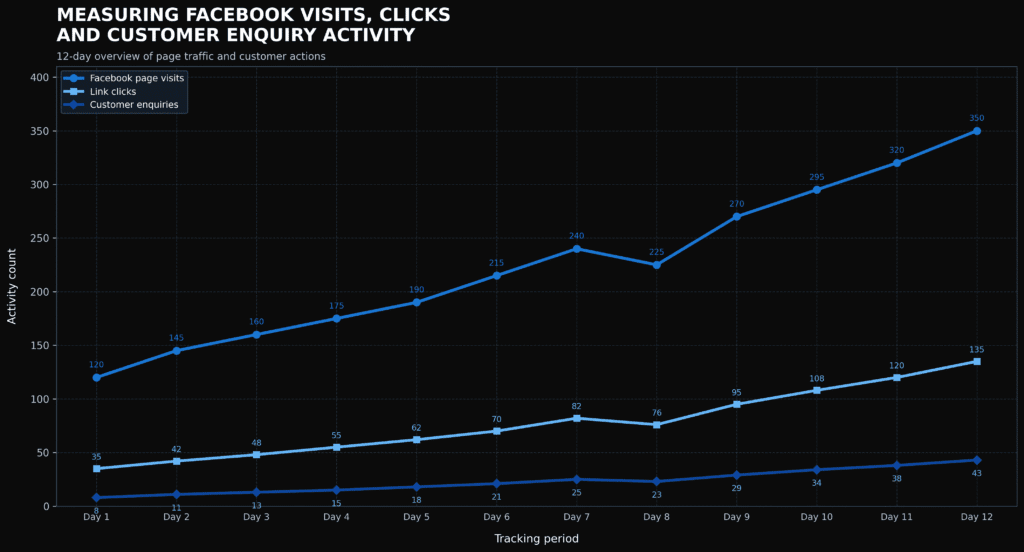
Reach and engagement show that people saw and enjoyed your content. Profile visits, link clicks and enquiries show that they took a step toward your business. These numbers sit closer to money, so they deserve more attention than most owners give them.
Page visits show how many people opened your page after seeing a post, an ad or a search result. A rise in visits means your content makes people curious about the business.
Link clicks show how many people tapped a link in your post, such as a shop link, a booking page or a WhatsApp link. They reveal real interest in taking action.
Customer enquiries are the messages, calls, comments and bookings that arrive because of your page. These are the clearest sign that the page works as a business tool.
Here is how to measure each one.
- Add trackable links. Use a unique link or a short note in the post, such as “Message us on WhatsApp and say FB2026,” so you know where the enquiry came from.
- Ask new customers. A simple “How did you hear about us?” gives useful information at no cost.
- Count messages. Note how many new conversations start each week from the page.
- Record bookings or orders. Match them to the posts or ads that preceded them.
- Compare across weeks. Look for posts that bring more clicks and messages than others.
Consider a tailor in Ibadan who posts a short video of a finished outfit and adds a WhatsApp number in the caption. She notices that posts with clear prices bring more messages than posts without them. She starts to include prices in every post. Her enquiries rise, even though her follower count stays about the same. Her page improved without a single new follower.
That story shows why these numbers matter. A business grows through conversations and sales, not through counts. If your visits and clicks rise while orders stay flat, look at your replies, your prices, your offer and your delivery. The problem may lie in what happens after the click.
Also check the speed of your replies. Slow replies lose customers quickly. A message answered within an hour is far more likely to become an order than one answered the next day. If you cannot reply fast, add a short automatic greeting that tells people when you will respond.
Finally, keep your goal in view. Decide before each month what a good result looks like, for example, ten new enquiries or five orders from the page. Then measure against that goal. Numbers without a target are easy to ignore.
Use Meta Business Suite To Review Page Performance

Meta Business Suite is a free tool from Meta that lets you manage your Facebook Page, review insights, schedule posts, answer messages and run ads from one place. It works on a computer and as a phone app. Names of menus and charts change from time to time, so look for the closest match in your own account.
Here is a simple way to use it.
- Open Meta Business Suite and select your page.
- Go to Insights (or the closest option in your menu).
- Check the overview. Look at reach, views, interactions and follower changes for a chosen period.
- Open the audience section. Look at locations, age ranges, gender and active times.
- Open content performance. Sort posts by reach or reactions to see your best and weakest items.
- Check messages. Review response time and the number of conversations.
- Set a date range. Compare the last 28 days with the previous 28 days.
Here is what to look for in each area.
| Area | What to check | Why it matters |
| Overview | Trend in reach, views and interactions | Shows whether your page is moving forward |
| Audience | Top locations and active hours | Confirms whether you reach the right people |
| Content | Best and weakest posts | Shows which topics and formats work |
| Followers | Net follower change | Shows whether people stay or leave |
| Messages | Volume and response time | Shows how well you turn interest into talk |
| Ads | Cost per result | Shows whether paid effort pays off |
Use the scheduling feature to plan posts at the times your audience is online. Many owners post at times that suit themselves, not their audience. A small change in timing can raise early reactions, which helps reach.
Also use the inbox to track conversations. Reply from one place, add notes, and save common answers. If you run a small team, this keeps everyone consistent.
Here is an example of a monthly review. A food vendor in Abuja opens Insights at the end of each month. She notes that her audience is mostly women aged 25 to 44 in her city, with peak activity around 7 pm. She also sees that posts with menu prices and a short video earn the most reactions.
She schedules next month’s posts for 6:30 pm and adds prices to every menu image. Within weeks, her reach and orders improve.
Why High Follower Counts Do Not Always Mean Strong Engagement
A big follower count looks impressive, but it can hide a quiet audience. Many pages with thousands of followers receive only a handful of reactions. If you have seen this on your own page, you are not alone, and the causes are easy to name.
Low-quality or inactive followers. Accounts that never open the app, or that exist only to add a number, will not react to anything. This often happens when followers come from giveaways, swaps or bought packages.
The wrong audience. Followers who live far from your business or do not speak your language will scroll past your posts. A fashion vendor in Lagos gains little from followers in a distant country.
Old followers. People who followed years ago may have lost interest, changed phones or stopped using Facebook.
Weak content. Dull, blurry or sales-only posts give people no reason to react. Poor timing. Posting when your audience sleeps lowers the early reactions that help a post spread.
Feed ranking. Facebook shows posts it thinks people will enjoy. If past posts earned few reactions, future posts may reach fewer people.
Too many posts at once. A flood of posts can tire your audience and reduce attention for each one.
A page with a large follower count and low engagement can send a negative signal to visitors, brands and the platform. The two numbers do not match, and the gap raises doubt.
Here is how to diagnose the problem.
- Open your insights and compare followers with average reach and reactions.
- Check your top locations and age ranges against your target customers.
- Sample 25 followers and see whether they look like real, relevant people.
- Review your last ten posts for quality, clarity and variety.
- Check your posting times against your audience’s active hours.
Then apply the fix that matches the cause.
| Cause | Fix |
| Wrong audience | Change content and targeting to suit your real market |
| Inactive followers | Focus on engaging active ones, and avoid adding more of the same |
| Weak content | Improve photos, videos, captions and offers |
| Poor timing | Post when your audience is online |
| Low trust | Reply faster and add reviews and real photos |
| Old followers | Ask questions and run simple polls to wake the audience |
Consider a gospel artist in Enugu with 25,000 followers who gets about 30 reactions per post. After checking her insights, she finds that most followers live outside her country. She decides to focus on local content, shares clips from her live events, and runs a small ad aimed at her home region. Her reactions rise, and her booking enquiries improve, even though her follower count barely changes.
Never judge a page by followers alone. Check reach, reactions, comments, and messages. If your followers rise and your engagement stays flat, pause and find out why before you spend more on growth.
A smaller group that cares is more useful than a larger group that does not. Aim for the audience that behaves like your future customers.
Facebook Page Followers vs Page Likes: Which Should You Grow First?
After all the details, the answer is simple enough to remember. For most pages, grow followers first, then watch engagement, and treat likes as a supporting sign of public approval. That order makes sense because followers connect your posts to people’s feeds, while likes mostly show support. But the real answer is a little richer, and it depends on your goal.
Frequently Asked Questions
A Facebook page follower is a person who has chosen to see your page’s updates in their feed. When someone follows your page, your public posts can appear alongside posts from their friends and other pages. Following is the action that connects your content to a person’s daily scroll. A Facebook page like is a public sign that a person supports or enjoys your page. It is a form of social proof. When a visitor lands on your page and sees a long list of people who liked it, the page feels established and trusted.
In the past, a like carried more weight because it also made the person a follower, and that link made likes the headline number on every page. Over time, Meta shifted the emphasis, and the follower number moved forward. Many pages now show followers first, and the like count may be shown less prominently or in some views only.
What does a like mean in practice? It means approval, because the person is saying in public that they like what the page stands for. It means association, because some people like pages to connect their own profile to a brand, a church, a school or an artist. It also means a starting signal, because a like can be a first step toward deeper interest, such as following, messaging or buying.
A like does not mean that the person will see your posts, buy your product or share your content. That is a common mistake. A page can collect thousands of likes through giveaways and still earn almost no sales, because the people who liked it only wanted the prize.
Not always, and not in every case. The old habit of treating the two as one still lingers, which is why this question comes up so often.
In the past, tapping Like on a page usually made the person a follower as well, so likes often led to follows. The reverse was not as reliable. A person could follow a page without liking it, for example by choosing to follow from a post that appeared in their feed. This is one reason many pages had more followers than likes.
Today, the connection depends on how the person reached your page and on the current design of Facebook. Meta has adjusted buttons, labels and counts over time. For many pages, the follow action is now the main action, and the follower count is the main number. That means a person who follows your page does not necessarily show up as a like in the way they once did.
You may also notice odd results that seem to contradict each other. Older likes remain, because likes from earlier years may still sit on your page even if some of those people later unfollowed. A person can like your page and then unfollow it to stop seeing posts, so the like stays and the follow disappears. A person who follows from a shared post may never visit your page and never tap like. An ad that aims for page likes may bring followers instead, depending on how Facebook currently processes the action. And Meta may show only one of the numbers in some views.
If your page has more likes than followers, it usually means many people liked it and later unfollowed, or the older like count was never matched with follows. If your page has more followers than likes, it usually means many people followed through posts and ads without ever tapping like.
Yes, but in a smaller and more specific way than before. Page likes still serve as social proof, and some owners, clients and partners still glance at them. But they no longer sit at the centre of how Facebook shows your content. The follower count has taken a bigger role.
Here is where likes still have value. First impressions matter, because a visitor who sees many people supporting your page may feel more confident about your business. Community identity matters too, since churches, schools, clubs and artists often use likes to show how many people back them. Historic proof matters, because older pages with large like counts carry years of earned support. Ad context matters as well, since in some ad tools, objectives and labels still refer to likes, even if the results appear as followers. The wording in Ads Manager may change, so read each option carefully before you spend.
Here is where likes matter less. Reach is shaped mainly by follows and by how people react to posts, not by the raw like count. Sales do not follow a like on its own. Content success depends on reactions, not on a large like total. A page with many likes and low reactions is weaker than a page with fewer likes and strong reactions.
Consider a small furniture business in Enugu. The owner has 6,000 likes from a giveaway three years ago, but her posts now earn only a handful of reactions. A competitor has 1,200 followers who comment on every new chair design. Which page is healthier? The second one. The first owner holds a number. The second holds an audience.
Followers and likes both help a page become known, but they work at different stages of the journey.
Followers are the stronger tool for audience building. When a person follows your page, your future posts can appear in their feed. That means every follower is a recurring chance to be seen, without extra ad spending. Over months, a steady follower base builds a repeat audience that learns your style, your products and your voice.
Likes are the stronger tool for public visibility of support. They show a visitor that others have already backed the page. This can make a new visitor feel safer. But a like does not by itself put your posts in anyone’s feed.
Here is how the two compare across typical goals. For showing new posts to the same people again, followers are strong and likes are weak. For building a repeat audience, followers are strong and likes are weak. For showing public approval, followers are medium and likes are strong. For helping strangers trust the page, both are medium to strong. For supporting announcements and offers, followers are strong and likes are weak. For reflecting long-term brand history, followers are medium and likes are strong.
Think of a gospel singer in Jos who releases a new song every month. Followers matter most for her, because each release can reach people who asked to hear from her. Likes still help, since a visitor who sees a well-supported page may be more willing to listen. But the follower is the person who will actually see the next song in their feed.
Now think of a new restaurant in Port Harcourt. A stranger searches for it and lands on the page. A decent number of supporters and a few recent posts with reactions create a quick sense of trust. For this first moment, likes and followers both help, because the visitor is judging the page in seconds.
Brand visibility depends on more than counts. It depends on how often your posts appear, how well they perform and whether people share them. A follower who reacts often will see more of your content than a follower who never does. In the same way, a liker who never engages again may as well be invisible.
So when you compare their roles, use this rule: followers feed your distribution, and likes feed your reputation. Distribution brings people to your content. Reputation helps them stay once they arrive.
Credibility is the feeling a visitor gets when they decide whether your page is real, active and worth their time. Followers and likes both play a part, but they send slightly different signals.
A follower count tells a visitor how many people want updates from the page. A healthy count can suggest that the page has an audience. A very low count on an old business can raise a question: if the business is so good, why do so few people follow it?
A like count, where it appears, tells the visitor how many people have shown public support. It can add to the sense of being established, especially for older pages with long histories.
But visitors rarely stop at the numbers. They look at the page as a whole. In a few seconds, they check whether recent posts exist, whether posts get reactions and comments, whether the page replies to messages, whether photos look real and clear, whether contact details are present, and whether the follower and reaction numbers seem to fit together.
That last check matters most. If a page has 20,000 followers but each post gets five reactions, the mismatch is obvious. A visitor may decide that the audience is not real. A page with 2,000 followers and steady comments feels more honest.
This is why credibility is never about size alone. It is about consistency. Numbers that fit the activity on the page create trust. Numbers that do not fit create doubt.
Brands and partners are even sharper judges. A marketer in Lagos who wants to work with a creator will often compare followers with typical post reactions before making an offer. A big gap suggests a weak audience. Banks, event organisers and sponsors may do the same.
Organic reach is the number of people who see your posts without paid promotion. This is the area where followers and likes differ most.
Followers have a direct link to reach. Because a follow places your page in a person’s feed system, your posts have a chance to appear for that person. Whether they actually appear depends on how the person has interacted with your content before and on Facebook’s own ranking.
Likes have a weaker direct link. A page like, by itself, does not guarantee any appearance in the feed. A person who liked your page and then unfollowed will not see your posts in the same way. In that case, the like remains as a trace of past approval but has little effect on reach.
Engagement connects the two. When people react, comment and share, Facebook reads the post as interesting and may show it to more people. So the quality of your followers matters more than the raw number. Fifty active followers can create more reach than five hundred silent ones.
If you must pick one number to describe your audience, followers usually give the better picture, and engagement gives the best picture of all. Here is why.
A follower represents a current choice. The person decided to receive your updates, and they can reverse that choice at any time. That makes the follower count a living measure. It moves up and down as people react to your content.
A like represents a choice that may be old. A page can hold likes from years ago, long after interest has faded. That makes the like count more of a record than a pulse.
Still, neither number alone describes your audience well. The better picture comes from a few numbers read together. If you want to know how many people want your updates, check followers. If you want to know how many people publicly support your page, check likes where shown. If you want to know how many people see your posts, check reach. If you want to know how many people react to your posts, check reactions, comments and shares. If you want to know how many people take action, check messages, link clicks, and orders. If you want to know where your audience lives, check audience insights.
Prioritise followers when your main goal is to reach people repeatedly with your content. Because followers connect your posts to a person’s feed, they suit any business that depends on regular updates.
Here are the situations where followers should come first. You post often, because if you share new products, offers, tips or videos every week, you need a base of people who will see them. You sell through content, because fashion, food, beauty, real estate, entertainment and education all rely on a steady flow of posts. You run events, because concerts, church programmes, workshops and sales need an audience that sees your announcements in time. You plan to run ads later, because a warm follower base can improve how your ads perform, since people already know you. You want repeat customers, because followers who see your posts regularly are more likely to remember you when they need your service.
Likes matter more when public support is the main thing a visitor needs to see, or when your tools and campaigns still use likes as the main label. They are less central than before, but they still have a place.
Here are situations where likes carry extra weight. Community pages matter, because churches, schools, clubs and associations often use likes to show how many people back them. Brand identity matters, because a visible show of support can help a brand look established. Older pages matter, because pages with long histories may hold large like counts that still impress visitors. Certain campaigns matter, because some ad tools or older guides still refer to page likes as an objective, and you should check the exact wording in Ads Manager since Meta may convert the result into followers. Partner checks matter too, because some sponsors or partners still glance at the like count as a quick sign of support.
For a brand new page, credibility is the first hurdle. A visitor lands on an empty page, sees almost no followers and wonders whether the business is real. The best answer is to build a small but believable base of real people and real activity, not to chase a big number overnight.
Both followers and likes can help, but a new page gains most from a mix of followers, recent posts and early reactions. A stranger who sees a modest number of supporters, some fresh posts and a few comments will feel safer than a stranger who sees a huge number and no life on the page.
Here is a simple starting plan for a new page. Complete your profile by adding a clear logo, cover photo, short description, phone number, address and opening hours. Post at least five good items before you promote, including photos of products, a short video and a clear offer. Invite your first 100 supporters, asking friends, family, staff and early customers to follow and react. Ask for simple reviews or comments, because a few honest comments make the page feel alive. Reply to every message, because fast replies build trust. Keep a steady schedule, because three posts a week is better than ten posts in one day and then silence.
For most Nigerian businesses, followers should come first, because the goal is usually to be seen repeatedly by people who live near the business or who buy from it. But the choice also depends on the kind of business.
Local conditions shape the answer. Most users browse on mobile phones. Data is costly, so people watch short, clear content and skip heavy posts. Many customers also move from Facebook to WhatsApp for a chat, which means a page that sends people to a quick message often wins. In many markets, trust is personal, so a page that replies fast and shows real photos earns more than a page that only shows numbers.
Here is how different businesses may choose. A fashion vendor should focus on followers for repeat exposure to new designs. A food business should focus on followers for daily or weekly menu updates. A real estate agent should focus on followers for regular listings for local buyers. A church or community group should focus on followers with likes as support, for announcements and public support. A musician should focus on followers for releases and show announcements. A school or institution should focus on both, for public trust and regular notices. A service provider such as a cleaner or electrician should focus on followers and reviews, for local trust and enquiries.
Followers and likes are easy to see, which is exactly why they can mislead. They tell you how many people connected with your page at some point. They do not tell you how many people read your posts, trust your brand or spend money with you. To measure real progress, you need to look deeper.
Think of a restaurant owner in Lagos who counts only the people who walk through the door. She might feel pleased when the number rises. But if most visitors leave without ordering, the restaurant is still in trouble. The better count includes how many people sat down, how many orders were placed and how many came back. Page measurement works the same way.
A good measurement plan tracks four layers. Visibility covers reach and impressions, showing how many people see your content. Interest covers engagement, showing how many people react, comment, share or watch. Intent covers profile visits, link clicks and questions, showing early buying signals. Outcome covers customers, members or attendees, showing the real result.
Followers and likes sit near the top of that ladder. They matter, but they do not prove the lower layers. A page can have many followers and weak intent. A page can have few followers and strong outcomes.
Reach, impressions and engagement are the first three numbers to check each week. They show how far your content travels and how people respond.
Reach is the number of unique people who saw your content. If one person sees your post three times, reach counts them once. Impressions, sometimes called views in newer menus, count how many times your content was displayed, including repeat views by the same person. Impressions are usually higher than reach. Engagement is the sum of actions people take on your content, such as reactions, comments, shares, saves and link clicks.
Here is a quick guide to reading them. Reach tells you how many people saw your post, with a healthy sign being that it holds steady or rises, and a warning sign being that it falls week after week. Impressions or views tell you how often content was shown, with a healthy sign being that it rises with good posts, and a warning sign being that it stays flat despite more posts. Reactions show quick interest, with a healthy sign being that they are steady on most posts, and a warning sign being that there are almost none. Comments show deeper interest, with a healthy sign being a few real replies, and a warning sign being only spam or none. Shares show willingness to recommend, with a healthy sign being occasional shares, and a warning sign being never shared. Engagement rate shows the share of viewers who act, with a healthy sign being that it is stable or rising, and a warning sign being that it falls after follower jumps.
Reach and engagement show that people saw and enjoyed your content. Profile visits, link clicks and enquiries show that they took a step toward your business. These numbers sit closer to money, so they deserve more attention than most owners give them.
Page visits show how many people opened your page after seeing a post, an ad or a search result. A rise in visits means your content makes people curious about the business. Link clicks show how many people tapped a link in your post, such as a shop link, a booking page or a WhatsApp link. They reveal real interest in taking action. Customer enquiries are the messages, calls, comments and bookings that arrive because of your page. These are the clearest sign that the page works as a business tool.
Here is how to measure each one. Add trackable links, using a unique link or a short note in the post, such as asking people to message you on WhatsApp and mention a specific code, so you know where the enquiry came from. Ask new customers how they heard about you, because a simple question gives useful information at no cost. Count messages, noting how many new conversations start each week from the page. Record bookings or orders, matching them to the posts or ads that preceded them. Compare across weeks, looking for posts that bring more clicks and messages than others.
A big follower count looks impressive, but it can hide a quiet audience. Many pages with thousands of followers receive only a handful of reactions. If you have seen this on your own page, you are not alone, and the causes are easy to name.
Low-quality or inactive followers are one cause. Accounts that never open the app, or that exist only to add a number, will not react to anything. This often happens when followers come from giveaways, swaps or bought packages. The wrong audience is another. Followers who live far from your business or do not speak your language will scroll past your posts. A fashion vendor in Lagos gains little from followers in a distant country. Old followers matter too, because people who followed years ago may have lost interest, changed phones or stopped using Facebook. Weak content is a third, because dull, blurry or sales-only posts give people no reason to react. Poor timing is another, since posting when your audience sleeps lowers the early reactions that help a post spread. Feed ranking matters as well, because Facebook shows posts it thinks people will enjoy, and if past posts earned few reactions, future posts may reach fewer people. Too many posts at once can also tire your audience and reduce attention for each one.
A page with a large follower count and low engagement can send a negative signal to visitors, brands and the platform. The two numbers do not match, and the gap raises doubt.