Table of Contents
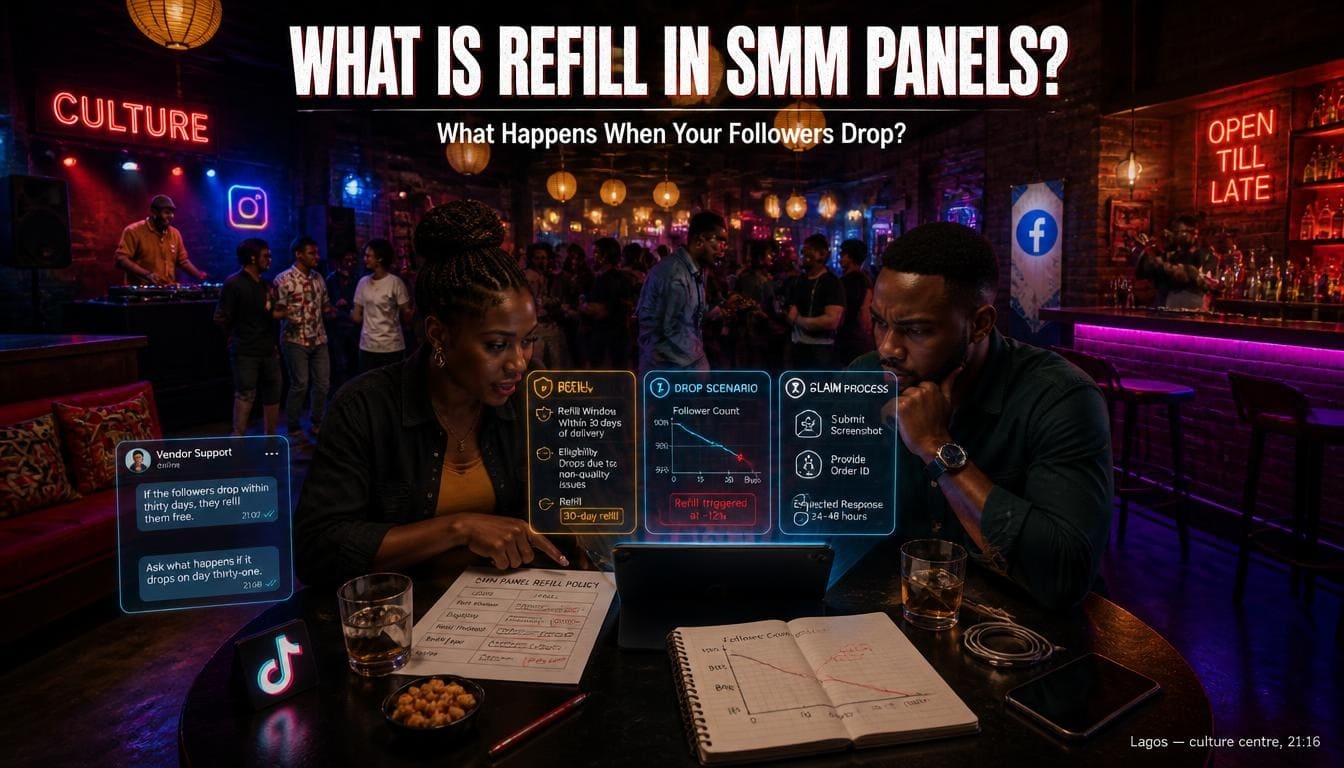
Online vendors operating out of Balogun Market in Lagos or digital campaign strategy teams working in Abuja share a common operational concern: sudden drops in social engagement metrics destroy public trust. When an online business owner spends marketing capital to expand page reach, watching follower totals vanish days later feels like burning money. What is refill in SMM panels, and how does this safeguard function protect digital promotion budgets?
Social network algorithms regularly run systemic cleanses to filter out dormant profile accounts. These automated network cleanses trigger unexpected metric declines across public handles. A refill agreement operates as a clear safety net integrated directly into digital growth dashboards. It promises to replace dropped count metrics back to agreed baseline totals within a fixed schedule, requiring zero extra financial layout.
Understanding the operational mechanics behind profile metric coverage saves creators from wasted promotional spending. This guide analyzes refill policies, contrasts varied metric safety labels, outlines explicit account eligibility terms, and provides clear steps to protect promotional orders.
What Is Refill In SMM Panels And How Does It Work?

When buying engagement online, seeing your hard-earned numbers drop a few days after checkout can feel frustrating. Social media platforms continuously run automated sweeps to clean up unverified profiles, which often results in sudden metric dips across public handles. A refill guarantee acts as a crucial safety net built directly into digital growth dashboards. It promises to replace dropped metrics back to your agreed baseline totals within a scheduled window, requiring zero extra financial layout.
Understanding the operational mechanics behind profile metric coverage saves creators from wasted promotional spending. This guide analyzes refill policies, contrasts varied metric safety labels, outlines explicit account eligibility terms, and provides clear steps to protect promotional orders.
At its primary operational level, a refill guarantee is an active contract commitment provided by a social media marketing dashboard that replaces numeric metrics that disappear after order fulfillment. Network updates or automated platform checks frequently cause profile count drops, and a refill rule ensures that the supplier dispatches supplementary numbers back to your target total without requesting extra fees.
- Automatic count monitoring: Advanced panels track your order metrics continuously during the active guarantee window, detecting drops without manual intervention.
- Defined coverage periods: Guarantees typically last for specific durations, such as thirty, sixty, or ninety days following the initial order completion date.
- Zero additional charges: Replacement metrics are added automatically or via simple button clicks inside your dashboard without requiring new purchases.
- Baseline metric preservation: The system ensures your total follower or view count remains steady against routine platform security purges.
- Seamless background delivery: Refill orders use the same public routing channels as your original order to restore numbers safely.
Understanding how these policies function gives you complete peace of mind when investing in growth campaigns. Knowing that your investment remains protected against unexpected platform purges allows you to scale your online presence with confidence. Selecting packages that include explicit refill warranties safeguards your budget and keeps your brand metrics stable over the long run.
What Does Refill Mean When Buying Social Media Engagement?
What is refill in SMM panels? At its primary operational level, an active contract guarantee provided by a social media marketing dashboard replaces numeric metrics that disappear after order fulfillment. Network updates or automated platform checks frequently cause profile count drops, and a refill rule ensures that the supplier dispatches supplementary numbers back to your target total without requesting extra fees.
Consider buying a sack of grain from a wholesale merchant in Ibadan. If a small tear in the container causes grain to leak out while heading home, a fair vendor hands over an extra portion to restore your total weight. On digital growth systems, the refill option serves as that compensation mechanism, holding deliverable numbers steady.
Understanding the meaning of refill guarantee on a social media panel allows campaign planners to separate protected order packages from high-risk options. Many online buyers focus entirely on initial delivery speed instead of overall account retention. Speed offers little practical value when profiles disappear forty-eight hours later. A transparent replacement terms agreement shields money spent on digital marketing campaigns, converting uncertain trial orders into predictable growth plans.
When checking catalog options, seeing a free top up after followers drop commitment gives brand owners peace of mind to test new profile visibility tactics without worrying about sudden numerical drops. Proper planning prevents wasted capital, ensuring that every naira spent yields measurable digital progress across platforms.
How Does A Refill Guarantee Replace Lost Followers?

Following order processing completion, the central dashboard logs your current total as a reference starting point, known as the base delivery figure. If background network checks clean out old profiles weeks later, public metric totals drop below the target figure.
When triggering a metric top-up, system scripts check existing profile metrics against original transaction records. If automated checks confirm that counts fell below baseline metrics due to normal audience decay, the platform schedules a supplementary delivery batch. This replacement batch pushes numbers back up to agreed targets outlined in your service confirmation.
Dashboard algorithms operate using rigid mathematical steps rather than manual estimates:
- Baseline Capture: Logging starting profile counts before dispatch starts.
- Target Calculation: Adding purchased volume to logged starting numbers.
- Discrepancy Detection: Scanning active public counts to spot dips below target baselines.
- Queue Placement: Routing confirmed metric drops to automated delivery queues.
- Completion Verification: Running profile checks to confirm metrics match required targets.
Learning what the refill button actually does clarifies why keeping accounts open to the public remains mandatory throughout protection periods. Changing profile privacy blocks automatic status checks, stalling metric recovery tasks. Maintaining steady visibility requires strict adherence to dashboard protocols, preventing technical errors from delaying account restoration.
Which Social Media Services Usually Include Refill Protection?

Not every digital package includes replacement coverage. Premium packages normally feature metric safeguards because their profile networks demonstrate higher retention, whereas low-tier options often carry zero replacement promises.
Digital packages featuring standard replacement terms include:
- Profile Followers: Core user metric packages across leading platform channels.
- Page Likes and Channel Subscribers: Public audience counts for business handles, community pages, and video hubs.
- Post Reaction Packages: Extended post interaction metrics on featured promotional content.
- Group and Channel Members: Public membership totals across community discussion groups.
- Long-Term Video Engagements: Sustained view metrics assigned to central video uploads built for search discovery.
Instant video view packages or temporary story interaction packages rarely include refill terms because public visibility cycles end immediately. For dependable profile retention, content owners can review Instagram growth service options on Sizzle Social featuring explicit top-up coverage. Selecting robust packages safeguards marketing investments, ensuring that digital growth remains stable over extended promotional cycles.
How Can You Check If Your Order Has Refill Coverage?
Reviewing service cards prior to checkout prevents operational confusion. Dashboard listings utilize specific tags to highlight covered packages.
Key indicators of package coverage include:
- Refill Badges: Bright green visual indicators or clear “Refill Active” notices located next to item names.
- Service Code Labels: Standard industry markers like “R30,” “R90,” or “R365” embedded inside item titles, signaling 30-day, 90-day, or 365-day replacement timelines.
- Explicit Terms Text: Clear descriptive text inside service details boxes explaining exact top-up rules.
- Automated System Icons: Visual markers showing scheduled background checks for metric drops.
- Support Ticket Tags: Markers confirming that manual request options remain active for your order reference code.
Learning what R30 on a service listing means becomes simple once you understand these catalog codes. R30 indicates thirty calendar days of drop replacement, while R90 offers ninety full days of coverage.
If a service card states “No Refill” or “NR,” that specific listing carries zero replacement guarantees once initial delivery finishes. Careful inspection of item details guarantees that buyers purchase dependable protection for their digital accounts.
Compare Refill, Non-Drop, and Drop Protection

When buying engagement online, seeing your hard-earned numbers drop a few days after checkout can feel frustrating. Social media platforms continuously run automated sweeps to clean up unverified profiles, which often results in sudden metric dips across public handles. A refill guarantee acts as a crucial safety net built directly into digital growth dashboards. It promises to replace dropped metrics back to your agreed baseline totals within a scheduled window, requiring zero extra financial layout.
Understanding the operational mechanics behind profile metric coverage saves creators from wasted promotional spending. This guide analyzes refill policies, contrasts varied metric safety labels, outlines explicit account eligibility terms, and provides clear steps to protect promotional orders.
At its primary operational level, a refill guarantee is an active contract commitment provided by a social media marketing dashboard that replaces numeric metrics disappearing after order fulfillment. Network updates or automated platform checks frequently cause profile count drops, and a refill rule ensures that the supplier dispatches supplementary numbers back to your target total without requesting extra fees.
- Automatic count monitoring: Advanced panels track your order metrics continuously during the active guarantee window, detecting drops without manual intervention.
- Defined coverage periods: Guarantees typically last for specific durations, such as thirty, sixty, or ninety days following the initial order completion date.
- Zero additional charges: Replacement metrics are added automatically or via simple button clicks inside your dashboard without requiring new purchases.
- Baseline metric preservation: The system ensures your total follower or view count remains steady against routine platform security purges.
- Seamless background delivery: Refill orders use the same public routing channels as your original order to restore numbers safely.
Understanding how these policies function gives you complete peace of mind when investing in growth campaigns. Knowing that your investment remains protected against unexpected platform purges allows you to scale your online presence with confidence. Selecting packages that include explicit refill warranties safeguards your budget and keeps your brand metrics stable over the long run.
Is Non-Drop The Same As A Refill Guarantee?
Digital managers frequently confuse these service terms, yet non-drop and refill guarantees represent different system strategies:
| Feature | Non-Drop Listing | Refill Guarantee |
| Primary System Strategy | Accounts designed to resist algorithm sweeps. | Contractual promise to replace lost count numbers. |
| Drop Risk Exposure | Minimal, though network updates can still cause drops. | Variable, but numeric losses get restored within valid timelines. |
| Pricing Model | Higher initial purchase costs. | Balanced pricing with built-in backup coverage. |
| Recourse for Count Drops | Zero top-ups unless paired with a refill clause. | Clear top-up process through dashboard buttons or support tickets. |
Evaluating non-drop versus refill difference helps budget planners make wiser purchasing decisions. Non-drop describes account quality expectations, whereas a refill guarantee represents an active safety policy covering your money when network drops happen. Combining durable profile quality with explicit replacement coverage yields the safest outcome for digital marketing campaigns. Strategic planning ensures that promotional budgets deliver maximum long-term visibility without unexpected numerical setbacks.
How Does Drop Protection Differ From Free Refills?
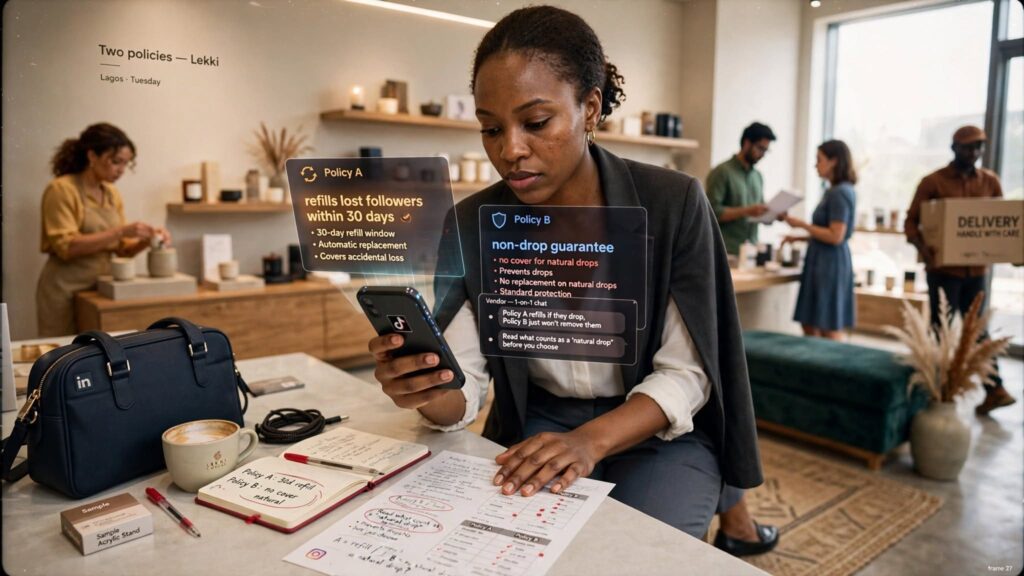
Drop protection serves as an overall strategy encompassing all methods used to shield profile metrics from sudden drops. This strategy includes source quality filtering, gradual delivery rates, and refill rules.
Free refills represent the specific action tool within a drop protection strategy. A free refill structure means zero supplementary payments when requesting top-ups during your active coverage period. Certain budget dashboards add hidden processing fees to replacement claims, so choosing options with free refills guarantees complete price safety.
Industry data confirms that maintaining stable social signals remains vital for digital outreach. Research shared by HubSpot shows that stable engagement signals help platform distribution algorithms evaluate post authority effectively. When public metrics drop without prompt restoration, organic reach slows down. Maintaining consistent online engagement protects brand credibility, allowing Nigerian enterprises to connect effectively with target audiences across competitive digital channels.
Why Do Non-Drop Claims Not Guarantee Permanent Followers?
Zero digital providers hold operational control over algorithm updates deployed by global platforms. When network platforms update security checks, even robust profile networks face unexpected purges.
Promoting packages as permanent non-drop without backup guarantees misleads online buyers. Understanding why non drop claims are not promises helps prevent disappointment when platform updates occur. Profiles can drop due to:
- System Security Updates: Global purges clearing inactive profile entries.
- User Activity Shifts: Natural unfollow decisions from real account holders.
- Account Closure: Old profiles naturally shutting down over time.
- Data Sync Lag: Temporary gaps between social network servers and public API counters.
- Regional Maintenance: Platform server maintenance causing localized metric drops.
A written metric guarantee provides far superior protection compared to an exaggerated permanent count pitch. Brands aiming for steady audience reach should consult proven methods to grow Instagram followers in Nigeria to balance promotional boosts with natural organic activity. Embracing realistic growth expectations prevents misplaced reliance on unbacked claims, ensuring long-term digital stability.
What Does A Refill Window Actually Protect?

A refill window defines the exact duration during which an order remains eligible for count replacements. If a package carries a 30-day window, any metric loss occurring within those 30 days qualifies for free restoration.
Comparing refill window versus lifetime guarantee parameters highlights clear operational differences. Lifetime promises sound appealing, but providers frequently adjust underlying API protocols or service links over extended timelines. A defined 30-day or 90-day window provides a realistic, fully enforceable timeline backed by active dashboard monitoring systems.
This active timeframe protects initial marketing spends while target pages build organic audience momentum. It buys your profile time to showcase steady social proof without sudden drops scaring away genuine page visitors. Protecting promotional investments with well-defined terms ensures predictable campaign outcomes.
A written metric guarantee provides far superior protection compared to an exaggerated permanent count pitch. Brands aiming for steady audience reach should consult proven methods to grow Instagram followers in Nigeria to balance promotional boosts with natural organic activity. Embracing realistic growth expectations prevents misplaced reliance on unbacked claims, ensuring long-term digital stability.
Expanding your support framework with these active metrics safeguards your overall digital strategy against unexpected platform updates. When you understand how a refill window operates, you can better evaluate different supplier service tiers and choose protection plans that match your promotional goals. This transparency separates reliable growth partners from low-quality operators who vanish the moment platform updates cause metric dips.
Which Service Label Offers Better Protection For Your Money?
When evaluating digital promotion budgets, determining which label actually protects your money comes down to clear terms over vague promises. Services marked with verifiable replacement codes outshine unbacked claims every single time.
Smart selection criteria include:
- Explicit Timelines: Choosing listings with defined terms like R30 or R60 over vague permanent promises.
- Clear Baseline Rules: Selecting panels displaying transparent starting count rules.
- Automated Dashboard Tracking: Preferring services running background scans over systems requiring manual support tickets.
- Responsive Support Options: Verifying that missing top-up buttons can be escalated via help desk tickets.
- Proven Delivery Track Record: Ordering through platforms showing documented fulfillment history.
Selecting service packages marked with explicit coverage windows provides clear contract terms and straightforward recovery steps if numbers dip. Thorough evaluation protects marketing capital, ensuring sustainable digital growth across competitive online spaces.
Understand Refill Periods And Eligibility Rules
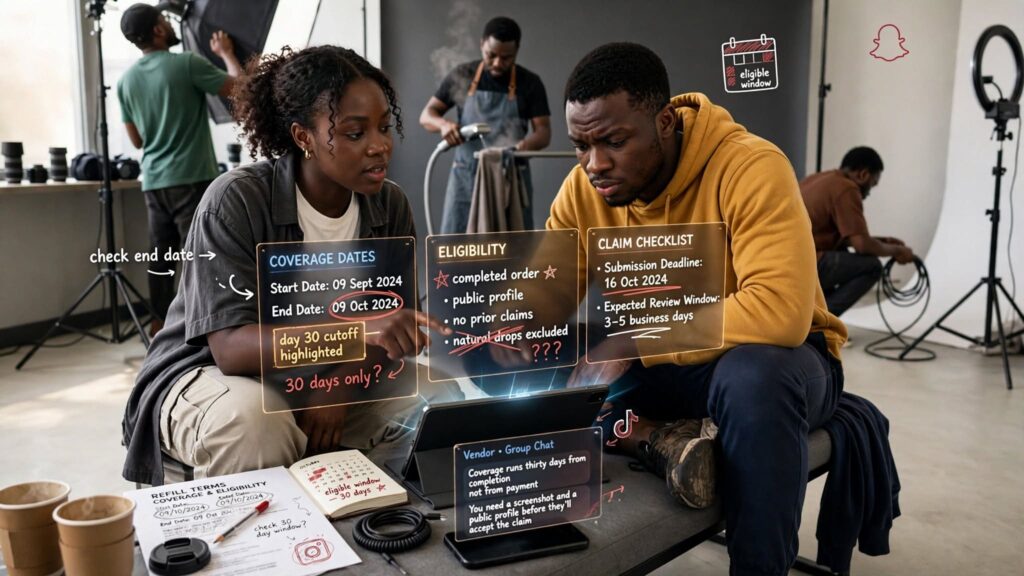
Target refill windows vary based on overall marketing goals and budget flexibility. Understanding how long a refill window should last prevents overpaying for unnecessary coverage lengths on short promotional projects.
Recommended coverage windows include:
- Short Campaign Boosts (30 Days): Ideal for product launches, seasonal offers, or quick social proof boosts.
- Mid-Term Growth Cycles (90 Days): Great for business accounts needing steady metrics over a full financial quarter.
- Extended Marketing Campaigns (180 Days): Suitable for corporate campaigns requiring long-term metric stability checks.
- Annual Brand Coverage (365 Days): Best for enterprise accounts requiring continuous metric stability across full yearly cycles.
- Custom Enterprise Coverage: Specialized replacement terms built for marketing agencies managing large client campaign spends.
How Long Should A Social Media Refill Window Last?
Target refill windows vary based on overall marketing goals and budget flexibility. Understanding how long a refill window should be prevents overpaying for unnecessary coverage lengths on short promotional projects.
Recommended coverage windows include:
- Short Campaign Boosts (30 Days): Ideal for product launches, seasonal offers, or quick social proof boosts.
- Mid-Term Growth Cycles (90 Days): Great for business accounts needing steady metrics over a full financial quarter.
- Extended Marketing Campaigns (180 Days): Suitable for corporate campaigns requiring long-term metric stability checks.
- Annual Brand Coverage (365 Days): Best for enterprise accounts requiring continuous metric stability across full yearly cycles.
- Custom Enterprise Coverage: Specialized replacement terms built for marketing agencies managing large client campaign spends.
For most online brands, a 30-day to 90-day window offers the best balance between price value and profile protection. Choosing appropriate timelines aligns promotional budgets with realistic platform stability requirements.
Compare 30-Day, 90-Day And 365-Day Refill Periods
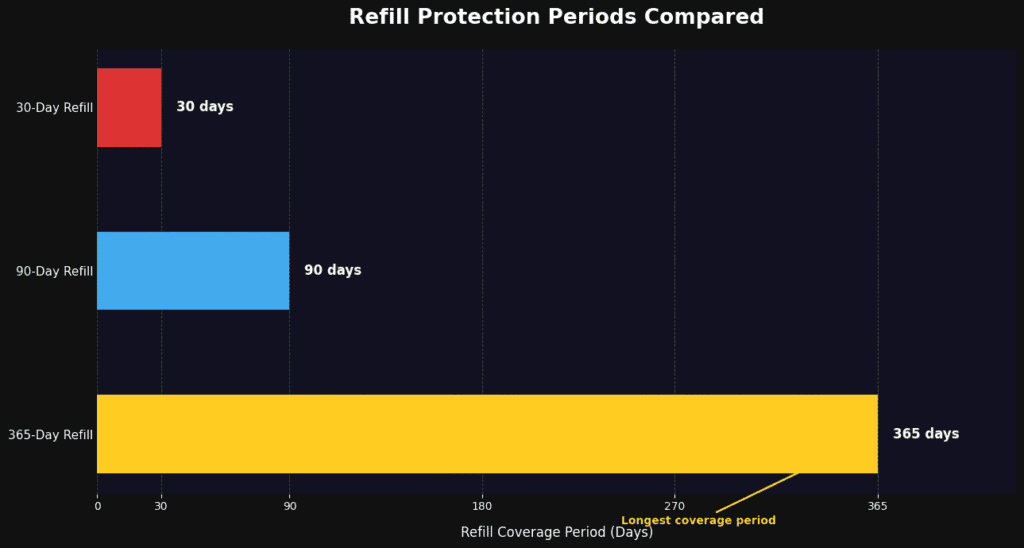
Choosing the right protection duration depends entirely on how long you want your social proof secured against automated platform purges. A thirty-day refill period works wonderfully for short promotional campaigns, product launches, or single viral posts that need stable metrics during their initial peak visibility window. This shorter duration offers affordable protection without tying up resources for long-term guarantees you might not even need.
Stepping up to a ninety-day refill window provides a much more robust safety net for growing business profiles or creator accounts building steady momentum across a full financial quarter. Ninety days gives your audience enough time to establish deep organic engagement while protecting your investment against periodic algorithm updates.
Opting for an extended three hundred sixty-five-day refill period delivers maximum security for enterprise-level brands and high-stakes marketing campaigns requiring continuous metric stability across an entire calendar year. While longer windows involve slightly higher upfront pricing, they eliminate the worry of unexpected drops months after your initial order finishes.
Evaluating your project goals helps you choose the ideal duration. Matching your coverage length to your campaign timeline ensures your promotional budget works efficiently while keeping your profile metrics fully protected.
What Happens When Your Refill Guarantee Expires?
Once a refill guarantee period expires, dashboard monitoring scripts stop tracking baseline counts for that specific transaction code. Understanding what happens after the refill period ends helps managers plan ongoing growth budgets without running into unexpected issues.
Key steps to manage expiring coverage include:
- Tracking order transaction dates and coverage windows inside a simple campaign schedule.
- Checking account metrics carefully as expiration dates draw near.
- Submitting needed metric top-ups a few days before active windows expire.
- Reviewing organic retention metrics to gauge natural page health accurately.
- Deciding if a fresh promotional package is needed to maintain growth momentum.
Planning around expiration dates ensures profile metrics stay steady without metric drops hurting visual account authority. Proactive account management sustains audience trust, maximizing the return on digital marketing investments.
How Many Followers Must Drop Before You Qualify?
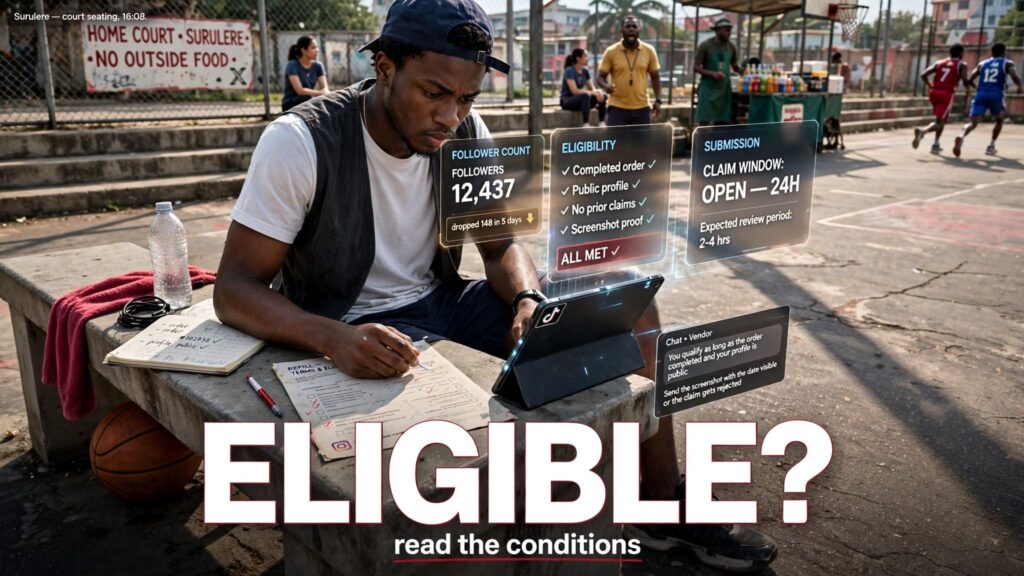
SMM platform systems require public metrics to fall below the calculated baseline figure (Start Count + Delivered Volume) before approving a top-up request.
Consider this mathematical breakdown:
- Initial Starting Metric: 1,000
- Purchased Quantity: 1,000
- Target Baseline Target: 2,000
If your profile total drops to 1,950, your account qualifies for a 50-item top-up. Conversely, if your account total rises to 2,050 through organic profile reach, the system declines refill requests because current metrics stay above the 2,000 baseline requirement.
Having drop replacement policy on SMM sites explained clearly prevents confusion when filing refill claims. If organic additions keep profile totals above agreed baselines, automated systems mark original delivery contracts as fulfilled. Clear understanding of eligibility thresholds ensures smooth resolution of support inquiries.
Why Do Some Refill Requests Get Rejected?
Dashboard refill claims get declined due to technical issues that break baseline calculation rules.
Common reasons for claim rejections include:
- Metrics Below Starting Level: Dips below initial starting numbers make it impossible for automated checks to confirm if lost items were purchased metrics or older organic followers.
- Private Profile Settings: Switching profile settings from public to private blocks validation bots from checking active counts.
- Handle Alterations: Changing account handles breaks tracking connections linked to original order IDs.
- Overlapping Orders: Ordering identical metric packages across different platforms breaks baseline calculation logic.
- Expired Coverage Timelines: Submitting top-up requests after active coverage windows close.
Learning why refill requests get rejected helps page owners maintain correct account settings throughout active campaigns. Creators seeking clear growth guidelines can explore TikTok growth services on Sizzle Social to review compliant promotional packages. Correct technical configuration prevents claim denials, ensuring seamless metric maintenance.
How to Compare Automatic And Manual Refill Options

Understanding the difference between automatic and manual refill options helps you maintain consistent engagement across your social media profiles. When you purchase growth services, choosing how your metrics get replenished ensures your account looks active and reliable over time. Both systems achieve the same end goal, but they work quite differently behind the scenes.
Automatic refill relies on system integration to monitor your profile metrics continuously. Once configured, server scripts track your follower or view counts against your baseline targets. If a drop occurs due to platform updates or routine cleanup, the system instantly queues a top-down replacement without requiring human intervention. This hands-off approach saves time and keeps your metrics stable without constant supervision.
Manual refill, on the other hand, puts you in direct control of every adjustment. When you notice a dip in your numbers, you submit a request or click a button through your dashboard to trigger a top-up batch. This option gives you complete oversight over when and how replacement metrics are added, making it ideal for creators who prefer strict control over their account activity pacing.
Choosing the right approach depends on your daily workflow and management style. If you want a completely seamless experience that fixes drops automatically, auto-refill provides unmatched convenience. If you prefer verifying every adjustment yourself, manual refill gives you precise oversight from start to finish.
What Is Automatic Refill And How Does It Work?
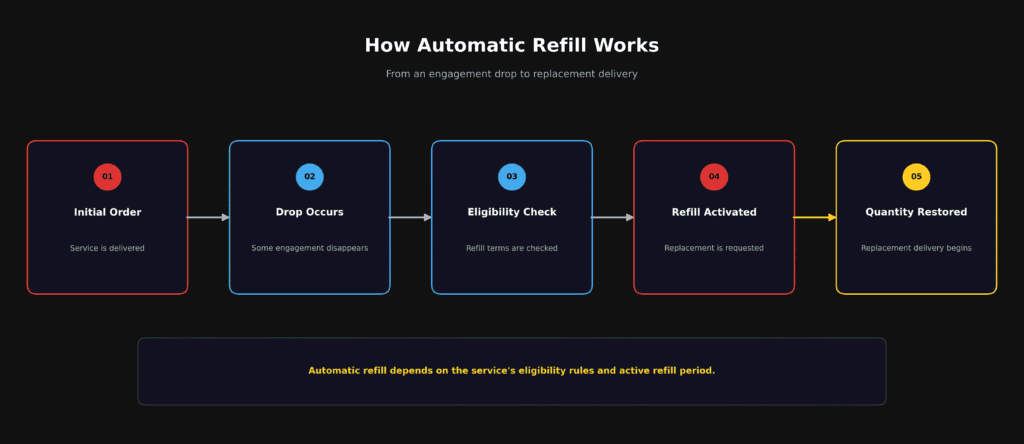
Automatic refill (auto-refill) is a dashboard feature where server scripts check profile metrics automatically. If system checks detect counts dropping below target baselines, the platform dispatches a top-up batch without requiring support tickets or manual button clicks.
Understanding the difference between automatic and manual top up functions helps managers streamline profile administration. Auto-refill software scans public profile counts every 24 to 48 hours. When validated metric dips occur, the platform dispatches replacement metrics automatically, preserving brand credibility in the background.
Core mechanics of automatic monitoring systems include:
- Scheduled Profile Audits: System tools checking public metrics at regular time intervals.
- Instant Queue Routing: Routing replacement orders to delivery queues as soon as count dips get verified.
- Hands-Free Metric Management: Account managers avoid logging in repeatedly to report count drops.
- Uninterrupted Coverage: Active safeguards operating continuously throughout guarantee windows.
- Minimized Human Error: Eliminating missed top-up deadlines caused by forgotten dashboard checks.
How Does Manual Refill Differ From Automatic Top-Ups?
Manual refill relies on account owners monitoring profile counts directly and requesting top-ups when drops occur. When a drop happens, you must log into the user dashboard, locate the specific order ID, and click the replacement trigger manually.
Resolving issues like a refill button greyed out on my order or a refill button not showing on my order requires understanding dashboard system triggers. Replacement buttons become inactive when initial orders are still running, when profile metrics stay above baseline targets, or when active coverage windows end.
Steps for completing manual top-up requests:
- Monitoring public profile counts regularly against recorded order baseline figures.
- Confirming target accounts stay public with handles matching original order details.
- Navigating to order history lists inside your management dashboard.
- Clicking active Refill buttons positioned next to qualifying order numbers.
- Opening support tickets with order details if automated buttons appear greyed out.
Which Refill Option Works Better For Nigerian Creators?

Managing social media growth requires careful handling of metric drops, particularly for creators operating in regions with unique digital workflows and infrastructure challenges. When balancing client messages, regional platforms, and unstable connection speeds, automatic refill tools offer a clear advantage. They handle metric maintenance in the background, freeing creators to concentrate on content quality, customer conversations, and sales fulfillment.
Assessing auto refill reliability across local panels shows that hands-free tools remove the hassle of manual metric tracking. Balancing client orders while making page activity steady makes constant count checking difficult. Automatic top-ups keep metrics stable even during peak workload periods.
Manual top-ups remain useful for campaign planners who prefer tight control over profile updates. Manual options allow page owners to time replacement batches around planned content releases. Selecting the right refill mode aligns administrative workflows with individual operational capacities. Choosing the ideal option depends entirely on how much hands-on control you prefer over your daily profile maintenance.
For Nigerian content creators running tight schedules, minimizing operational friction makes a noticeable difference in daily output. Platforms often experience fluctuating delivery speeds or minor audience drops due to network connectivity issues or routine platform sweeps. Relying on an automated setup means you never have to pause your creative workflow just to check numbers or submit recovery tickets.
On the flip side, creators who manage sensitive brand accounts or strict promotional windows might prefer reviewing every batch before it hits their profile. This hands-on method lets you match engagement spikes precisely with product launches or live events. Weighing your technical setup against your daily scheduling habits will point you toward the most sustainable workflow for long-term growth.
What Should You Check Before Paying For Refill Protection?
Before funding wallet accounts and placing metric orders, run through this verification checklist to ensure smooth coverage processing. Checking these details beforehand prevents common headaches and guarantees that your account qualifies for automatic replacement if drops occur. Many users rush into transactions without confirming basic account settings, which leads to denied refill claims later. Taking a few minutes to verify your setup protects your investment and ensures uninterrupted support from your provider.
- Public Account Status: Confirm target profiles are set to public view prior to ordering. Private accounts block tracking systems from verifying metrics, rendering refill guarantees useless.
- Baseline Record: Capture screenshots of starting counts for personal baseline tracking. Having visual records helps resolve disputes quickly if delivery discrepancies arise.
- Service Label Verification: Check that service titles show clear coverage codes such as R30 or Auto Refill. Selecting unverified tiers means you will not receive replenishment protection if metrics drop.
- Unchanged Account Handle: Avoid modifying profile handles while replacement windows stay open. Changing your username breaks system trackers and halts active refill queues.
- Single Source Ordering: Avoid submitting concurrent orders for the same account across multiple growth panels. Overlapping orders confuse tracking algorithms and make delivery counts impossible to verify accurately.
- Active Window Terms: Check that selected coverage windows match your overall marketing timeline. Knowing how long protection lasts helps you plan subsequent promotional pushes effectively.
Following these pre-purchase checks prevents avoidable top-up claim denials. Businesses building broader online outreach campaigns can review Facebook growth service solutions on Sizzle Social to structure balanced promotional campaigns. Careful preparation guarantees that growth initiatives proceed without technical obstacles.
Does A Refill Guarantee Protect Your Social Media Order?
A refill guarantee stands as the most dependable safety net when purchasing digital growth services. It shields marketing budgets against algorithm purges, keeping social proof steady over time. Knowing how to submit a refill ticket with order ID details gives online buyers confidence when managing digital marketing campaigns.
By selecting services with defined coverage windows, keeping target handles public, and utilizing transparent service panels, digital managers safeguard promotional spends and build lasting online brand trust.
Ready to expand public profile metrics backed by reliable replacement coverage? Explore Sizzle Social’s growth services today to build steady, long-lasting social proof for your brand.
Frequently Asked Questions
At its primary operational level, an active contract guarantee provided by a social media marketing dashboard replaces numeric metrics that disappear after order fulfillment. Network updates or automated platform checks frequently cause profile count drops, and a refill rule ensures that the supplier dispatches supplementary numbers back to your target total without requesting extra fees. Consider buying a sack of grain from a wholesale merchant in Ibadan. If a small tear in the container causes grain to leak out while heading home, a fair vendor hands over an extra portion to restore your total weight. On digital growth systems, the refill option serves as that compensation mechanism, holding deliverable numbers steady. Understanding the meaning of refill guarantee on a social media panel allows campaign planners to separate protected order packages from high risk options. Many online buyers focus entirely on initial delivery speed instead of overall account retention, but speed offers little practical value when profiles disappear forty eight hours later. A transparent replacement terms agreement shields money spent on digital marketing campaigns.
Following order processing completion, the central dashboard logs your current total as a reference starting point, known as the base delivery figure. If background network checks clean out old profiles weeks later, public metric totals drop below the target figure. When triggering a metric top up, system scripts check existing profile metrics against original transaction records. If automated checks confirm that counts fell below baseline metrics due to normal audience decay, the platform schedules a supplementary delivery batch, and this replacement batch pushes numbers back up to agreed targets outlined in your service confirmation. Dashboard algorithms operate using rigid mathematical steps rather than manual estimates. Baseline capture logs starting profile counts before dispatch starts. Target calculation adds purchased volume to logged starting numbers. Discrepancy detection scans active public counts to spot dips below target baselines. Queue placement routes confirmed metric drops to automated delivery queues. Completion verification runs profile checks to confirm metrics match required targets. Learning what the refill button actually does clarifies why keeping accounts open to the public remains mandatory throughout protection periods.
Not every digital package includes replacement coverage. Premium packages normally feature metric safeguards because their profile networks demonstrate higher retention, whereas low tier options often carry zero replacement promises. Digital packages featuring standard replacement terms include profile followers, which cover core user metric packages across leading platform channels, and page likes and channel subscribers, which cover public audience counts for business handles, community pages, and video hubs. Post reaction packages provide extended post interaction metrics on featured promotional content. Group and channel members cover public membership totals across community discussion groups. Long term video engagements cover sustained view metrics assigned to central video uploads built for search discovery. Instant video view packages or temporary story interaction packages rarely include refill terms because public visibility cycles end immediately. For dependable profile retention, content owners should review growth service options featuring explicit top up coverage. Selecting robust packages safeguards marketing investments, ensuring that digital growth remains stable over extended promotional cycles across all major platforms.
Reviewing service cards prior to checkout prevents operational confusion, and dashboard listings utilize specific tags to highlight covered packages. Refill badges appear as bright green visual indicators or clear refill active notices located next to item names. Service code labels use standard industry markers like R30, R90, or R365 embedded inside item titles, signaling 30 day, 90 day, or 365 day replacement timelines. Explicit terms text provides clear descriptive text inside service details boxes explaining exact top up rules. Automated system icons are visual markers showing scheduled background checks for metric drops. Support ticket tags confirm that manual request options remain active for your order reference code. Learning what R30 on a service listing means becomes simple once you understand these catalog codes. R30 indicates thirty calendar days of drop replacement, while R90 offers ninety full days of coverage. If a service card states no refill or NR, that specific listing carries zero replacement guarantees once initial delivery finishes. Careful inspection of item details guarantees that buyers purchase dependable protection for their digital accounts.
Digital managers frequently confuse these service terms, yet non drop and refill guarantees represent different system strategies. Non drop listings use accounts designed to resist algorithm sweeps, while refill guarantees offer a contractual promise to replace lost count numbers. Drop risk exposure differs too: non drop listings carry minimal risk though network updates can still cause drops, while refill guarantees carry variable risk but numeric losses get restored within valid timelines. Pricing models diverge as well, since non drop options carry higher initial purchase costs while refill options balance pricing with built in backup coverage. Recourse for count drops is another key difference: non drop listings offer zero top ups unless paired with a refill clause, while refill guarantees provide a clear top up process through dashboard buttons or support tickets. Evaluating the non drop versus refill difference helps budget planners make wiser purchasing decisions. Non drop describes account quality expectations, whereas a refill guarantee represents an active safety policy covering your money when network drops happen. Combining durable profile quality with explicit replacement coverage yields the safest outcome for digital marketing campaigns.
Drop protection serves as an overall strategy encompassing all methods used to shield profile metrics from sudden drops. This strategy includes source quality filtering, gradual delivery rates, and refill rules. Free refills represent the specific action tool within a drop protection strategy. A free refill structure means zero supplementary payments when requesting top ups during your active coverage period. Certain budget dashboards add hidden processing fees to replacement claims, so choosing options with free refills guarantees complete price safety. Industry data confirms that maintaining stable social signals remains vital for digital outreach. Research shared by HubSpot shows that stable engagement signals help platform distribution algorithms evaluate post authority effectively. When public metrics drop without prompt restoration, organic reach slows down. Maintaining consistent online engagement protects brand credibility, allowing Nigerian enterprises to connect effectively with target audiences across competitive digital channels. Understanding this distinction helps buyers evaluate whether a package offers genuine protection or simply markets account quality without any recovery mechanism.
Zero digital providers hold operational control over algorithm updates deployed by global platforms. When network platforms update security checks, even robust profile networks face unexpected purges. Promoting packages as permanent non drop without backup guarantees misleads online buyers, and understanding why non drop claims are not promises helps prevent disappointment when platform updates occur. Profiles can drop due to system security updates that trigger global purges clearing inactive profile entries, natural unfollow decisions from real account holders, old profiles naturally shutting down over time, temporary gaps between social network servers and public API counters, and platform server maintenance causing localized metric drops. A written metric guarantee provides far superior protection compared to an exaggerated permanent count pitch. Brands aiming for steady audience reach should consult proven methods to grow followers in Nigeria to balance promotional boosts with natural organic activity. Embracing realistic growth expectations prevents misplaced reliance on unbacked claims, ensuring long term digital stability across all promotional campaigns.
A refill window defines the exact duration during which an order remains eligible for count replacements. If a package carries a 30 day window, any metric loss occurring within those 30 days qualifies for free restoration. Comparing refill window versus lifetime guarantee parameters highlights clear operational differences. Lifetime promises sound appealing, but providers frequently adjust underlying API protocols or service links over extended timelines. A defined 30 day or 90 day window provides a realistic, fully enforceable timeline backed by active dashboard monitoring systems. This active timeframe protects initial marketing spends while target pages build organic audience momentum. It buys your profile time to showcase steady social proof without sudden drops scaring away genuine page visitors. Protecting promotional investments with well defined terms ensures predictable campaign outcomes. When evaluating which label actually protects your money, clear terms beat vague promises every time, since services marked with verifiable replacement codes outshine unbacked claims and provide straightforward recovery steps if numbers dip during the coverage period.
Target refill windows vary based on overall marketing goals and budget flexibility. Understanding how long a refill window should be prevents overpaying for unnecessary coverage lengths on short promotional projects. Recommended coverage windows include 30 days for short campaign boosts, which suits product launches, seasonal offers, or quick social proof boosts. A 90 day window works well for mid term growth cycles, since it suits business accounts needing steady metrics over a full financial quarter. Extended marketing campaigns of 180 days suit corporate campaigns requiring long term metric stability checks, while annual brand coverage of 365 days works best for enterprise accounts requiring continuous metric stability across full yearly cycles. Custom enterprise coverage offers specialized replacement terms built for marketing agencies managing large client campaign spends. For most online brands, a 30 day to 90 day window offers the best balance between price value and profile protection. Choosing appropriate timelines aligns promotional budgets with realistic platform stability requirements, and global social media statistics published by DataReportal confirm that major platforms deploy system updates multiple times per quarter
Once a refill guarantee period expires, dashboard monitoring scripts stop tracking baseline counts for that specific transaction code. Understanding what happens after the refill period ends helps managers plan ongoing growth budgets without running into unexpected issues. Key steps to manage expiring coverage include tracking order transaction dates and coverage windows inside a simple campaign schedule, checking account metrics carefully as expiration dates draw near, submitting needed metric top ups a few days before active windows expire, reviewing organic retention metrics to gauge natural page health accurately, and deciding if a fresh promotional package is needed to maintain growth momentum. Planning around expiration dates ensures profile metrics stay steady without metric drops hurting visual account authority. Proactive account management sustains audience trust, maximizing the return on digital marketing investments. Managers who calendar their coverage windows avoid the unpleasant surprise of discovering an expired guarantee only after a platform purge has already wiped out purchased metrics.
SMM platform systems require public metrics to fall below the calculated baseline figure, which is start count plus delivered volume, before approving a top up request. Consider this mathematical breakdown: an initial starting metric of 1,000 plus a purchased quantity of 1,000 creates a target baseline of 2,000. If your profile total drops to 1,950, your account qualifies for a 50 item top up. Conversely, if your account total rises to 2,050 through organic profile reach, the system declines refill requests because current metrics stay above the 2,000 baseline requirement. Having drop replacement policy on SMM sites explained clearly prevents confusion when filing refill claims. If organic additions keep profile totals above agreed baselines, automated systems mark original delivery contracts as fulfilled. Clear understanding of eligibility thresholds ensures smooth resolution of support inquiries and helps account owners avoid frustration when their requests are reviewed by automated systems that compare live counts against recorded transaction data.
Dashboard refill claims get declined due to technical issues that break baseline calculation rules. Metrics below starting level is a common cause, since dips below initial starting numbers make it impossible for automated checks to confirm if lost items were purchased metrics or older organic followers. Private profile settings also block validation bots from checking active counts when profile settings switch from public to private. Handle alterations break tracking connections linked to original order IDs. Overlapping orders create problems too, because ordering identical metric packages across different platforms breaks baseline calculation logic. Expired coverage timelines cause rejection when top up requests are submitted after active coverage windows close. Learning why refill requests get rejected helps page owners maintain correct account settings throughout active campaigns. Creators seeking clear growth guidelines should review compliant promotional packages carefully. Correct technical configuration prevents claim denials, ensuring seamless metric maintenance and protecting the value of every purchase made through the platform dashboard.
Automatic refill is a dashboard feature where server scripts check profile metrics automatically. If system checks detect counts dropping below target baselines, the platform dispatches a top up batch without requiring support tickets or manual button clicks. Understanding the difference between automatic and manual top up functions helps managers streamline profile administration. Auto refill software scans public profile counts every 24 to 48 hours, and when validated metric dips occur, the platform dispatches replacement metrics automatically, preserving brand credibility in the background. Core mechanics of automatic monitoring systems include scheduled profile audits where system tools check public metrics at regular time intervals, instant queue routing that routes replacement orders to delivery queues as soon as count dips get verified, hands free metric management so account managers avoid logging in repeatedly to report count drops, uninterrupted coverage with active safeguards operating continuously throughout guarantee windows, and minimized human error by eliminating missed top up deadlines caused by forgotten dashboard checks. This hands free approach suits busy creators who cannot monitor counts daily.
Manual refill relies on account owners monitoring profile counts directly and requesting top ups when drops occur. When a drop happens, you must log into the user dashboard, locate the specific order ID, and click the replacement trigger manually. Resolving issues like a refill button greyed out on an order or a refill button not showing on an order requires understanding dashboard system triggers. Replacement buttons become inactive when initial orders are still running, when profile metrics stay above baseline targets, or when active coverage windows end. Steps for completing manual top up requests include monitoring public profile counts regularly against recorded order baseline figures, confirming target accounts stay public with handles matching original order details, navigating to order history lists inside your management dashboard, clicking active refill buttons positioned next to qualifying order numbers, and opening support tickets with order details if automated buttons appear greyed out. Manual top ups remain useful for campaign planners who prefer tight control over profile updates and want to time replacement batches around planned content releases.
Before funding wallet accounts and placing metric orders, run through a verification checklist to ensure smooth coverage processing. Confirm public account status by verifying target profiles are set to public view prior to ordering. Capture a baseline record by taking screenshots of starting counts for personal baseline tracking. Verify service labels by checking that service titles show clear coverage codes such as R30 or auto refill. Keep the account handle unchanged, since modifying profile handles while replacement windows stay open breaks tracking connections. Use a single source for ordering by avoiding concurrent orders for the same account across multiple growth panels. Check active window terms to confirm that selected coverage windows match your overall marketing timeline. Following these pre purchase checks prevents avoidable top up claim denials. Businesses building broader online outreach campaigns should review growth service solutions to structure balanced promotional campaigns. Careful preparation guarantees that growth initiatives proceed without technical obstacles, and understanding how to submit a refill ticket with order ID details gives online buyers confidence when managing digital marketing campaigns.