
Table of Contents
- YouTube Followers vs Subscribers: What Are the Key Differences
- Common Differences Between YouTube Subscribers, Views, and Audience Engagement
- YouTube Subscriber Growth Strategies vs Building a Loyal Audience
- How to Choose the Right YouTube Growth Strategy Based on Your Goals
- Understand YouTube Subscribers to Measure Meaningful Channel Growth
- Frequently Asked Questions
You post a video, check your channel dashboard, and wonder why people keep talking about followers on a platform built entirely around subscriptions. Across Nigeria, content creators, small business owners in Computer Village, and brand managers in Victoria Island ask this exact question every day. The mix-up comes naturally because almost every other platform uses the term follower.
When someone clicks that red button on your channel, they become a subscriber, which carries a completely different meaning for your channel reach and video views. Understanding this difference helps you measure real audience loyalty, set clear marketing goals, and build a sustainable channel.
YouTube Followers vs Subscribers: What Are the Key Differences

When someone clicks that red button on your channel, they become a subscriber, which carries a completely different meaning for your channel reach and video views. Understanding this difference helps you measure real audience loyalty, set clear marketing goals, and build a sustainable channel.
Understanding channel terminology helps you navigate video growth metrics with complete clarity. Many creators who start after running pages on Instagram or TikTok naturally look for YouTube followers when checking their channel performance. The platform built its entire infrastructure around subscribers, and this distinction changes how your audience interacts with every new upload.
A YouTube subscriber represents an active member of your audience who chooses to sign up for regular content updates. When a viewer clicks the subscribe button on your channel, the platform adds your video uploads directly to their dedicated subscription feed. This action signals a genuine commitment from the viewer, moving them past casual browsing into a loyal fan relationship. Subscribers receive direct notifications through their mobile devices or desktop feeds whenever you publish fresh material, creating a reliable baseline of initial viewership for your future projects.
In contrast, the term follower frequently appears across alternative social media networks where profile feeds function differently. On platforms centered around short status updates or image streams, following someone means you see their latest posts appear inside a chronological or algorithmic home timeline. YouTube does not rely on a traditional follower model for channels. Instead, the subscriber base acts as your core community, driving long-term engagement and signaling platform algorithms that your content maintains sustained value over time.
What YouTube Subscribers Mean and How Channel Subscriptions Work
A YouTube subscriber represents an active member of your video audience who chooses to sign up for regular content updates. When a user clicks the subscribe button on your channel, the platform adds your video uploads directly to their dedicated subscription feed. This action signals to the algorithm that the user wants to see your content frequently.
The platform also gives subscribers the option to turn on the notification bell, which sends instant notifications to their mobile devices whenever you publish new videos, go live, or share a community post.
| Subscription Feature | How It Functions for the Creator |
| Subscription Feed Placement | Guarantees automatic placement on viewer homepages |
| Notification Bell Alerts | Triggers immediate push alerts for new uploads |
| Community Tab Access | Delivers text updates, polls, and images directly |
| Algorithmic Signal | Informs YouTube that your content retains viewers |
Subscribers form the backbone of long-term audience retention. Unlike casual viewers who find your videos through search queries or temporary recommendations, subscribers demonstrate a clear commitment to your voice, brand, or business. According to official statistics from YouTube Creator Resources, channels that actively optimize their content for subscription conversion experience higher average watch times and stronger viewer retention over 90-day periods. When someone subscribes, they give your channel permission to occupy space in their daily video stream.
This long-term relationship allows you to project future view counts and build a community that interacts with your uploads consistently. To expand your channel audience and turn casual viewers into loyal channel members, check out the options on the YouTube Growth Platform.
To understand how subscriptions function in practice across your entire publishing routine, consider the following technical mechanics that occur behind the scenes whenever a user joins your channel base:
- Active Feed Syndication: Every published long-form video or public Short appears in the dedicated Subscriptions tab of logged-in account holders instantly.
- Push Notification Priority: Users choosing the personalized or all notification bell preferences receive automated push alerts and email summaries based on upload frequency.
- Homepage Recommendation Bias: YouTube’s recommendation engine evaluates subscriber watch activity during the first two hours of publication to determine whether to surface the video to broader non-subscribed audiences.
- Community Post Distribution: Text updates, image polls, and behind-the-scenes teasers published via the Community Tab appear directly in subscriber home feeds, bypassing traditional video production requirements.
- Channel Membership Conversion: Subscribers who engage consistently serve as the primary organic sales funnel for paid channel memberships, merchandise shelf offers, and direct fan funding options.
Building a predictable publishing workflow depends heavily on cultivating this active subscriber layer. Rather than relying on temporary viral hits that produce unstable daily view curves, focusing on subscription conversion provides your video strategy with structural stability, predictable viewer retention, and sustained long-term reach across all major video discovery surfaces.
What People Mean When They Search for YouTube Followers

When creators, business owners, or digital marketers search for YouTube followers, they usually mean YouTube subscribers. The search query stems from habits built on platforms like Instagram, Twitter, TikTok, and Facebook, where every audience member falls under the follower category. Beginners frequently use these terms interchangeably because they expect every social channel to run on identical terminology.
- Users coming from TikTok or Instagram default to searching for followers out of habit.
- New creators often search for follower packages when looking for channel growth services.
- Clients evaluating digital marketing agencies frequently ask for follower metrics on video campaigns.
- Non-technical business owners use the word follower to describe total audience reach across all platforms.
- Foreign brands looking for Nigerian influencers often write brief specifications asking for follower counts on YouTube.
Understanding this terminology overlap helps you optimize your online content strategy. People searching for followers want the exact same outcome as those looking for subscribers, which includes more channel reach, active viewers, and consistent engagement.
However, to break down why cross-platform users consistently default to this specific phrase when entering queries into search engines, examine these additional structural factors:
- Multi-Platform Dashboard Confusion: Social media management tools aggregate cross-platform analytics under generic follower headings, leading creators to apply the same label to video channels.
- Client Reporting Standards: Marketing agencies operating in commercial hubs like Ikeja or Lekki frequently use standardized monthly reporting templates that group all social media connections under follower metrics.
- Mobile App Interface Similarities: Casual internet users scrolling quickly through mobile applications perceive double-tapping or tapping a follow button on short-form platforms as identical to tapping YouTube’s subscription button.
- Influencer Marketing Agency Briefs: Corporate sponsorship briefs distributed by agency reps routinely ask for follower counts across YouTube, Instagram, and TikTok without distinguishing platform architecture.
- E-Commerce Store Integration Terminology: External web plugins and social proof widgets designed for online stores regularly label all audience counts as followers regardless of the underlying API source.
Recognizing these industry-wide terminology habits allows you to bridge the gap between initial online search intent and practical channel management. When clients, sponsors, or partners inquire about expanding your follower count on video platforms, addressing their underlying desire for subscriber growth and sustainable video views keeps everyone aligned around identical business metrics.
YouTube Followers vs Subscribers vs Viewers: Comparing Their Roles
Dissecting the specific roles of subscribers, casual viewers, and search-driven audiences clarifies how your channel generates traffic. A viewer is anyone who clicks on your video thumbnail and watches a portion of your content, regardless of whether they ever return. Subscribers represent your return audience, while the term followers remains an informal term used by cross-platform marketers.
| Metric Category | Primary Platform Function | Impact on Channel Growth |
| Viewers | One-time or casual video consumption | Generates immediate watch time |
| Subscribers | Dedicated content membership | Drives initial organic velocity |
| “Followers” | Informal cross-platform terminology | Reflects general audience interest |
Viewers provide your initial view counts, but subscribers provide the recurring traffic that keeps your video metrics stable. A channel with high view counts but zero subscription growth relies entirely on external search traffic or lucky algorithmic recommendations.
Conversely, a channel with consistent subscription conversion builds recurring value. Balancing these metrics ensures your video production efforts produce predictable returns over time.
On the other hand, to evaluate how these three distinct categories interact within your daily channel ecosystem, examine the core characteristics that define their performance value:
- Single-Session Audience (Casual Viewers): These users land on individual uploads via external Google search results, shared WhatsApp links, or embedded website articles, contributing immediate watch time without committing to future uploads.
- Recurring Audience (Subscribers): These users form the foundation of your initial upload velocity, opening mobile notifications within minutes of publishing and providing critical early click-through signals to the algorithm.
- Informal Audience Metric (Followers): This conceptual grouping encompasses your general social presence across multiple platforms, representing broad brand awareness rather than direct channel subscription mechanics.
- Search-Driven Traffic (Niche Viewers): These individuals actively seek solutions to specific problems, generating highly targetable view counts on educational tutorials or product review videos.
- Community Core (Super Subscribers): A subset of your subscriber base that consistently likes, comments, shares, and watches every upload from start to finish, driving essential community interaction.
Distinguishing these user roles ensures that your channel optimization efforts target real business outcomes rather than superficial numbers. Aligning your content production with these distinct audience segments maximizes overall watch time while continuously converting casual discovery traffic into long-term subscribers.
Why YouTube Uses Subscribers Instead of Followers as Its Main Channel Metric

YouTube adopted the subscription model from traditional broadcasting, magazines, and RSS feeds during its early development. The model treats every channel like an independent publication or television network where users subscribe to receive regular programming. This system sets a higher bar for audience engagement compared to simple follower mechanics found on microblogging platforms.
Subscribing requires a conscious choice from the user to receive regular content updates rather than passively scrolling past individual posts. YouTube uses this high-intent signal to determine which channels merit placement on the platform’s valuable homepage recommendations. The subscription model protects user experience by ensuring users only see repeated content from channels they explicitly chose to support.
For channels seeking to establish authority quickly, utilizing a trusted YouTube SMM Panel provides the initial social proof needed to catch the algorithm’s attention.
To understand why this architectural decision remains central to the platform’s long-term commercial success, consider these structural advantages built into the subscription framework:
- High Intent Filtering: Subscribing requires explicit user intent, creating a much stronger algorithmic signal regarding user interest than passive feed scrolling on alternative platforms.
- Long-Term Channel Equity: The subscription model allows creators to build sustainable digital publications that maintain viewer value over years rather than relying on ephemeral post lifespans.
- Ecosystem Monetization Alignment: Advertisers pay higher CPM rates on channels with active, predictable subscriber bases because subscription viewing patterns indicate intentional, highly focused attention.
- Content Delivery Control: By separating passive recommendation feeds from dedicated subscription feeds, the platform balances algorithmic discovery with user-selected publisher updates.
- Audience Retention Measurement: Subscription growth provides channel owners with clear benchmarks to evaluate channel authority, content quality, and long-term brand equity.
By maintaining this publication-style framework, the platform rewards channels that cultivate meaningful, recurring audience relationships over those chasing temporary clickbait traffic. Structuring your content strategy around this subscription framework ensures higher audience retention and stronger algorithmic positioning across every upload cycle.
Common Differences Between YouTube Subscribers, Views, and Audience Engagement

Tracking the right metrics prevents strategic errors that stall channel momentum. High subscriber numbers look impressive on your channel header, but view counts and audience engagement determine your actual digital influence and revenue potential.
A view simply means someone started playing your video. It records an impression turned into a click, but it tells you nothing about whether the person enjoyed the content or stayed until the final minute. You might pull thousands of views from a catchy title or thumbnail, yet watch your audience drop off within the first thirty seconds.
Subscribers represent a deeper commitment. When someone hits that subscribe button, they are telling the platform they want to see your future uploads regularly. This group forms the foundation of your community. They provide the initial wave of traffic whenever you drop a new video, helping the algorithm test your content with a warm audience before pushing it out to broader recommendation feeds.
Audience engagement binds these elements together. Likes, comments, shares, and average view duration reveal how deeply your viewers care about the material. High engagement signals to automated recommendation engines that your content sparks genuine conversations and holds attention. Creators who focus solely on vanity numbers often miss the subtle shifts in community sentiment that drive long-term channel health. Balancing all three metrics gives you a realistic picture of your performance, helping you refine your content strategy and build a loyal audience that lasts.
Subscriber Count vs Active Viewers: Why the Numbers Often Differ
A common source of confusion for channel owners involves the gap between total subscriber numbers and actual video views. A channel can display 50,000 subscribers while its new video uploads struggle to reach 1,000 views in their first week. This gap happens because user viewing habits evolve, notification settings change, and individual interests shift over time.
| Discrepancy Cause | Practical Result on Video Metrics |
| Dormant User Accounts | Subscribers remain listed but never log in |
| Notification Settings Turned Off | Subscribers miss new upload alerts |
| Niche Content Pivots | Existing subscribers ignore new video topics |
| Algorithmic Homepage Filtering | Platform prioritizes new user interests over subscriptions |
Active viewers represent the actual slice of your audience that opens YouTube, clicks your thumbnails, and watches your content during a given period. Subscriber count serves as a cumulative historical total, whereas active viewers reflect real-time interest. A data study from HubSpot highlights that active audience engagement correlates three times more strongly with brand conversion than total channel subscriber counts.
To understand why this disconnect occurs across mature channels, consider the operational factors that dilute historic subscriber counts over extended periods:
- Account Decay over Time: Older YouTube accounts naturally become inactive as users lose access, abandon email addresses, or create new profiles without transferring old subscriptions.
- Evolving User Interests: Viewers who subscribed during a specific life stage or project lose interest in those topics as their personal or professional preferences change.
- Platform Feed Personalization: The algorithm continuously modifies individual user homepages based on immediate viewing history, suppressing updates from channels the user has not clicked on recently.
- Content Format Mismatch: Channels switching from short-form Shorts to long-form tutorials often discover that subscriber crossover between these distinct video formats remains low.
- Alert Burnout: Users overwhelmed by daily mobile alerts frequently disable notification bells across all subscribed channels, reducing immediate upload traffic.
Managing a channel effectively requires accepting that cumulative subscriber numbers serve as historical social proof rather than absolute view guarantees. Directing your focus toward active viewer metrics, upload click-through rates, and audience retention graphs allows you to make data-driven decisions that restore real-time viewer engagement.
Why YouTube Subscribers May Not Watch Your New Videos
Subscribing to a channel does not guarantee that every subscriber watches every future upload. Modern users subscribe to dozens or even hundreds of channels, creating intense competition within their daily subscription feeds. YouTube’s recommendation system sorts these options, showing users content based on immediate viewing habits rather than raw subscription status.
- Viewers subscribe for one specific viral video hit but lose interest in subsequent upload topics.
- Users turn off mobile notification bells to avoid daily phone distractions.
- Subscribers watch YouTube on TV screens where subscription feeds receive less visual prominence.
- Channel owners change video formats, switching from short tutorials to long commentary without warming up the audience.
- Viewers naturally abandon old YouTube accounts and open new ones without migrating their old subscriptions.
Recognizing these viewing habits helps you craft video content that captures attention regardless of feed placement. Consistently designing compelling thumbnails and clear titles keeps existing subscribers clicking back.
But to maintain high interest levels across your existing subscriber base and prevent audience drop-off, implement these strategic publishing practices:
- Topic Consistency within Playlists: Group related uploads into tightly focused topic clusters so subscribers always receive the exact content style they originally signed up for.
- Thumbnail and Title Cohesion: Maintain recognizable visual styling and clear title framing across video series to signal immediate familiar value on crowded homepages.
- Immediate Video Hooks: Capture viewer attention within the first ten seconds of every upload to maximize early retention signals and protect algorithmic distribution.
- Audience Warming Announcements: Use Community Tab posts and Short teasers to prepare subscribers for upcoming format changes or major topic shifts before publishing main videos.
- Interactive Call-to-Actions: Encourage viewers to check notification bell settings during high-value moments in your videos rather than relying on generic ending reminders.
By actively aligning your content execution with viewer expectations, you minimize subscriber fatigue and keep your uploads performing strongly in competitive user feeds. Consistent value delivery remains the most effective antidote to declining subscriber views.
Comparing Subscribers, Watch Time, Views, and Monthly Audience Metrics
Managing a channel successfully requires balancing multiple performance metrics rather than obsessing over a single number. Subscribers build long-term value, views provide immediate traffic, watch time measures audience interest, and monthly audience metrics show total brand reach across the entire platform.
| Metric | Primary Measurement Goal | Strategic Value |
| Views | Total video plays started | Short-term audience attention |
| Watch Time | Cumulative minutes consumed | Key algorithmic ranking factor |
| Monthly Audience | Unique accounts watching content | Total platform market reach |
| Subscribers | Dedicated community members | Long-term channel equity |
Watch time remains one of the heaviest weighted metrics in YouTube’s recommendation engine. A channel with 2,000 subscribers that maintains high watch time often outranks a channel with 20,000 subscribers that suffers from immediate viewer drop-off. Analyzing these metrics together in your channel analytics gives a complete picture of your video performance. When you need to improve overall visibility and channel traction, consider implementing a dedicated YouTube Views Growth Strategy.
To gain deeper context on how these four core pillars interact to drive platform distribution, consider their structural functions across your channel lifecycle:
- View Count Velocity: Measures the speed at which an upload collects plays within its first 24 to 48 hours, signaling immediate topical relevance to recommendation algorithms.
- Cumulative Watch Time Minutes: Represents the total combined duration viewers spend watching your videos, serving as the primary threshold requirement for partner program eligibility.
- Unique Monthly Viewers: Tracks the total number of distinct individual accounts that consume your content over a 30-day window, providing true audience reach data.
- Audience Retention Percentage: Highlights the average percentage of a video completed by viewers, reflecting overall pacing, script quality, and editing effectiveness.
- Subscriber Conversion Rate: Measures the percentage of unique viewers who choose to subscribe after watching specific uploads, revealing which topics drive audience growth.
Evaluating these metrics in combination prevents misinterpreting isolated analytics spikes. A holistically optimized channel leverages steady view counts to generate high watch time, expanding monthly audience reach while continuously funneling casual discovery traffic into permanent subscribers.
Which YouTube Growth Metrics Matter Most for Creators and Businesses?

The relative importance of channel metrics depends entirely on your ultimate goal. A business using YouTube for lead generation needs qualified viewer conversions rather than high subscriber totals. Conversely, an entertainment creator targeting brand sponsorships needs high view counts and active comment sections to prove audience value.
For monetized channels, average watch time and audience retention percentages directly dictate revenue potential. Advertisers pay higher rates on videos that keep viewers engaged for extended periods. Focusing on metrics that drive your specific business model ensures your channel generates practical commercial returns rather than vanity achievements.
To select the correct primary metric for your unique operational goals, examine how different channel objectives require tailored analytics priorities:
- E-Commerce and Lead Generation: Prioritize click-through rates on video description links, pinned comment interactions, and total qualified conversion actions over raw subscriber numbers.
- AdSense Revenue Maximization: Focus primarily on average watch time, video length optimization, and mid-roll placement retention rates to maximize ad impressions per view.
- Corporate Sponsorship Acquisition: Focus on average view counts per video within 30 days of release, audience demographic alignment, and active comment section engagement.
- Brand Authority and Local Influence: Emphasize local audience reach, returning viewer ratios, and high search placement rankings across targeted industry keywords.
- Community-Driven Membership Models: Prioritize super fan engagement, Community Tab interaction rates, and live chat participation levels to build recurring subscription revenue.
Defining your operational priorities ensures you allocate production resources efficiently. By focusing on metrics that directly serve your commercial objectives, you turn basic platform metrics into predictable business results.
YouTube Subscriber Growth Strategies vs Building a Loyal Audience

Gaining subscribers is only half the challenge; transforming casual subscribers into a loyal audience secures your long-term success. Creators who focus exclusively on numeric growth often end up with quiet comment sections and stagnant view counts
| Metric / Focus | Subscriber Growth Strategies | Building a Loyal Audience |
|---|---|---|
| Primary Goal | Attracting high volumes of new viewers and converting them into subscribers. | Cultivating deep community engagement, trust, and long-term retention. |
| Common Tactics | Trend-jacking, broad keyword optimization, catchy thumbnails, and frequent uploads. | Consistent value delivery, active community interaction, and direct audience communication. |
| Viewer Relationship | Often transactional or passive; viewers subscribe once and rarely return. | Interactive and active; viewers eagerly anticipate new uploads and participate in discussions. |
| Channel Impact | Inflated subscriber counts that may not translate into consistent view velocity. | Higher average view durations, strong click-through rates, and sustainable organic reach. |
Relying solely on rapid acquisition tactics can stall a channel’s momentum once the initial hype fades. Sustainable channels strike a balance by using growth tactics to bring people through the door while investing heavily in content that genuinely resonates with the viewer. When you prioritize real connection over vanity metrics, your audience naturally transforms into your most effective promotional engine.
How to Turn YouTube Viewers Into Long-Term Subscribers
Converting casual search traffic into loyal channel subscribers requires clear value delivery and strategic calls to action. Viewers need a compelling reason to subscribe beyond a generic reminder at the end of your video.
Also, to establish a structured framework that reliably converts casual discovery traffic into permanent community members, implement these tactical steps across your channel uploads:
- Value-Driven Subscriptions Hook: Explain clearly within the first minute what ongoing value or insights subscribers receive by joining your channel community.
- End Screen Binge Loops: Configure end screens to feature a custom playlist link alongside a prominent subscription button during the final 15 seconds of every video.
- Pinned Comment Engagement: Write a thought-provoking pinned comment on new uploads that invites viewer feedback while offering a direct link to subscribe.
- Explicit Content Commitments: Mention upcoming video topics explicitly during your current upload so interested viewers subscribe to avoid missing the next installment.
- Community Recognition: Highlight standout comments or answer viewer questions directly in subsequent videos to demonstrate active appreciation for subscriber input.
Implementing these practices transforms passive viewing sessions into active subscription decisions. Consistently guiding viewers toward channel membership builds an engaged community that supports every new publication.
Growing Subscribers Through YouTube Shorts, Playlists, and Consistent Content

YouTube Shorts provide an effective channel discovery engine for acquiring subscribers rapidly. Short-form video content exposes your channel to thousands of new viewers daily through the dedicated Shorts feed, creating rapid subscription opportunities.
| Format | Audience Acquisition Role | Content Strategy Best Practice |
| YouTube Shorts | High-volume discovery engine | Fast hooks, direct calls to action |
| Playlists | Binge-watching driver | Theme-based video grouping |
| Long-form Videos | Authority & depth builder | Detailed value, structured chapters |
Organizing long-form uploads into thematic playlists keeps incoming Shorts viewers watching your channel longer. Binge-watching sessions increase total channel watch time, triggering further algorithmic recommendations. According to data compiled by Statista, multi-format channels utilizing long-form videos alongside Shorts report up to 40% faster subscription growth rates than single-format channels. For creators looking to accelerate their channel authority across formats, using proven Fast YouTube Subscriber Growth Methods ensures rapid baseline expansion.
Why Increasing Subscriber Count Does Not Always Improve Engagement
Focusing solely on increasing your subscriber count can create a deceptive metric environment. Acquiring thousands of subscribers through clickbait thumbnails or unrelated viral topics often results in an inactive subscriber base that ignores your core content uploads.
When inactive subscribers ignore your new video notifications, YouTube interprets the low click-through rate as a sign of poor content quality. The algorithm then reduces homepage recommendations for that video, hurting your reach among non-subscribers as well. Healthy channel development prioritizes subscriber alignment over raw numbers.
To understand how misaligned subscriber growth can hinder your channel’s organic distribution, examine these underlying algorithmic side effects:
- Low Initial Click-Through Rate: When new uploads are shown to inactive subscribers who decline to click, the video’s initial CTR score drops significantly.
- Suppressed Homepage Impressions: Poor subscriber engagement during early testing windows signals to the algorithm that the upload lacks broad viewer appeal.
- Skewed Demographic Analytics: Attracting unrelated subscribers distorts channel demographic data, making it difficult for the platform to identify your ideal audience target.
- Diluted Watch Time Averages: Inactive subscribers who click out of curiosity but abandon the video within seconds destroy overall audience retention percentages.
- Unstable View-to-Subscriber Ratios: A high subscriber tally paired with minimal view counts creates negative social proof for first-time visitors and prospective sponsors.
Focusing on attracting relevant, aligned subscribers ensures your upload notification signals remain strong. A smaller, highly active subscriber base provides far better algorithmic momentum than a large, disengaged audience.
Organic Subscriber Growth vs Artificially Inflated Subscriber Counts
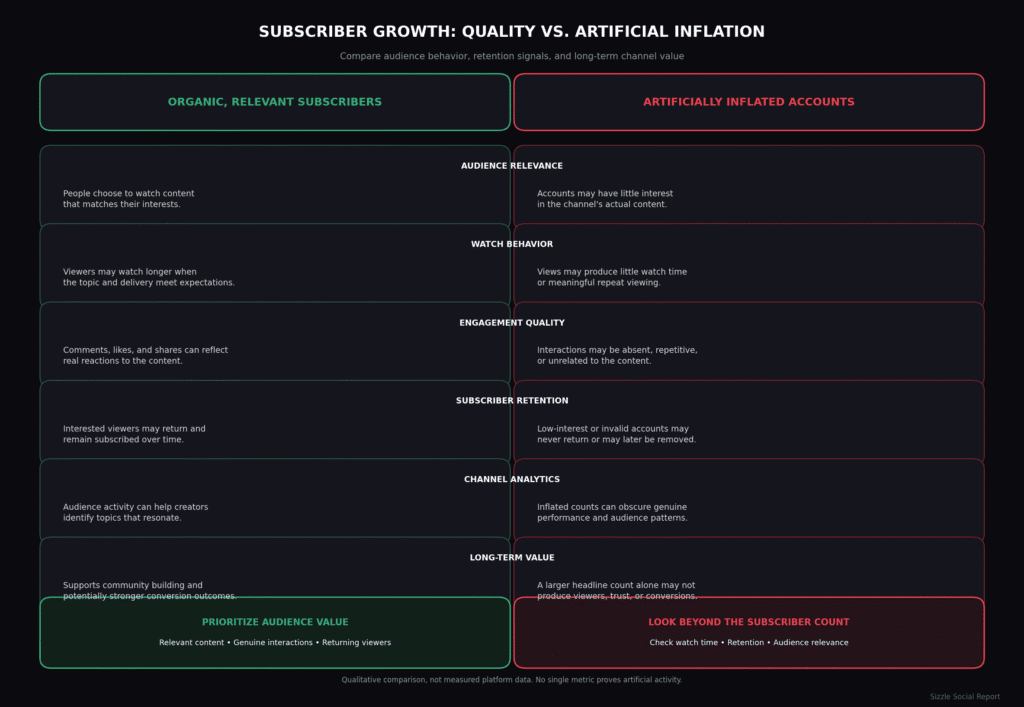
Understanding the difference between high-retention audience development and low-quality account inflation protects your channel reputation. Organic growth builds an audience that watches, likes, comments, and buys products, while low-quality bot inflation provides static numbers that carry zero commercial value.
| Growth Characteristic | Organic vs Low-Quality Inflation Impact |
| Long-term View Velocity | Organic builds steady views; Low-quality yields zero views |
| Channel Safety & Policy | Organic ensures 100% safety; Low-quality risks purges |
| Audience Interaction | Organic drives real comments; Low-quality stays silent |
| Monetization Eligibility | Organic passes review; Low-quality fails watch metrics |
Using legitimate growth platforms to establish baseline social proof differs significantly from buying low-quality bot accounts. Proper promotional services connect your channel with real users to ensure ongoing retention. To safeguard your channel integrity while building authority, explore options on the YouTube Likes Growth Platform.
To protect your channel assets and maintain long-term compliance with platform terms, review the clear distinctions separating genuine audience promotion from dangerous bot services:
- Platform Policy Compliance: Organic promotional services operate fully within YouTube terms of service, avoiding automated bot activity that triggers account terminations.
- Real User Engagement: Legitimate promotion delivers authentic human impressions, generating real watch time minutes and natural interaction signals.
- Algorithmic Retention Safety: Natural subscriber growth maintains healthy audience retention curves, supporting rather than harming future video recommendations.
- Monetization Audit Success: Channels utilizing legitimate promotion pass strict YouTube Partner Program manual reviews without facing rejection for artificial metrics.
- Long-Term Channel Equity: Real subscribers remain connected to your channel brand, contributing to long-term audience stability and revenue potential.
Prioritizing safe, legitimate growth channels protects your digital assets while establishing the visual social proof needed to attract organic viewers. Sustainable expansion relies on real human engagement across every stage of development.
How to Choose the Right YouTube Growth Strategy Based on Your Goals

Choosing the right growth strategy starts with aligning your channel analytics with real business objectives. Analyzing viewer data allows you to make informed adjustments that convert casual visitors into active channel advocates.
Before picking a specific tactic, assess what you actually want to achieve. If your priority is brand awareness, your approach will focus heavily on searchable titles, high-impact thumbnails, and broad topics designed for the recommendation feed. If your goal is direct monetization or community building, you need to shift toward deep viewer engagement, structured playlists, and consistent calls to action that turn passive watchers into loyal subscribers.
To execute this effectively, follow a systematic approach:
- Audit your current channel metrics: Review your YouTube Studio analytics to identify which videos currently drive the highest watch time and viewer retention.
- Define your primary objective: Decide whether you are optimizing for subscriber growth, direct product sales, or ad revenue.
- Align content formats with your goal: Match your video topics to what your target audience actually searches for or responds to.
- Monitor conversion patterns: Track how traffic sources shift over time as you test new optimization techniques.
- Refine your publishing schedule: Adjust your upload frequency based on when your specific audience is most active online.
Evaluating these performance indicators ensures your channel avoids stagnant view counts. Creators who match their execution methods to clear milestones build sustainable momentum that compounds over time.
How to Use YouTube Analytics to Understand Subscriber Growth and Viewer Behaviour

YouTube Studio Analytics provides actionable data on how viewers discover and interact with your channel. Monitoring audience retention graphs, traffic sources, and subscriber conversion rates highlights which content formats deliver the best returns.
- Check the Audience Tab to track the ratio of returning viewers versus new viewers.
- Review Traffic Sources to see if subscribers find your videos through notifications, search, or home feeds.
- Examine Audience Retention Curves to locate exact timestamps where viewers lose interest.
- Monitor Subscriber Conversion by Video to identify which uploads drive the most subscription clicks.
- Evaluate Device Type Analytics to optimize video formatting for mobile or desktop users.
Regular analysis of these data points eliminates guesswork. By doubling down on topics that consistently convert viewers into subscribers, you optimize your channel strategy for continuous expansion.
Also, to derive clear, actionable insights from your monthly YouTube Studio reports, implement these analytical review procedures across your channel dashboard:
- Identify Top Converting Content: Filter your video list by subscribers gained to pinpoint the exact topics and video formats that drive maximum audience conversion.
- Monitor Traffic Source Diversity: Ensure your traffic sources maintain a healthy balance between YouTube search, browse features, suggested videos, and external links.
- Analyze Average Percentage Viewed: Track retention curves across individual videos to identify structural editing mistakes or unengaging middle segments that cause viewer drop-off.
- Benchmark Returning Viewer Loyalty: Compare returning viewer trends week-over-week in the Audience tab to verify that your current content strategy retains existing subscribers.
- Track Click-Through Rates by Impression: Compare thumbnail CTR performance across different publishing windows to evaluate the visual effectiveness of your packaging choices.
Mastering these analytical tools provides complete clarity over your content performance. Data-driven adjustments replace speculation, allowing you to refine video production routines around proven audience preferences.
How to Diagnose Rising Subscribers but Declining Views

A channel experiencing rising subscriber counts alongside declining view totals usually suffers from an audience disconnect. This trend often emerges when a channel shifts its primary topic focus, leaving older subscribers uninterested in new video releases.
| Potential Issue | Corrective Channel Action |
| Topic Drift | Return to core topics that attracted original audience |
| Outdated Thumbnail Style | Modernize visual designs to match current trends |
| Low Click-Through Rate (CTR) | A/B test compelling title formats and hooks |
| Inactive Subscriber Inflation | Clean up subscriber base through targeted content |
Diagnosing this issue requires reviewing performance metrics across individual video releases. Aligning new uploads with core audience expectations restores click-through rates and brings view counts back in line with subscriber growth.
To systematically identify and resolve the root causes behind declining view velocity despite expanding subscriber totals, follow these diagnostic steps:
- Audit Content Topic Consistency: Compare recent video topics against your top historical uploads to determine if recent content strays too far from your channel’s core niche.
- Evaluate Thumbnail Competition: Compare your visual packaging against top-ranking videos in your niche to identify weak color contrast, unreadable text, or confusing imagery.
- Assess First-Minute Viewer Drop-Off: Examine retention graphs for the first 60 seconds of recent uploads to verify that your video openings immediately deliver on title promises.
- Review Notification Click Rates: Check the percentage of subscribers who open mobile notification alerts to determine if current upload titles lack urgency or relevance.
- Test Content Format Variances: Temporarily adjust video pacing, duration, or presentation style to identify which visual adjustments restore subscriber engagement.
Taking decisive corrective action restores alignment between your content output and subscriber expectations. Re-engaging your subscriber base revitalizes click-through rates and prompts recommendation algorithms to surface your videos to wider audiences.
Strategies for Attracting Active Viewers Instead of Focusing Only on Subscriber Count
Attracting active viewers requires designing content for search discovery and viewer intent rather than chasing passive subscriptions. Delivering immediate value in every video encourages viewers to engage deeply with your brand.
- Design custom thumbnails with clear contrast and readable text tailored for mobile screens.
- Craft video titles that match exact user search queries and high-intent keyphrases.
- Hook viewer attention in the first 10 seconds without long animated introductions.
- Structure video content using clear chapters to improve user experience and watch time.
- Ask direct, engaging questions during the video to encourage comments.
Active viewers drive algorithmic recommendations by generating strong engagement signals. When your videos generate high watch time and comment activity, YouTube automatically surfaces them to broader audiences across the platform.
To build an active, search-optimized content engine that attracts high-intent viewers consistently, incorporate these strategic execution techniques:
- Keyword-Focused Video Research: Use search suggestion tools to identify specific problem-based queries viewers enter daily within your target niche.
- Mobile-First Visual Design: Create high-contrast thumbnails optimized for display on small smartphone screens where the majority of video discovery occurs.
- Streamlined Introductions: Eliminate lengthy channel intros or generic greetings, jumping directly into topic resolution within the opening five seconds.
- Strategic Video Chaptering: Add detailed timestamp chapters to video descriptions to satisfy specific search queries and enhance search snippet indexing.
- Targeted Engagement Prompts: Ask viewers specific, easy-to-answer questions at natural transition points in your script to stimulate lively comment section activity.
Prioritizing active viewer satisfaction creates a self-reinforcing growth loop. High watch time and active comment sections signal exceptional video quality, prompting YouTube’s recommendation engine to promote your content to expanding non-subscribed audiences.
How to Build a Loyal YouTube Audience Beyond Vanity Metrics
Building a loyal audience requires viewing your channel as a comprehensive community platform rather than just a video repository. Establishing personal connection, consistent communication, and clear brand identity turns casual subscribers into long-term brand advocates.
Engage with your community regularly through the YouTube Community Tab by posting polls, behind-the-scenes photos, and channel updates. Host live streams to interact with viewers in real time, answering their questions directly. For Nigerian creators and business owners seeking to build comprehensive online visibility, incorporating proven strategies from the Sizzle Social Blog Guides provides actionable insights across all major platforms.
However, to expand your digital presence beyond basic subscriber tallies and build an enduring, highly resilient brand community, deploy these loyalty-building initiatives:
- Interactive Community Tab Polls: Publish weekly engagement polls, image updates, and discussion prompts on your Community feed to stay connected between video uploads.
- Regular Live Q&A Sessions: Host live streaming sessions where subscribers interact with you directly, answer community questions, and provide immediate feedback.
- Branded Community Terminology: Establish distinct channel references, inside jokes, or community titles that build a shared sense of identity among regular viewers.
- Multi-Channel Ecosystem Integration: Connect your video strategy with secondary communication channels like email newsletters, Telegram groups, or WhatsApp broadcast lists to retain direct audience contact.
- User-Generated Content Features: Showcase fan submissions, subscriber comments, or community success stories inside main channel uploads to recognize fan contributions.
Cultivating deep community loyalty transforms casual subscribers into passionate brand advocates. A loyal audience supports every new release, shares your content across external networks, and provides the sustained commercial foundation needed to build long-term digital authority.
Understand YouTube Subscribers to Measure Meaningful Channel Growth
Understanding the distinction between YouTube followers and subscribers provides the clarity needed to build a successful video channel. While casual searchers use both terms, focusing on genuine subscription metrics, audience retention, and active viewer engagement ensures your channel delivers measurable business value.
By designing targeted content, monitoring analytics, and building real audience connections, you transform basic view counts into long-term platform authority. Take charge of your video growth strategy today, apply these proven tactics, and build a thriving channel audience.
Frequently Asked Questions
Understanding channel terminology helps you navigate video growth metrics with complete clarity. Many creators who start out after running pages on Instagram or TikTok naturally look for YouTube followers when checking their channel performance. The platform built its entire infrastructure around subscribers, and this distinction changes how your audience interacts with every new upload. A YouTube subscriber represents an active member of your video audience who chooses to sign up for regular content updates. When a user clicks the subscribe button on your channel, the platform adds your video uploads directly to their dedicated subscription feed. This action signals to the algorithm that the user wants to see your content frequently. The platform also gives subscribers the option to turn on the notification bell, which sends instant notifications to their mobile devices whenever you publish new videos, go live, or share a community post. When creators, business owners, or digital marketers search for YouTube followers, they usually mean YouTube subscribers, since the search query stems from habits built on platforms like Instagram, Twitter, TikTok, and Facebook where every audience member falls under the follower category.
To understand how subscriptions function in practice across your entire publishing routine, consider the technical mechanics that occur behind the scenes whenever a user joins your channel base. Active feed syndication means every published long-form video or public Short appears in the dedicated Subscriptions tab of logged-in account holders instantly. Push notification priority means users choosing the personalized or all notification bell preferences receive automated push alerts and email summaries based on upload frequency. Homepage recommendation bias means YouTube’s recommendation engine evaluates subscriber watch activity during the first two hours of publication to determine whether to surface the video to broader non-subscribed audiences. Community post distribution means text updates, image polls, and behind-the-scenes teasers published via the Community Tab appear directly in subscriber home feeds, bypassing traditional video production requirements. Channel membership conversion means subscribers who engage consistently serve as the primary organic sales funnel for paid channel memberships, merchandise shelf offers, and direct fan funding options. Building a predictable publishing workflow depends heavily on cultivating this active subscriber layer rather than relying on temporary viral hits that produce unstable daily view curves.
When creators, business owners, or digital marketers search for YouTube followers, they usually mean YouTube subscribers. The search query stems from habits built on platforms like Instagram, Twitter, TikTok, and Facebook, where every audience member falls under the follower category. Beginners frequently use these terms interchangeably because they expect every social channel to run on identical terminology. Users coming from TikTok or Instagram default to searching for followers out of habit. New creators often search for follower packages when looking for channel growth services. Clients evaluating digital marketing agencies frequently ask for follower metrics on video campaigns. Non-technical business owners use the word follower to describe total audience reach across all platforms. Foreign brands looking for Nigerian influencers often write brief specifications asking for follower counts on YouTube. Understanding this terminology overlap helps you optimize your online content strategy. People searching for followers want the exact same outcome as those looking for subscribers, which includes more channel reach, active viewers, and consistent engagement.
Dissecting the specific roles of subscribers, casual viewers, and search-driven audiences clarifies how your channel generates traffic. A viewer is anyone who clicks on your video thumbnail and watches a portion of your content, regardless of whether they ever return. Subscribers represent your return audience, while the term followers remains an informal term used by cross-platform marketers. Viewers provide one-time or casual video consumption that generates immediate watch time. Subscribers represent dedicated content membership that drives initial organic velocity. Followers reflect general audience interest as informal cross-platform terminology. Viewers provide your initial view counts, but subscribers provide the recurring traffic that keeps your video metrics stable. A channel with high view counts but zero subscription growth relies entirely on external search traffic or lucky algorithmic recommendations. Conversely, a channel with consistent subscription conversion builds recurring value. Balancing these metrics ensures your video production efforts produce predictable returns over time. Single-session audiences land on individual uploads via external search results, shared links, or embedded articles, contributing immediate watch time without committing to future uploads.
YouTube adopted the subscription model from traditional broadcasting, magazines, and RSS feeds during its early development. The model treats every channel like an independent publication or television network where users subscribe to receive regular programming. This system sets a higher bar for audience engagement compared to simple follower mechanics found on microblogging platforms. Subscribing requires a conscious choice from the user to receive regular content updates rather than passively scrolling past individual posts. YouTube uses this high-intent signal to determine which channels merit placement on the platform’s valuable homepage recommendations. The subscription model protects user experience by ensuring users only see repeated content from channels they explicitly chose to support. High intent filtering means subscribing requires explicit user intent, creating a much stronger algorithmic signal regarding user interest than passive feed scrolling on alternative platforms. Long-term channel equity means the subscription model allows creators to build sustainable digital publications that maintain viewer value over years. Ecosystem monetization alignment means advertisers pay higher CPM rates on channels with active predictable subscriber bases.
A common source of confusion for channel owners involves the gap between total subscriber numbers and actual video views. A channel can display 50,000 subscribers while its new video uploads struggle to reach 1,000 views in their first week. This gap happens because user viewing habits evolve, notification settings change, and individual interests shift over time. Dormant user accounts mean subscribers remain listed but never log in. Notification settings turned off mean subscribers miss new upload alerts. Niche content pivots mean existing subscribers ignore new video topics. Algorithmic homepage filtering means the platform prioritizes new user interests over subscriptions. Active viewers represent the actual slice of your audience that opens YouTube, clicks your thumbnails, and watches your content during a given period. Subscriber count serves as a cumulative historical total, whereas active viewers reflect real-time interest. A data study from HubSpot highlights that active audience engagement correlates three times more strongly with brand conversion than total channel subscriber counts.
Subscribing to a channel does not guarantee that every subscriber watches every future upload. Modern users subscribe to dozens or even hundreds of channels, creating intense competition within their daily subscription feeds. YouTube’s recommendation system sorts these options, showing users content based on immediate viewing habits rather than raw subscription status. Viewers subscribe for one specific video viral hit but lose interest in subsequent upload topics. Users turn off mobile notification bells to avoid daily phone distractions. Subscribers watch YouTube on TV screens where subscription feeds receive less visual prominence. Channel owners change video formats, switching from short tutorials to long commentary without warming up the audience. Viewers naturally abandon old YouTube accounts and open new ones without migrating their old subscriptions. Recognizing these viewing habits helps you craft video content that captures attention regardless of feed placement. Consistently designing compelling thumbnails and clear titles keeps existing subscribers clicking back. To maintain high interest levels across your existing subscriber base, implement topic consistency within playlists, thumbnail and title cohesion, immediate video hooks, audience-warming announcements, and interactive calls-to-action.
Managing a channel successfully requires balancing multiple performance metrics rather than obsessing over a single number. Subscribers build long-term value, views provide immediate traffic, watch time measures audience interest, and monthly audience metrics show total brand reach across the entire platform. Views measure total video plays started and provide short-term audience attention. Watch time measures cumulative minutes consumed and serves as a key algorithmic ranking factor. Monthly audience measures unique accounts watching content and reflects total platform market reach. Subscribers represent dedicated community members and provide long-term channel equity. Watch time remains one of the heaviest weighted metrics in YouTube’s recommendation engine. A channel with 2,000 subscribers that maintains high watch time often outranks a channel with 20,000 subscribers that suffers from immediate viewer drop-off. Analyzing these metrics together in your channel analytics gives a complete picture of your video performance. View count velocity measures the speed at which an upload collects plays within its first 24 to 48 hours, signaling immediate topical relevance to recommendation algorithms. Subscriber conversion rate measures the percentage of unique viewers who choose to subscribe after watching specific uploads.
The relative importance of channel metrics depends entirely on your ultimate goal. A business using YouTube for lead generation needs qualified viewer conversions rather than high subscriber totals. Conversely, an entertainment creator targeting brand sponsorships needs high view counts and active comment sections to prove audience value. For monetized channels, average watch time and audience retention percentages directly dictate revenue potential. Advertisers pay higher rates on videos that keep viewers engaged for extended periods. E-commerce and lead generation channels should prioritize click-through rates on video description links, pinned comment interactions, and total qualified conversion actions over raw subscriber numbers. AdSense revenue maximization focuses primarily on average watch time, video length optimization, and mid-roll placement retention rates. Corporate sponsorship acquisition focuses on average view counts per video within 30 days of release, audience demographic alignment, and active comment section engagement. Brand authority and local influence emphasize local audience reach, returning viewer ratios, and high search placement rankings. Community-driven membership models prioritize super fan engagement, Community Tab interaction rates, and live chat participation levels.
Converting casual search traffic into loyal channel subscribers requires clear value delivery and strategic calls to action. Viewers need a compelling reason to subscribe beyond a generic reminder at the end of your video. Offer clear specialized value in your video niche so viewers know what to expect from future uploads. Insert verbal subscription reminders at natural transition points when engagement peaks. Use end screens and pinned comments to direct viewers to related video playlists. Maintain a consistent upload schedule so subscribers expect content on specific days. Respond directly to user comments in the first few hours after publishing a video. To establish a structured framework that reliably converts casual discovery traffic into permanent community members, implement a value-driven subscriptions hook that explains clearly within the first minute what ongoing value subscribers receive by joining your channel community. Configure end screens to feature a custom playlist link alongside a prominent subscription button during the final 15 seconds of every video. Write a thought-provoking pinned comment on new uploads that invites viewer feedback while offering a direct link to subscribe.
YouTube Shorts provide an effective channel discovery engine for acquiring subscribers rapidly. Short-form video content exposes your channel to thousands of new viewers daily through the dedicated Shorts feed, creating rapid subscription opportunities. Organizing long-form uploads into thematic playlists keeps incoming Shorts viewers watching your channel longer. Binge-watching sessions increase total channel watch time, triggering further algorithmic recommendations. According to data compiled by Statista, multi-format channels utilizing long-form videos alongside Shorts report up to 40% faster subscription growth rates than single-format channels. To maximize audience conversion across these distinct content formats, use the official related video link setting within YouTube Studio to redirect mobile Shorts viewers directly to full-length long-form tutorials. Create keyword-optimized playlists that organize single video topics into complete learning modules, increasing auto-play video consumption. Slice key highlight moments from long-form videos into high-energy Shorts that act as standalone teasers for full channel uploads. Use matching channel banners, color schemes, and custom thumbnail typography to build immediate brand recognition across both formats.
Focusing solely on increasing your subscriber count can create a deceptive metric environment. Acquiring thousands of subscribers through clickbait thumbnails or unrelated viral topics often results in an inactive subscriber base that ignores your core content uploads. When inactive subscribers ignore your new video notifications, YouTube interprets the low click-through rate as a sign of poor content quality. The algorithm then reduces homepage recommendations for that video, hurting your reach among non-subscribers as well. Low initial click-through rate occurs when new uploads are shown to inactive subscribers who decline to click, causing the video’s initial CTR score to drop significantly. Suppressed homepage impressions happen because poor subscriber engagement during early testing windows signals to the algorithm that the upload lacks broad viewer appeal. Skewed demographic analytics occur because attracting unrelated subscribers distorts channel demographic data. Diluted watch time averages happen because inactive subscribers who click out of curiosity but abandon the video within seconds destroy overall audience retention percentages. Focusing on attracting relevant aligned subscribers ensures your upload notification signals remain strong.
Understanding the difference between high-retention audience development and low-quality account inflation protects your channel reputation. Organic growth builds an audience that watches, likes, comments, and buys products, while low-quality bot inflation provides static numbers that carry zero commercial value. Organic growth builds steady views, ensures complete safety, drives real comments, and passes monetization review. Low-quality inflation yields zero views, risks purges, stays silent, and fails watch metrics. Using legitimate growth platforms to establish baseline social proof differs significantly from buying low-quality bot accounts. Proper promotional services connect your channel with real users to ensure ongoing retention. Platform policy compliance means organic promotional services operate fully within YouTube terms of service, avoiding automated bot activity that triggers account terminations. Real user engagement means legitimate promotion delivers authentic human impressions, generating real watch time minutes and natural interaction signals. Algorithmic retention safety means natural subscriber growth maintains healthy audience retention curves. Monetization audit success means channels utilizing legitimate promotion pass strict YouTube Partner Program manual reviews without facing rejection for artificial metrics.
A channel experiencing rising subscriber counts alongside declining view totals usually suffers from an audience disconnect. This trend often emerges when a channel shifts its primary topic focus, leaving older subscribers uninterested in new video releases. Diagnosing this issue requires reviewing performance metrics across individual video releases. Aligning new uploads with core audience expectations restores click-through rates and brings view counts back in line with subscriber growth. Audit content topic consistency by comparing recent video topics against your top historical uploads to determine if recent content strays too far from your channel’s core niche. Evaluate thumbnail competition by comparing your visual packaging against top-ranking videos in your niche to identify weak color contrast, unreadable text, or confusing imagery. Assess first-minute viewer drop-off by examining retention graphs for the first 60 seconds of recent uploads to verify that your video openings immediately deliver on title promises. Review notification click rates to determine if current upload titles lack urgency or relevance. Test content format variances by temporarily adjusting video pacing, duration, or presentation style.
YouTube Studio Analytics provides actionable data on how viewers discover and interact with your channel. Monitoring audience retention graphs, traffic sources, and subscriber conversion rates highlights which content formats deliver the best returns. Check the Audience Tab to track the ratio of returning viewers versus new viewers. Review Traffic Sources to see if subscribers find your videos through notifications, search, or home feeds. Examine Audience Retention Curves to locate exact timestamps where viewers lose interest. Monitor Subscriber Conversion by Video to identify which uploads drive the most subscription clicks. Evaluate Device Type Analytics to optimize video formatting for mobile or desktop users. Building a loyal audience requires viewing your channel as a comprehensive community platform rather than just a video repository. Engage with your community regularly through the YouTube Community Tab by posting polls, behind-the-scenes photos, and channel updates. Host live streams to interact with viewers in real time, answering their questions directly. Establishing personal connection, consistent communication, and clear brand identity turns casual subscribers into long-term brand advocates. A loyal audience supports every new release and provides the sustained commercial foundation needed to build long-term digital authority.