Every online business owner in Lagos, Abuja, or Port Harcourt faces the exact same challenge: turn promotional expenses into direct profit. Running a business requires constant cash flow, yet many merchants watch money vanish into digital campaigns without receiving a single WhatsApp message or web order.
A successful campaign rests on a simple formula. A business presents a clear offer, targets people who actually need the solution, and provides an easy way to complete the purchase. When these elements align, High-Converting Facebook Ads shift from an unpredictable gamble into a dependable revenue pipeline.
Digital promotions fail for predictable reasons. Poor audience selection, weak offers, or complicated checkout steps quickly drain marketing budgets. Local merchants often spend thousands of Naira on promotions that reach buyers with zero intent to purchase.
High-Converting Facebook Ads: What Makes a Campaign Convert?

Achieving high digital returns requires a systematic transition from vanity metrics to actual bottom-line revenue. Many account managers judge campaign performance by high impression volumes, broad user reach, or hundreds of surface-level post likes. While seeing thousands of double-taps provides temporary social proof, these superficial metrics do not cover operational expenses or restock inventory. True campaign success centers on driving specific, profitable user actions at a sustainable price point.
Establishing profitable marketing operations demands continuous alignment between acquisition costs and long-term customer value. When prospective buyers encounter an ad, the initial impression must immediately communicate tangible value while minimizing physical and digital friction. Establishing initial social validation often accelerates user trust during competitive ad cycles. Merchants who increase Facebook page engagement through targeted SMM services frequently notice an immediate bump in organic user interaction, making cold traffic significantly more receptive to promotional messages.
Strategic account management relies heavily on understanding platform algorithm mechanics. Meta prioritizes content that generates immediate user interactions, delivering lower bidding costs to advertisers whose ad units hold consumer attention. Combining well-structured campaign budgets with authentic platform engagement creates a compounding advantage that lowers customer acquisition overhead across competitive industries.
Building a campaign setup that consistently turns viewers into paying clients requires strict adherence to core operational principles. Before launching any new promotional campaign, local business owners should evaluate their readiness against specific structural requirements:
- Value proposition clarity: The underlying offer addresses a urgent, high-priority problem for the targeted demographic without confusing messaging.
- Creative disruption: Visual assets immediately stop feed scrolling while establishing genuine credibility within the first three seconds.
- Seamless path to purchase: Destination environments, such as a custom landing page or a WhatsApp chat window, remove buy hesitation completely.
- Algorithmic signals: Campaign settings allow Meta’s machine learning systems to optimize delivery toward users showing high purchase intent.
- Clear economic guarantees: Transparent pricing, physical delivery timelines, and risk-reversal guarantees protect overall profit margins.
Understanding these foundational requirements ensures that every promotional Naira spent targets meaningful business growth. When marketers shift away from superficial metrics and focus entirely on structural alignment, paid campaigns turn into predictable customer acquisition tools.
What Defines a High-Converting Facebook Ad Campaign?

A high-converting campaign maintains an optimal balance between Customer Acquisition Cost (CAC) and Return on Ad Spend (ROAS). Achieving this level of marketing efficiency requires structural alignment across four core pillars:
- Offer Alignment: The underlying product or service directly addresses an urgent, high-priority problem for the targeted demographic.
- Creative Relevance: Visual assets and primary body copy immediately stop feed scrolling and spark genuine user interest.
- Frictionless Path: The destination experience, whether a landing page or a messaging screen, removes all buy hesitation.
- Accurate Delivery: The Meta auction algorithm delivers promotional units strictly to users showing high intent.
- Value Messaging: Clear communication of pricing, benefits, and physical guarantees protects overall profit margins.
Building campaigns around these structural requirements transforms casual ad viewers into paying clients. Continuous testing ensures that every allocated marketing dollar contributes directly to predictable business growth.
Beyond basic campaign structure, successful conversion strategies demand a deep understanding of customer psychology. Buyers in major commercial centers evaluate risk heavily before initiating contact or entering payment details.
An ad unit must establish credibility rapidly through precise copy, high-quality media assets, and clear value statements. If any element of the promotional creative feels deceptive or unclear, users scroll past without engaging. High-converting campaigns bridge the gap between initial attention and final payment by offering immediate clarity at every step of the funnel.
Facebook Ad Objectives That Drive Sales, Leads, and Enquiries
Selecting an inappropriate campaign objective during account setup stands as a primary cause of wasted ad spend. Meta’s delivery engine optimizes distributions based strictly on the core target chosen at the ad set level. Choosing superficial options like “Awareness” or “Traffic” forces the platform to serve ads primarily to casual platform browsers who click links but rarely complete checkout forms.
| Campaign Objective | Primary Business Outcome | Best Use Case |
| Sales | Direct web orders, completed payments, and catalog purchases. | E-commerce stores, digital products, and automated checkouts. |
| Leads | Contact information collection via instant forms or web pages. | Service providers, real estate firms, and high-ticket consulting. |
| Engagement (Messages) | Direct conversations starting on WhatsApp, Messenger, or IG. | Local service providers, conversational sales, and direct consultations. |
Aligning business goals directly with technical platform objectives ensures that ad spend reaches active shoppers. According to global performance benchmarks published by WordStream, the average conversion rate across all industries for Facebook ads stands at 9.21%, proving that properly targeted direct-response campaigns consistently outperform generic awareness efforts.
Selecting the right campaign objective requires aligning corporate revenue goals with Meta’s user classification systems. Meta categorizes platform users based on historical behaviors, such as frequent link clicking, form submitting, or direct messaging. Selecting a Sales objective instructs the algorithm to search specifically for individuals who routinely complete online purchases. Conversely, selecting a Engagement objective targets users known for commenting or liking posts, which rarely translates into immediate sales volume.
However, to maximize operational efficiency, local vendors should select campaign objectives based on their actual sales infrastructure. Businesses with fully functional e-commerce websites should leverage the Sales objective paired with Meta Pixel events. Service-based providers or high-ticket sellers who close transactions via conversation should utilize Engagement objectives directed toward WhatsApp or Messenger. Choosing the correct technical objective directs algorithmic optimization toward generating actual business revenue rather than superficial platform activity.
Facebook Ads vs Boosted Posts for Conversion Goals
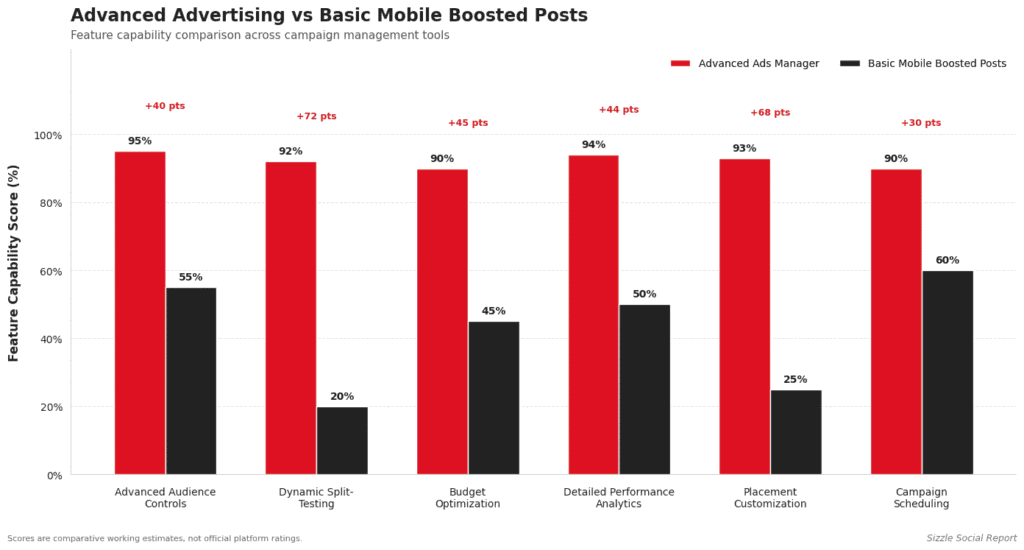
Tapping the native “Boost Post” button on mobile feeds offers speed, but lacks the granular controls required for scalable performance marketing. Boosted posts default heavily toward broad engagement metrics, generating casual comments from users who rarely buy.
| Capability | Meta Ads Manager | Boosted Posts |
| Objective Selection | Full suite (Sales, Leads, Conversions, CAPI) | Limited (Page Likes, Basic Engagement) |
| Audience Control | Deep interest stacking, Custom & Lookalikes | Basic age, gender, and broad location radius |
| Creative Testing | Dynamic creative testing (DCT) & Multiple formats | Single post asset boosting only |
| Budget Control | ABO & CBO with strict spend limits | Simple daily or lifetime spend caps |
Managing campaigns through Meta Ads Manager provides complete command over placement distributions, bidding strategies, and ad variations, laying the ground for long-term scalability.
While boosting posts appears convenient for busy entrepreneurs, it strips away essential direct-response tools. Boosted posts limit creative testing to a single static asset or existing video post. In contrast, Meta Ads Manager allows media buyers to build Dynamic Creative Testing (DCT) environments, testing multiple visual assets, primary texts, headlines, and call-to-action buttons simultaneously within a single ad set.
Additionally, Ads Manager provides detailed placement control across feed, stories, reels, and marketplace inventory. Boosted posts distribute budgets across automated placements without clear performance controls, leading to inefficient spend on low-converting inventory. Serious brands relying on paid digital channels for consistent growth must utilize Ads Manager to maintain absolute control over audience targeting, visual delivery, and conversion tracking.
Key Metrics for Measuring Facebook Ad Conversion Performance
Analyzing core performance metrics isolates underlying funnel bottlenecks before they drain daily budgets:
- Click-Through Rate (CTR Link): Measures the percentage of viewers who click outbound destination links.
- Cost Per Click (CPC): The average expense incurred for every outbound link click generated.
- Conversion Rate (CVR): The percentage of landing page visitors who complete desired purchasing actions.
- Cost Per Acquisition (CPA): The true advertising expense allocated to secure a single paying customer.
- Return on Ad Spend (ROAS): Gross revenue generated divided strictly by total ad spend invested.
Tracking these numbers provides clear data regarding whether ad creatives, audience targeting, or landing pages require optimization.
Relying on high-level performance numbers without understanding their relationships makes campaign diagnostic work difficult.
For example, a high Click-Through Rate combined with a low Conversion Rate indicates that ad creatives are successfully attracting attention, but the destination landing page fails to deliver on the original promise. Conversely, a high Cost Per Click paired with an exceptionally high Conversion Rate suggests that while ad delivery costs are elevated, incoming traffic holds strong purchase intent.
Marketers must evaluate these metrics holistically to make data-backed optimizations. Regularly auditing campaign indicators allows media buyers to identify decaying creative assets, audience fatigue, or technical landing page friction early. By making systematic adjustments based on clear data signals, brands maintain stable acquisition costs and maximize return on ad spend over extended campaign lifecycles.
Facebook Ad Creative and Copywriting That Convert

Developing effective ad visual assets and direct-response text requires an understanding of consumer psychology. Feed viewers scroll through hundreds of meters of content daily, making aggressive visual disruption necessary for capturing attention. Ad copy must establish immediate context, validate consumer pain points, and present a compelling solution before the user scrolls past.
Establishing strong account authority amplifies overall creative performance. Brands that leverage proven Instagram growth services to elevate page visibility often experience higher click-through rates on their ad creatives. Prospective buyers evaluate profile credibility before making purchase decisions, making overall brand presentation a core factor in performance ad conversions.
Focusing on clarity rather than complex design produces superior performance results across mobile placements. Visual assets should display well on small screens, feature high-contrast text overlays, and highlight immediate practical value. Combining strong visual hooks with structured direct-response copywriting turns standard ad units into reliable customer acquisition channels.
Creating high-converting visual assets requires testing various creative formats systematically to determine what resonates best with cold traffic. Media buyers should structure creative variation tests around distinct user preferences:
- User-Generated Content (UGC): Authentic, mobile-shot product demonstrations built by real users build immediate trust.
- High-Contrast Static Graphics: Bold visual layouts displaying key benefits and price points capture quick scrolling attention.
- Problem-Solution Video Reels: Short 9:16 vertical video narratives showing clear product transformations within 15 seconds.
- Carousel Product Showcases: Interactive multi-card units allowing users to browse through product collections seamlessly.
- Social Proof Highlights: Customer testimonial overlays and star-rating visuals that ease buyer skepticism instantly.
Deploying a diverse set of creative formats ensures your campaigns reach broad audience segments across varied placement environments. Regularly refreshing creative assets prevents audience fatigue and keeps acquisition costs predictable.
Facebook Ad Hooks That Capture Attention and Encourage Action

The first three seconds of a video or the opening text line of a static ad dictates whether a user stops scrolling. Effective hooks target specific user scenarios, call out explicit industry challenges, or dismantle common assumptions.
Pattern Interrupt Framework
- Weak Hook: We offer premium business accounting tools for Nigerian business owners.
- High-Converting Hook: Stop manually balancing your business accounts in Excel every single evening.
Direct Audience Identification Framework
- Weak Hook: Discover our brand-new line of organic skincare products today.
- High-Converting Hook: Attention Lagos boutique owners: How are you managing peak holiday inventory delivery?
Problem-State Callout Framework
- Weak Hook: Professional digital marketing agency setup available now.
- High-Converting Hook: Tired of spending your daily ad budget on clicks that never buy?
Stopping feed scrolling requires testing multiple hook concepts systematically against cold audiences.
Crafting effective hooks requires a thorough understanding of target market frustrations. A hook should never sound like a traditional corporate broadcast; it must read or sound like a direct conversation between peers. By calling out specific pain points immediately, an ad filters out uninterested viewers while locking in the attention of high-intent buyers.
Furthermore, testing creative hooks systematically allows media buyers to discover high-performing messaging concepts without changing underlying product offerings. Changing the first line of ad copy or the initial two seconds of a video ad can double click-through rates overnight. Continuous hook testing remains the single most effective lever for lowering overall cost-per-click across competitive social feeds.
High-Converting Facebook Ad Images, Videos, and Formats
Selecting high-performing creative formats directly impacts user engagement across different feed placements:
- User-Generated Content (UGC): Mobile-shot product unboxing videos build strong authentic proof.
- Before-and-After Comparisons: Side-by-side visual split screens clearly demonstrate quick problem resolution.
- Carousel Presentations: Multi-card ad units showcase product variations or step-by-step usage guides.
- Short-Form Reels (9:16): Vertical video demonstrations highlight immediate product benefits within 15 seconds.
- Static Visual Callouts: Bold imagery paired with minimal text overlays delivers simple messaging quickly.
Deploying diverse visual assets ensures campaigns capture user attention across varied feed environments.
Matching visual assets with mobile user consumption habits is essential for maintaining strong campaign engagement. Over 90% of Facebook users access the platform via mobile devices, meaning ad creatives must be designed for vertical screen orientation and silent viewing. Adding clear captions, high-contrast typography, and explicit visual cues ensures your message gets across even when audio is muted.
Additionally, leveraging high-quality visual production without appearing overly corporate helps maintain authenticity. Overly polished television-style commercials often get ignored on social feeds because users recognize them immediately as intrusive marketing. Raw, native-feeling media assets perform significantly better because they blend seamlessly into user feeds while maintaining visual interest.
Writing Facebook Ad Copy That Turns Clicks Into Customers

Persuasive direct-response copy guides prospect awareness smoothly from initial interest to direct action using tested structural frameworks. Data compiled in HubSpot’s State of Marketing Report highlights that targeted call-to-action copy and direct-response messaging increase overall buyer conversion rates by up to 202%.
PAS Copywriting Application:
- Problem: Running out of inventory during high-volume sales weekends costs your business significant revenue.
- Agitate: Nothing alienates a ready customer faster than encountering an “Out of Stock” notice. While waiting weeks for fresh inventory arrivals, prospective buyers turn directly to competing alternatives.
- Solution: Our inventory tracking system monitors stock movements automatically and reorders products before levels drop. Tap “Shop Now” to secure your setup today.
Pairing structured copy with clear calls-to-action ensures users understand their immediate next steps.
Effective copywriting relies on absolute clarity rather than clever wordplay. Every sentence must drive the reader toward taking action, removing doubt, and building trust. Utilizing proven copy frameworks like Problem-Agitate-Solution (PAS) or Attention-Interest-Desire-Action (AIDA) keeps body copy structured and persuasive.
In addition, ad copy must incorporate strong social proof, address common buying objections, and clearly state physical delivery details. When prospective buyers understand exactly what they are purchasing, how much it costs, and how quickly it will arrive, buying friction drops significantly. Including clear call-to-action statements directs users toward the destination link without ambiguity.
Matching Your Ad Creative to Your Offer and Audience Needs
Aligning ad creative styles with market awareness stages prevents ad budget waste across cold and warm user segments:
Delivering targeted messaging matched to user familiarity optimizes overall ad spend performance.
Serving identical creative messaging across all funnel stages leads to inefficient ad spend. Cold audiences who have never interacted with your brand require educational content that introduces problem solutions clearly. Showing aggressive retargeting offers or direct payment requests to cold traffic often results in low engagement and elevated acquisition costs.
Conversely, warm and hot audiences who have visited your site or added products to cart require social validation, handling of specific objections, and direct call-to-action offers. Tailoring creative strategies to match audience familiarity speeds up buying decisions and maximizes campaign profitability.
Facebook Ad Targeting and Landing Pages That Drive Conversions

High-performing ad creatives require precise audience delivery to produce consistent sales results. While Meta’s machine learning systems excel at broad audience targeting, building structured core targeting configurations provides essential baseline delivery parameters. Connecting ads with matching landing pages ensures prospective buyers experience zero friction during their purchase journey.
Establishing strong cross-platform social proof supports overall audience targeting efforts. Content creators who use dedicated TikTok growth services to build real engagement often see improved audience retention across integrated multi-channel ad campaigns. Social validation reassures prospective buyers across every stage of the digital sales conversion funnel.
Optimizing mobile destination experiences remains critical for conversion success. High page loading speed, clear typography, and accessible action buttons keep incoming traffic focused on completing order forms. Matching ad messaging directly with landing page content creates a cohesive customer journey that maximizes advertising returns.
To ensure paid traffic converts efficiently upon reaching your destination site, media buyers must optimize landing pages around core user experience principles:
- Instant page loading: Optimizing images and code scripts ensures destination pages load in under two seconds on mobile networks.
- Above-the-fold value: Displaying core headlines, key benefits, and prominent order buttons immediately without requiring scrolling.
- Message match continuity: Aligning landing page headlines, visual themes, and pricing directly with original ad creatives.
- Embedded social proof: Displaying verified customer reviews, star ratings, and real product images near payment forms.
- Simplified checkout forms: Eliminating unnecessary form fields to accelerate order completion speeds for mobile users.
Optimizing landing pages around these structural requirements prevents user drop-off and cart abandonment. A seamless transition from social feed ad to web checkout turns casual clicks into verified revenue.
How to Target High-Converting Facebook Audiences
Structuring precision audience configurations ensures Meta’s auction engine targets active buyers:
- Broad Audience Delivery: Leaving demographic fields open allows machine learning systems to filter users via creative signals.
- Interest Group Stacking: Bundling related competitor brands, relevant media publications, and core niche keywords builds defined targeting pools.
- Behavioral Filtering: Narrowing delivery by platform activities targets frequent online buyers and active digital payments users.
- Geographic Boundary Precision: Setting targeted delivery radii around major commercial centers concentrates spend within core logistics coverage areas.
- Device Demographics: Segmenting audiences by mobile operating systems isolates users matching target purchasing profiles.
Systematic audience structure ensures ad budgets target users most likely to convert.
Modern audience targeting relies on a combination of broad algorithm delivery and manual interest parameters. Leaving demographic parameters broad allows Meta’s machine learning models to analyze creative content and serve ad units to users most likely to engage. The visual hooks and primary copy act as the primary targeting filter, attracting qualified prospects naturally.
However, stacking detailed interest groups remains effective for niche industries or localized service offerings. Combining relevant keywords, industry publications, and competitor brand interests creates qualified target pools for new campaign launches. Testing broad delivery against interest-stacked audiences helps identify the most cost-effective acquisition structures for your specific market.
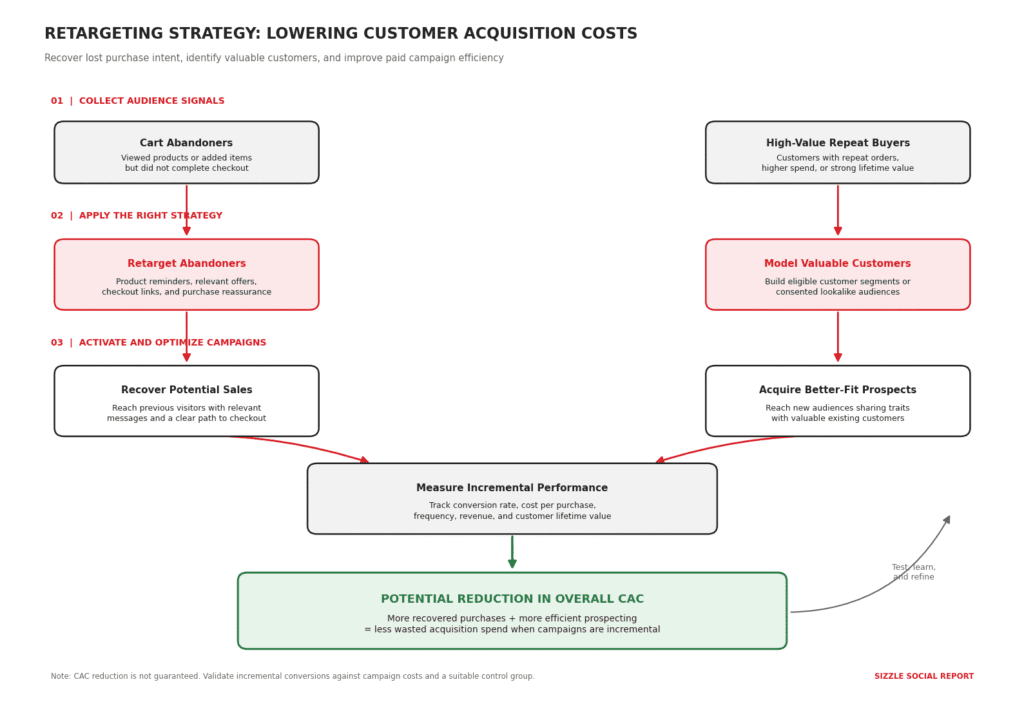
Using Retargeting and Lookalike Audiences to Improve Results
Warm audiences continuously generate the highest returns on ad spend by engaging users who already know your brand:
Custom Retargeting Configurations
- Site visitors who added items to cart in the last 14 days without completing checkout.
- Engaged Instagram profile visitors who sent direct messages over the past 30 days.
- Video viewers who watched over 50% of top-of-funnel demonstration ad units.
Lookalike Expansion Modeling
- 1% Lookalikes built strictly from high-value repeat purchaser pixel data.
- 2% Lookalikes sourced from verified custom lead form submitters.
- 3% Lookalikes modeled from highly engaged profile users.
Re-engaging warm prospects recovers potential lost revenue while maintaining lower overall acquisition expenses.
Retargeting campaigns act as a safety net for potential sales lost during initial ad impressions. Prospective buyers often abandon checkout forms due to external distractions, timing constraints, or temporary indecision. Serving retargeting ad units featuring customer reviews, FAQs, or limited-time incentives encourages these high-intent users to complete their purchase.
Lookalike audiences allow businesses to scale acquisition efforts by identifying platform users who share behavioral patterns with existing customers. Sourcing Lookalike models from high-quality seed data, such as repeat buyers or high-order-value clients, provides Meta’s algorithm with strong predictive signals. Scaling spend through verified Lookalike segments supports predictable account growth over time.
Creating Landing Pages That Match Your Facebook Ad Offer

A seamless connection between ad creative assets and destination landing pages prevents user drop-off and cart abandonment:
Destination Page Optimization Rules:
- Page Speed Optimization: Compress image sizes to ensure pages load under two seconds on standard mobile connections.
- Mobile-First Layouts: Position core value headlines, product images, and buy buttons prominently above the fold screen area.
- Visual Message Consistency: Mirror the imagery, color schemes, and headline copy used within original ad units.
- Social Proof Integration: Embed verified client reviews, star ratings, and unboxing images near main call-to-action elements.
- Frictionless Forms: Minimize required contact fields on order forms to accelerate user checkout speed.
Maintaining page design consistency builds immediate buyer confidence and increases completed transactions.
Landing page design must prioritize mobile usability above visual clutter. Incoming mobile users expect fast loading speeds, simple site navigation, and readable typography. Placing key value propositions, clear pricing, and order buttons high on the page ensures users grasp the core offer immediately without scrolling endlessly.
Additionally, visual and textual continuity between ad units and landing pages is vital for maintaining trust. If an ad features a specific product discount or headline, the landing page must display that exact offer prominently. Discrepancies in pricing, images, or messaging create doubt, causing incoming visitors to abandon the page immediately.
Turning Facebook Ad Clicks Into WhatsApp Enquiries and Sales
Directing ad traffic directly into messaging applications works exceptionally well for high-ticket services and custom sales that benefit from personal interaction:
Optimizing WhatsApp Conversation Funnels:
- Pre-filled Text Starters: Configure pre-set chat messages inside Meta Ads Manager to track origin ads easily.
- Automated Instant Greetings: Deploy immediate automated replies to welcome prospects outside standard operating hours.
- Rapid First-Response Speed: Assign dedicated team members to handle incoming leads within five minutes of arrival.
- Direct Payment Collection: Provide instant payment links inside the chat to close sales immediately.
- Structured Follow-up Sequences: Send helpful follow-up messages to warm prospects within 24 hours to recover pending orders.
Conversational selling builds direct customer rapport and converts hesitant browsers into verified buyers.
Click-to-WhatsApp campaigns excel in markets where buyers value direct conversation before sending payments. Direct messaging allows sales teams to address specific buyer concerns, clarify custom requirements, and build personal rapport. Configuring automated pre-filled greeting texts ensures prospective customers initiate conversations with structured inquiries.
To maintain high conversion rates across messaging channels, response speed is critical. Inquiries handled within five minutes show significantly higher closing rates compared to leads left waiting for hours. Utilizing quick-reply templates, dedicated sales reps, and structured follow-up messages turns casual chat enquiries into verified sales orders.
Facebook Conversion Tracking, Testing, and Campaign Optimization

Long-term campaign stability requires robust data tracking and continuous creative testing. Relying purely on basic client-side pixel tracking often results in missing conversion data due to browser privacy restrictions and network interruptions. Combining server-side tracking tools with client-side pixels ensures accurate data attribution for Meta’s delivery algorithms.
Supporting campaign delivery with strong social proof across platforms strengthens underlying account performance metrics. Channel managers who leverage YouTube growth services to improve video reach build comprehensive cross-platform brand authority that enhances ad performance. Establishing brand trust across multiple touchpoints lowers overall customer acquisition costs over time.
Scaling campaign spend safely requires structured budget adjustments. Increasing daily spend rapidly can trigger platform re-learning phases, raising ad delivery costs. Applying disciplined budget scaling frameworks protects performance stability while driving higher daily sales volumes.
- Server-side integration: Setting up Meta Conversions API alongside client-side Pixel tracking to protect attribution accuracy.
- Controlled split-testing: Isolating individual variables like ad hooks, body copy, or landing pages during testing phases.
- Budget allocation management: Utilizing ABO for early creative testing before moving winning assets into scaling CBO environments.
- Incremental budget scaling: Increasing daily ad set budgets by 15% to 20% every 48 hours to prevent algorithmic resetting.
- Performance diagnostics: Monitoring funnel metrics systematically to isolate high CPMs, low CTRs, or landing page drop-offs.
Adhering to these optimization protocols ensures ad budgets are spent efficiently. Systematic monitoring protects account profitability while enabling consistent campaign expansion.
Using Meta Pixel and Conversions API to Track Conversions
Implementing the Conversions API (CAPI) alongside the standard Meta Pixel protects tracking accuracy and attribution data:
Core Standard Tracking Events:
- PageView: Fires automatically when a user visits any landing page.
- ViewContent: Triggers when a user views a specific product details page.
- AddToCart: Signals when a prospective buyer places items into their shopping cart.
- InitiateCheckout: Tracks when a user begins entering payment details.
- Purchase: Captures completed payment transactions, returning explicit sales order value and currency parameters.
Accurate server-side tracking ensures Meta’s engine receives clear conversion data to optimize campaign distribution effectively. Official engineering documentation from Meta for Developers demonstrates that integrating server-side Conversions API alongside client-side Pixel reduces attribution loss and lowers average cost-per-action by over 13%.
Relying solely on web browser pixel tracking leads to significant data loss due to ad blockers, network drops, and browser security features like Apple’s iOS privacy updates. Missing conversion events prevents Meta’s delivery algorithm from identifying actual buyers, resulting in inefficient ad delivery. Server-side tracking via Conversions API routes purchase events directly from your web server to Meta’s database, ensuring data accuracy.
Combining browser and server tracking through Event Deduplication gives Meta’s machine learning models complete performance data. Accurate event reporting improves custom audience retargeting, enhances Lookalike audience modeling, and allows algorithmic delivery systems to find high-value customers predictably.
Facebook Ad A/B Testing for Creative, Copy, and Audiences
Isolating performance variables through controlled testing prevents budget waste and identifies high-performing creative combinations:
- Single Variable Testing: Test three distinct visual approaches against an identical target audience and body copy combination.
- Copy Variant Experiments: Test short, punchy benefit statements against longer narrative stories while using a proven winning visual asset.
- Audience Comparison Split-Tests: Deliver identical winning ad assets across broad targeting configurations and stacked interest groups.
- Landing Page Variations: Test standard long-form product pages against direct checkout forms to identify conversion preference.
- Offer Hook Variations: Test percentage discount incentives against free delivery promotions to measure buyer response.
Systematic testing identifies high-converting ad assets, laying a clear path for confident campaign scaling.
Testing campaign variables without clear structure often leads to inconclusive results and wasted budgets. Media buyers should test one element at a time, keeping all other variables constant to isolate what drives performance changes. Testing distinct visual concepts, such as UGC video against static graphics, yields actionable data regarding audience preference.
Once a winning creative format is identified, focus on optimizing copy variations, headline hooks, and calls-to-action. Moving winning assets into dedicated scaling campaigns ensures top-performing ads receive the majority budget allocation while fresh concepts undergo continuous testing in separate testing structures.
Optimizing Facebook Ad Budgets Without Wasting Spend
Managing marketing budgets requires adjusting bidding options and scaling budgets systematically:
ABO vs. CBO Deployment Strategy
Use Ad Set Budget Optimization (ABO) during creative testing phases to guarantee equal spend distribution across new ad concepts. Shift to Advantage Campaign Budget Optimization (CBO) during scaling phases, letting Meta’s algorithm allocate budget dynamically to winning ad sets.
Disciplined Budget Scaling Protocols
Scale high-performing ad sets by increasing daily budgets by 15% to 20% every 48 hours. Incremental budget increases prevent campaigns from re-entering unpredictable learning phases.
Strategic Budget Reallocation
Identify underperforming ad sets quickly and reallocate budget toward campaigns operating safely below target Cost Per Acquisition (CPA) thresholds.
Scaling ad budgets requires patience and disciplined tracking. Rapid budget increases often disrupt Meta’s optimization algorithms, forcing ad sets back into learning phases and spiking acquisition costs. Scaling daily spend incrementally preserves performance stability while increasing order volumes safely.
Additionally, knowing when to pause underperforming ads is just as critical as scaling winning assets. Establish clear performance thresholds based on target Cost Per Acquisition. If an ad set spends two to three times your target acquisition cost without generating conversions, pause the asset and reallocate capital toward winning ad variations.
Diagnosing Common Conversion Problems and Improving Campaign Performance
Resolving campaign delivery issues systematically restores campaign profitability:
| Observed Symptom | Primary Root Cause | Immediate Corrective Action |
| High CPM Rates | Low creative relevance or overly narrow targeting parameters. | Broaden target demographic fields; test fresh visual hooks. |
| Low CTR (<1.0%) | Weak initial visual hooks or visual audience fatigue. | Deploy high-contrast video openers; refresh primary ad copy. |
| High Clicks, Zero Sales | Slow page speed or ad-to-page messaging mismatch. | Compress site imagery; align landing page headlines with ad hooks. |
| Declining ROAS | Audience creative fatigue across warm retargeting pools. | Introduce new UGC video formats and updated product imagery. |
Applying structured troubleshooting methodology protects daily ad spend investments and maintains consistent account profitability.
Troubleshooting declining performance starts with analyzing funnel metrics systematically from top to bottom. If CPM rates spike unexpectedly, broaden targeting fields or refresh visual assets to improve creative relevance scores. When link click-through rates drop below 1%, focus on updating visual hooks and opening copy lines to recapture scrolling feed attention.
If campaigns generate high click volumes but fail to yield actual sales, inspect your landing page experience. Audit site load speed, verify mobile layout presentation, and confirm that checkout form fields operate properly. Resolving destination friction quickly restores sales velocity and protects daily promotional investments.
Let’s Build A Facebook Campaign That Converts
Consistently high-converting Facebook ad campaigns rely on strategic execution rather than luck or temporary platform tricks. Building sustainable campaign profitability demands a disciplined approach: aligning real business goals, producing persuasive ad creatives, targeting high-intent audiences, and maintaining server-side tracking infrastructure.
Treat every campaign as an evolving marketing system built around continuous testing and optimization. Monitor performance metrics continuously, fix funnel friction points quickly, and allocate ad spend toward top-performing ad assets. Applying these core direct-response principles allows brands to build scalable ad campaigns that generate steady business growth and reliable long-term profits.
Frequently Asked Questions
A high-converting Facebook ad campaign maintains an optimal balance between Customer Acquisition Cost and Return on Ad Spend. Achieving this balance requires structural alignment across several core pillars. First, offer alignment: the product or service directly addresses an urgent, high-priority problem for the targeted demographic. Second, creative relevance: visual assets and body copy immediately stop feed scrolling and spark genuine user interest. Third, a frictionless path: the destination experience, whether a landing page or a messaging screen, removes all buy hesitation. Fourth, accurate delivery: the Meta auction algorithm delivers promotional units strictly to users showing high intent. Fifth, value messaging: clear communication of pricing, benefits, and guarantees protects overall profit margins. Beyond structure, successful campaigns demand an understanding of customer psychology. Buyers in major commercial centers evaluate risk heavily before initiating contact or entering payment details. An ad unit must establish credibility rapidly through precise copy, high-quality media assets, and clear value statements. High-converting campaigns bridge the gap between initial attention and final payment by offering immediate clarity at every step of the funnel.
Selecting the right campaign objective is critical because Meta’s delivery engine optimizes distributions based strictly on the core target chosen at the ad set level. Choose the Sales objective for direct web orders, completed payments, and catalog purchases. This suits e-commerce stores, digital products, and automated checkouts, and it instructs the algorithm to find individuals who routinely complete online purchases. Choose the Leads objective for collecting contact information via instant forms or web pages. This suits service providers, real estate firms, and high-ticket consulting. Choose the Engagement objective with Messages for direct conversations starting on WhatsApp, Messenger, or Instagram. This suits local service providers, conversational sales, and direct consultations. Avoid choosing superficial options such as Awareness or Traffic, because these force the platform to serve ads primarily to casual browsers who click links but rarely complete checkout forms. To maximize efficiency, align campaign objectives with your actual sales infrastructure. Businesses with functional e-commerce websites should leverage Sales paired with Meta Pixel events, while service-based providers who close transactions via conversation should use Engagement objectives directed toward WhatsApp or Messenger.
Tapping the native Boost Post button offers speed but lacks the granular controls required for scalable performance marketing. Boosted posts default heavily toward broad engagement metrics, generating casual comments from users who rarely buy. Meta Ads Manager, by contrast, provides complete command over placement distributions, bidding strategies, and ad variations. Objective selection differs significantly: Ads Manager offers the full suite including Sales, Leads, Conversions, and CAPI, while boosted posts limit you to page likes and basic engagement. Audience control also varies: Ads Manager supports deep interest stacking, Custom Audiences, and Lookalikes, while boosted posts offer only basic age, gender, and broad location radius settings. Creative testing is another major difference. Ads Manager enables Dynamic Creative Testing across multiple visual assets, primary texts, headlines, and call-to-action buttons simultaneously, while boosted posts only boost a single post asset. Budget control is also superior in Ads Manager, which offers ABO and CBO with strict spend limits compared to simple daily or lifetime caps. Serious brands relying on paid digital channels must use Ads Manager to maintain absolute control over targeting, delivery, and conversion tracking.
Track several core performance metrics to isolate funnel bottlenecks before they drain daily budgets. Click-Through Rate measures the percentage of viewers who click outbound destination links. Cost Per Click is the average expense incurred for every outbound link click generated. Conversion Rate is the percentage of landing page visitors who complete desired purchasing actions. Cost Per Acquisition is the true advertising expense allocated to secure a single paying customer. Return on Ad Spend is gross revenue generated divided strictly by total ad spend invested. Tracking these numbers reveals whether ad creatives, audience targeting, or landing pages require optimization. Relying on high-level numbers without understanding their relationships makes diagnostic work difficult. For example, a high Click-Through Rate combined with a low Conversion Rate indicates that ad creatives attract attention, but the landing page fails to deliver on the original promise. Conversely, a high Cost Per Click paired with an exceptionally high Conversion Rate suggests that while delivery costs are elevated, incoming traffic holds strong purchase intent. Regularly auditing campaign indicators allows media buyers to identify decaying creative assets, audience fatigue, or technical landing page friction early.
Persuasive direct-response copy guides prospect awareness smoothly from initial interest to direct action using tested structural frameworks. Targeted call-to-action copy and direct-response messaging increase overall buyer conversion rates significantly. Effective copywriting relies on absolute clarity rather than clever wordplay. Every sentence must drive the reader toward taking action, removing doubt, and building trust. Use proven frameworks such as Problem-Agitate-Solution or Attention-Interest-Desire-Action to keep body copy structured and persuasive. In the Problem-Agitate-Solution framework, you first identify an explicit audience pain, such as running out of inventory during high-volume sales weekends. Then you agitate by highlighting the cost of inaction, such as alienating ready customers who turn to competing alternatives. Finally, you present the product as a clear fix, such as an inventory tracking system that monitors stock movements automatically. Ad copy must also incorporate strong social proof, address common buying objections, and clearly state physical delivery details. When buyers understand exactly what they are purchasing, how much it costs, and how quickly it will arrive, buying friction drops significantly.
The first three seconds of a video or the opening text line of a static ad dictates whether a user stops scrolling. Effective hooks target specific user scenarios, call out explicit industry challenges, or dismantle common assumptions. Consider the pattern interrupt framework. A weak hook says “We offer premium business accounting tools for Nigerian business owners,” while a high-converting hook says “Stop manually balancing your business accounts in Excel every single evening.” Consider direct audience identification. A weak hook says “Discover our brand-new line of organic skincare products today,” while a high-converting hook says “Attention Lagos boutique owners: How are you managing peak holiday inventory delivery?” Consider the problem-state callout framework. A weak hook says “Professional digital marketing agency setup available now,” while a high-converting hook says “Tired of spending your daily ad budget on clicks that never buy?” A hook should never sound like a traditional corporate broadcast; it must read or sound like a direct conversation between peers. By calling out specific pain points immediately, an ad filters out uninterested viewers while locking in attention from high-intent buyers.
Selecting high-performing creative formats directly impacts user engagement across feed placements. User-Generated Content, such as mobile-shot product unboxing videos, builds strong authentic proof. Before-and-after comparisons use side-by-side visual split screens to demonstrate quick problem resolution. Carousel presentations use multi-card ad units to showcase product variations or step-by-step usage guides. Short-form Reels in 9:16 vertical format highlight immediate product benefits within 15 seconds. Static visual callouts pair bold imagery with minimal text overlays to deliver simple messaging quickly. Matching visual assets with mobile consumption habits is essential, since over 90 percent of Facebook users access the platform via mobile devices. Ad creatives must be designed for vertical screen orientation and silent viewing, so add clear captions, high-contrast typography, and explicit visual cues. Leveraging high-quality visual production without appearing overly corporate helps maintain authenticity. Overly polished television-style commercials often get ignored on social feeds because users recognize them immediately as intrusive marketing. Raw, native-feeling media assets perform significantly better because they blend seamlessly into user feeds while maintaining visual interest.
Aligning ad creative styles with market awareness stages prevents ad budget waste across cold and warm user segments. For top of funnel cold audiences, focus on problem education, unboxing content, and User-Generated Content demonstrations. Cold audiences who have never interacted with your brand require educational content that introduces problem solutions clearly. Showing aggressive retargeting offers or direct payment requests to cold traffic often results in low engagement and elevated acquisition costs. For middle of funnel warm audiences, focus on detailed reviews, feature comparisons, and case studies. For bottom of funnel hot audiences, focus on direct offers, limited discounts, and guarantee proof. Warm and hot audiences who have visited your site or added products to cart require social validation, handling of specific objections, and direct call-to-action offers. Serving identical creative messaging across all funnel stages leads to inefficient ad spend. Tailoring creative strategies to match audience familiarity speeds up buying decisions and maximizes campaign profitability. Delivering targeted messaging matched to user familiarity optimizes overall ad spend performance across every campaign stage.
Structuring precision audience configurations ensures Meta’s auction engine targets active buyers. Broad audience delivery leaves demographic fields open, allowing machine learning systems to filter users via creative signals. Interest group stacking bundles related competitor brands, relevant media publications, and core niche keywords into defined targeting pools. Behavioral filtering narrows delivery by platform activities to target frequent online buyers and active digital payments users. Geographic boundary precision sets targeted delivery radiuses around major commercial centers to concentrate spend within core logistics coverage areas. Device demographics segment audiences by mobile operating systems to isolate users matching target purchasing profiles. Modern targeting relies on a combination of broad algorithm delivery and manual interest parameters. Leaving demographic parameters broad allows Meta’s machine learning models to analyze creative content and serve ads to users most likely to engage. The visual hooks and primary copy act as the primary targeting filter, attracting qualified prospects naturally. However, stacking detailed interest groups remains effective for niche industries or localized service offerings. Testing broad delivery against interest-stacked audiences helps identify the most cost-effective acquisition structures.
Warm audiences continuously generate the highest returns on ad spend by engaging users who already know your brand. Custom retargeting configurations include site visitors who added items to cart in the last 14 days without completing checkout, engaged Instagram profile visitors who sent direct messages over the past 30 days, and video viewers who watched over 50 percent of top-of-funnel demonstration ad units. Lookalike expansion modeling includes 1 percent Lookalikes built strictly from high-value repeat purchaser pixel data, 2 percent Lookalikes sourced from verified custom lead form submitters, and 3 percent Lookalikes modeled from highly engaged profile users. Retargeting campaigns act as a safety net for potential sales lost during initial ad impressions. Prospective buyers often abandon checkout forms due to external distractions, timing constraints, or temporary indecision. Serving retargeting ad units featuring customer reviews, FAQs, or limited-time incentives encourages these high-intent users to complete their purchase. Lookalike audiences allow businesses to scale acquisition efforts by identifying platform users who share behavioral patterns with existing customers. Sourcing Lookalike models from high-quality seed data provides Meta’s algorithm with strong predictive signals.
Directing ad traffic into messaging applications works exceptionally well for high-ticket services and custom sales that benefit from personal interaction. The WhatsApp conversion funnel follows a clear sequence: a Meta Click-to-WhatsApp ad leads to a pre-filled starter message sent by the buyer, which triggers an instant automated greeting or quick reply response, followed by a human representative closing the sale and sending a payment link. Optimize this funnel with several tactics. Configure pre-set chat messages inside Meta Ads Manager to track origin ads easily. Deploy immediate automated replies to welcome prospects outside standard operating hours. Assign dedicated team members to handle incoming leads within five minutes of arrival, because inquiries handled within five minutes show significantly higher closing rates compared to leads left waiting for hours. Provide instant payment links inside the chat to close sales immediately. Send helpful follow-up messages to warm prospects within 24 hours to recover pending orders. Conversational selling builds direct customer rapport and converts hesitant browsers into verified buyers, especially in markets where buyers value direct conversation before sending payments.
Long-term campaign stability requires robust data tracking. Relying purely on basic client-side pixel tracking often results in missing conversion data due to browser privacy restrictions and network interruptions. Combining server-side tracking tools with client-side pixels ensures accurate data attribution for Meta’s delivery algorithms. Standard tracking events include PageView, which fires when a user visits any landing page; ViewContent, which triggers when a user views a product details page; AddToCart, which signals when a buyer places items into a shopping cart; InitiateCheckout, which tracks when a user begins entering payment details; and Purchase, which captures completed payment transactions with explicit sales order value and currency parameters. Relying solely on browser pixel tracking leads to significant data loss due to ad blockers, network drops, and browser security features. Missing conversion events prevents Meta’s delivery algorithm from identifying actual buyers, resulting in inefficient ad delivery. Server-side tracking via Conversions API routes purchase events directly from your web server to Meta’s database. Integrating server-side tracking alongside client-side Pixel reduces attribution loss and lowers average cost-per-action significantly.
Isolating performance variables through controlled testing prevents budget waste and identifies high-performing creative combinations. Single variable testing means testing three distinct visual approaches against an identical target audience and body copy combination. Copy variant experiments test short, punchy benefit statements against longer narrative stories while using a proven winning visual asset. Audience comparison split tests deliver identical winning ad assets across broad targeting configurations and stacked interest groups. Landing page variations test standard long-form product pages against direct checkout forms to identify conversion preference. Offer hook variations test percentage discount incentives against free delivery promotions to measure buyer response. Testing campaign variables without clear structure often leads to inconclusive results and wasted budgets. Media buyers should test one element at a time, keeping all other variables constant to isolate what drives performance changes. Testing distinct visual concepts, such as User-Generated Content video against static graphics, yields actionable data regarding audience preference. Once a winning creative format is identified, focus on optimizing copy variations, headline hooks, and calls-to-action.
Managing marketing budgets requires adjusting bidding options and scaling budgets systematically. Use Ad Set Budget Optimization during creative testing phases to guarantee equal spend distribution across new ad concepts. Shift to Advantage Campaign Budget Optimization during scaling phases, letting Meta’s algorithm allocate budget dynamically to winning ad sets. Scale high-performing ad sets by increasing daily budgets by 15 to 20 percent every 48 hours. Incremental budget increases prevent campaigns from re-entering unpredictable learning phases. Identify underperforming ad sets quickly and reallocate budget toward campaigns operating safely below target Cost Per Acquisition thresholds. Rapid budget increases often disrupt Meta’s optimization algorithms, forcing ad sets back into learning phases and spiking acquisition costs. Knowing when to pause underperforming ads is just as critical as scaling winning assets. Establish clear performance thresholds based on target Cost Per Acquisition. If an ad set spends two to three times your target acquisition cost without generating conversions, pause the asset and reallocate capital toward winning ad variations. Disciplined scaling preserves performance stability while increasing order volumes safely.
Resolving campaign delivery issues systematically restores profitability. If you observe high CPM rates, the primary root cause is usually low creative relevance or overly narrow targeting parameters. The immediate corrective action is to broaden target demographic fields and test fresh visual hooks. If you observe a low Click-Through Rate below 1.0 percent, the root cause is typically weak initial visual hooks or visual audience fatigue. Deploy high-contrast video openers and refresh primary ad copy. If you see high clicks but zero sales, the cause is often slow page speed or an ad-to-page messaging mismatch. Compress site imagery and align landing page headlines with ad hooks. If you notice declining Return on Ad Spend, the cause is usually audience creative fatigue across warm retargeting pools. Introduce new User-Generated Content video formats and updated product imagery. Troubleshooting starts with analyzing funnel metrics systematically from top to bottom. When link click-through rates drop below 1 percent, focus on updating visual hooks and opening copy lines to recapture scrolling feed attention. If campaigns generate high clicks but no sales, audit site load speed, verify mobile layout, and confirm checkout fields operate properly.