Table of Contents
- What Is Social Media Boosting For Small Businesses
- How to Choose The Best Social Media Platforms For Your Business
- Ways to Build A Practical Social Media Growth Strategy
- How to Set-Up A Realistic Social Media Boosting Budget
- Which Social Media Strategy Should Your Small Business Start With Today?
- Frequently Asked Questions
A fashion shop in Yaba stocks up on trendy wears, posts crisp photos online, and sits back with high expectations. Hours turn into days, yet the notification bell stays silent. Only two likes land on the post, and both come from personal friends. This scenario happens across markets, office hubs, and home setups. Having quality products or services no longer guarantees customer attention. Attention belongs to enterprise brands that take active steps to reach their target audience.
Paid reach changes the entire game for local enterprises. Instead of waiting endlessly for algorithms to favor your page, targeted distribution places your offers directly before people ready to buy. This comprehensive guide breaks down how to leverage paid visibility, select the right channels, manage your budget efficiently, and convert attention into sustained revenue.
What Is Social Media Boosting For Small Businesses
Online marketing requires a clear understanding of paid distribution tools. Many business owners post content and hope for organic traction, but deliberate paid exposure provides a structured path to consistent customer reach. Commercial enterprises depend on steady visibility to survive competitive market pressures. Without direct promotion, your messages remain buried under thousands of daily uploads from competitor brands. Understanding how paid distribution functions gives your brand a clear advantage in local trade hubs.
Paid promotion involves allocating a specific monetary budget to amplify the reach of your digital content beyond your current follower base. Algorithms naturally restrict the percentage of followers who see unpromoted posts. When you boost a post or launch a targeted campaign, the host platform displays your content to a defined audience based on parameters such as geographical location, age, gender, and specific interests.
For a local enterprise, this system moves you past passive followers and places your updates directly in front of buyers ready to transact.
Understanding what this marketing strategy includes helps you structure campaigns effectively. Consider these core components of paid social media promotion:
- Audience Targeting Parameters: Precise filters allow you to select viewers based on geographic areas, age ranges, and specific buying behaviors.
- Budget Allocation Controls: Daily spending caps ensure your promotional costs stay strictly within your designated marketing limits.
- Content Amplification Formats: Promoted posts transform standard text and image updates into high-visibility ads appearing directly in user feeds.
- Performance Analytics Tracking: Built-in dashboards measure real-time impressions, click-through rates, and conversion metrics for every active campaign.
- Objective Optimization Settings: Platform algorithms automatically adjust delivery delivery targets to maximize leads, profile visits, or direct website traffic.
Mastering these features transforms your social pages from simple broadcast channels into reliable customer acquisition engines. When you stop relying solely on unpredictable algorithm changes, you gain reliable control over your brand visibility. Strategic promotion bridges the gap between your products and local consumers who are actively searching for your services.
What Does Social Media Boosting Mean For Small Businesses?
Paid promotion involves allocating a specific monetary budget to amplify the reach of your digital content beyond your current follower base. Algorithms naturally restrict the percentage of followers who see unpromoted posts. When you boost a post or launch a targeted campaign, the host platform displays your content to a defined audience based on parameters such as geographical location, age, gender, and specific interests.
For a local enterprise, this system moves your message past passive followers and places it directly in front of active users searching for your specific solutions. Paid amplification acts as an engine for customer acquisition. Instead of relying on chance discovery, your brand controls who sees your offer, when they see it, and how often it appears in their main feed. This targeted approach prevents wasted marketing efforts by focusing exclusively on individuals with strong buyer intent.
Traditional advertising methods like flyers or billboards lack accurate tracking mechanisms. Paid digital promotion allows owners to track every naira spent against real buyer interactions. You observe how many users view the advertisement, how many click your link, and how many send direct inquiries. This operational transparency ensures complete financial control over your promotional investments.
Small commercial operations use this method to compete with established corporate entities. A newly launched shoe shop in Ikeja can appear right alongside international footwear brands when targeted promotion is applied effectively. By placing your product directly into the daily content stream of local shoppers, you eliminate the visibility barrier that often keeps new enterprises small.
How Can Paid Visibility Support a Local SME?
Strategic visibility addresses several operational bottlenecks simultaneously. First, it accelerates discovery. Instead of spending months attempting to reach your first thousand target viewers organically, targeted promotion puts your brand in front of thousands of local prospects within hours. Rapid exposure provides immediate market feedback on your product offerings and pricing strategy.
Second, it establishes instant market presence. Local shoppers often evaluate brand credibility through online engagement levels and visual authority. A well-promoted page with steady activity signals reliability, reducing buyer hesitation. When potential clients spot active promotions backed by steady consumer engagement, their trust in your service capacity rises significantly.
Finally, it creates a predictable channel for customer acquisition, allowing business owners to plan inventory and service delivery with greater confidence. Organic traffic fluctuates wildly based on platform algorithm shifts, whereas paid promotion gives you control over traffic volume. When sales drop during slow business weeks, initiating a direct promotion campaign reactivates customer inquiries quickly.
Furthermore, paid visibility helps clean out stagnant stock. Retail vendors holding seasonal inventory utilize targeted promotions to clear warehouse space before bringing in fresh merchandise. By running localized promotion blasts over a short weekend, you convert dormant stock back into liquid operational capital.
Paid outreach also strengthens brand recollection. Consumers rarely purchase an item upon first encounter; they require repeated contact points before committing funds. Running continuous, low-cost promotional cycles keeps your business visible to prospective buyers so that when they finally decide to purchase, your brand comes to mind immediately.
What Should You Prepare Before Promoting Your Business Page?

Launching a promotion without proper preparation wastes valuable capital. Before allocating funds to any campaign, confirm that your business page meets these basic operational standards:
- Complete Profile Information: Your bio must state clearly what you sell, your physical operational base, contact details, and precise ordering instructions.
- High-Quality Core Content: A visitor arriving from a boosted post will browse your profile. Ensure your feed contains at least 9 to 12 high-resolution posts displaying products, client feedback, and operational details.
- Active Customer Response Channel: Set up an efficient system to respond to inquiries immediately. Delayed responses destroy the value generated by boosted content.
- Clear Offer Definition: Every campaign needs a singular focus; such as a product discount, a service bundle, or a direct call to action.
Proper visual branding is essential before spending marketing funds. Potential clients make quick judgments within seconds of landing on a commercial profile. If your header image is pixelated, your bio full of typos, or your recent posts lack clear pricing, visitors leave immediately despite your paid ad spend. Clean design aesthetics create instant professional authority.
Inventory organization must align with promotional campaigns. Running paid ads for a product line with limited stock leads to customer dissatisfaction if orders cannot be fulfilled prompt. Establish clear inventory checks before launching campaigns to ensure seamless order execution upon demand surges.
Your staff or customer service representatives need full preparation before campaigns go live. Ensure whoever handles your direct messaging channels understands campaign specifics, discount parameters, delivery fees, and payment methods. Fast, accurate answers convert ad traffic into actual revenue efficiently.
Establish reliable local delivery partnerships prior to running promotional campaigns. High ad engagement generates order inquiries across different cities; having trusted logistics partners ready guarantees smooth order fulfillment and protects your brand reputation.
Should You Focus On Brand Awareness, Leads Or Sales First?
Your campaign objective dictates your return on investment. Early-stage businesses often make the mistake of running broad awareness campaigns with limited funds. A small enterprise needs immediate liquidity to sustain operations, which makes revenue-focused campaign structures the primary priority.
| Campaign Goal | Primary Objective | Best Suited For | Target Action |
| Brand Awareness | Maximizing total impressions and view counts | Brand launches, new market entries | Profile visits, video views |
| Lead Generation | Collecting contact details of prospective buyers | Service providers, real estate, high-ticket items | Form fills, message starts |
| Direct Sales | Driving immediate orders and payment transactions | E-commerce, fast-moving retail, clear offers | Direct messages, website checkout |
Brand awareness campaigns distribute content across a wide audience spectrum to maximize views. While this builds name familiarity over extended periods, it rarely generates immediate cash flow. For a small business operating on tight margins, spending funds purely on impressions often leads to financial strain without matching sales numbers.
Lead generation campaigns focus on capturing prospective client contact details, such as phone numbers, email addresses, or physical locations. This objective suits service providers; such as interior decorators, solar panel installers, or corporate event planners; where buyers require detailed consultations before spending money.
Direct sales campaigns target immediate commercial transactions. These promotions feature clear pricing, crisp product imagery, and direct purchasing routes. E-commerce shops and fashion vendors benefit most from direct sales setups because they prompt immediate buyer decisions.
Resource-conscious commercial operations must prioritize direct sales and lead generation first. Generating immediate sales provides necessary capital to fund future marketing cycles. Once your operational cash flow stabilizes, you can allocate leftover funds toward broad brand awareness campaigns to solidify your overall market position.
How to Choose The Best Social Media Platforms For Your Business

Selecting the right digital channels determines whether your commercial offers reach active buyers or disappear into an overcrowded internet. Spreading your marketing resources across too many networks dilutes your impact and wastes capital. Commercial success depends on matching your specific products with the platform environment where your prospective customers congregate most actively.
Understanding how each channel operates helps you build a focused distribution strategy without wasting time on dead ends.
Consider these practical steps when deciding where to invest your energy:
- Audit Your Inventory Type: Determine whether your items rely heavily on visual aesthetics, detailed educational breakdowns, or quick entertainment value.
- Analyze Target Demographics: Identify the specific age groups, income levels, and daily habits of the consumers who buy your goods.
- Review Competitor Presence: Observe where your strongest commercial rivals capture the most attention and engage their audiences successfully.
- Assess Operational Bandwidth: Calculate how many channels your team can maintain daily without sacrificing content quality or customer response times.
- Test Platform Ad Tools: Run low-budget promotional experiments across two top contenders to see which network delivers the highest conversion rate.
Reviewing our detailed breakdown on Instagram vs. TikTok for small businesses helps structure your platform distribution strategy effectively. Instagram serves as a digital catalog. Users on Instagram expect clean visuals, curated brand feeds, and straightforward business interactions. It excels for fashion, beauty, interior decor, corporate services, and lifestyle goods where visual presentation drives purchasing decisions. Buyers on Instagram often possess higher purchasing power and display readiness to complete bank transfers directly inside chat windows.
TikTok thrives on spontaneous, video-first content. The platform algorithm favors raw creativity, humor, and authentic demonstrations over polished corporate graphics. If your products benefit from live video tutorials, behind-the-scenes footage, or trend-driven storytelling, TikTok offers fast discovery, especially among younger demographics. Content on TikTok must capture viewer attention within the first three seconds to prevent immediate scrolling.
Aligning your inventory characteristics with user expectations prevents wasted advertising expenditure. When you focus your energy on one or two high-converting channels, you build stronger brand recognition and turn casual scrollers into loyal customers.
Is Instagram Or TikTok Better For Your Small Business?

The choice between these two visual platforms depends on your inventory type and target demographic. Review our breakdown on Instagram vs TikTok for small businesses to structure your platform distribution strategy effectively.
Instagram serves as a digital catalog. Users on Instagram expect clean visuals, curated brand feeds, and straightforward business interactions. It excels for fashion, beauty, interior decor, corporate services, and lifestyle goods where visual presentation drives purchasing decisions. Buyers on Instagram often possess higher purchasing power and display readiness to complete bank transfers directly inside chat windows.
TikTok thrives on spontaneous, video-first content. The platform algorithm favors raw creativity, humor, and authentic demonstrations over polished corporate graphics. If your products benefit from live video tutorials, behind-the-scenes footage, or trend-driven storytelling, TikTok offers fast discovery; especially among younger demographics. Content on TikTok must capture attention within the first three seconds to prevent users from scrolling past.
Instagram offers stronger profile organization features. Highlights, pinned posts, and grid layouts allow small businesses to construct a permanent digital store front. Potential buyers can easily locate your price list, customer reviews, delivery terms, and address details without scrolling through endless video feeds.
TikTok excels at rapid content dissemination. A newly established account with zero followers can achieve thousands of organic video views if the content captures immediate audience interest. However, converting TikTok views into direct sales requires active effort, as users on the platform prefer entertainment over direct commercial transactions.
Combining both platforms strategically yields impressive outcomes. Creators and vendors often use TikTok as an top-of-funnel reach tool to attract raw attention, then redirect that traffic to their Instagram profile or WhatsApp contact to finalize transactions.
When Should Local SMEs Prioritise Facebook?

Facebook remains an absolute powerhouse for specific market segments. It holds the largest demographic spread, making it ideal for targeting older age groups, decision-makers, community-based groups, and regional markets outside major urban centers.
Businesses offering real estate, professional services, educational programs, household goods, and B2B solutions often find higher conversion rates and lower acquisition costs on Facebook compared to newer platforms. Furthermore, Facebook’s advertising manager provides deep geographic and interest targeting controls.
Facebook Groups offer unique community engagement opportunities for local vendors. Joining active community groups allows business owners to share value, answer queries, and post promotional offers directly to targeted local neighborhoods. This organic exposure works alongside paid Facebook page promotions to build local market dominance.
The platform supports long-form text content alongside images and videos. While platforms like TikTok restrict your message to short visual clips, Facebook allows you to tell complete stories, explain complex service packages, and write comprehensive sales copy that addresses prospective buyer objections directly.
Local enterprises targeting family decision-makers must prioritize Facebook. Household purchase decisions; such as furniture purchases, home renovations, school enrollments, and car maintenance; are heavily influenced by content consumed on Facebook feeds.
How Can WhatsApp Business Turn Enquiries Into Sales?
Social platforms attract attention, but WhatsApp closes transactions. In the local commercial landscape, consumers prefer direct, conversational commerce over complex website checkout forms.
Learn how top vendors optimize direct chat channels in our guide on how Nigerian vendors use WhatsApp to grow sales.
Integrating WhatsApp Business into your promotion funnel allows prospect traffic to move directly from an ad or boosted post into a private chat session. Using features like automated greeting messages, quick replies for common questions, product catalogs, and status updates turns routine inquiries into completed bank transfers.
WhatsApp Business acts as your private sales office. Unlike public platform feeds where competitor comments can divert prospective buyers, WhatsApp chat sessions provide an exclusive, distraction-free environment to address client concerns, share extra product photos, and negotiate deal terms.
The WhatsApp Status feature serves as a free continuous promotional channel. Once prospective buyers save your business contact number during initial ad inquiries, they view your daily status updates indefinitely. Posting regular customer feedback, fresh stock arrivals, and temporary price reductions on your status yields consistent repeat sales without additional ad spend.
Label organization features inside WhatsApp Business streamline customer tracking. You can categorize contacts using colored labels such as “New Inquiry,” “Pending Payment,” “Order Processed,” or “VIP Client.” This operational structure ensures no buyer inquiry gets lost during high-traffic ad campaigns.
Should You Focus On One Platform Before Expanding?
Attempting to build a presence on four different platforms simultaneously leads to content exhaustion and fragmented budgets. Master one primary platform where your target customers spend most of their time. Build a stable audience, refine your content delivery, establish a conversion workflow, and achieve consistent revenue there first. Once that primary channel generates predictable returns, reinvest those profits to expand into secondary channels.
Focusing on a single platform allows small business owners to master specific algorithm behavior. Each digital space operates under distinct rules; content styles that perform exceptionally on TikTok often fail on LinkedIn or Facebook. Mastering one space builds deep operational expertise.
Resource concentration yields superior results. Dividing a small monthly promotional budget of ₦50,000 across three platforms leaves each channel underfunded, leading to weak algorithmic distribution. Allocating that entire ₦50,000 budget to a single primary platform generates enough metric volume to trigger platform algorithms and yield solid sales.
Single-platform concentration simplifies customer service operations. Managing incoming inquiries across multiple separate platform message boxes often results in missed messages, slow response times, and lost revenue. Centering your marketing efforts on one main channel keeps inquiry management simple and effective.
Once your primary channel generates consistent monthly income, expansion becomes systematic. You can hire assistant managers to oversee multi-channel content distribution, purchase management software, and duplicate proven content strategies across new platforms without straining your core business operations.
Ways to Build A Practical Social Media Growth Strategy

Promotional spending yields maximum returns only when backed by a structured workflow and deliberate promotion tactics. Strategy turns random promotional activity into a repeatable revenue generation model.
Building this foundation requires balancing three core operational pillars:
- Audience Alignment: Define your exact buyer demographics before spending money so your promotional offers reach users most likely to purchase.
- Content Mix Ratio: Structure your daily posting schedule to balance educational guides, social proof, and direct sales pitches.
- Budget Discipline: Set strict spending limits for each campaign to prevent runaway costs on underperforming ad sets.
- Performance Tracking: Monitor key engagement metrics weekly to identify which promotional formats deliver the highest return on investment.
- Iterative Refinement: Adjust your targeting parameters and creative angles regularly based on real-time audience response data.
Consistency forms the foundation of any successful online presence. Random posting schedules confuse platform algorithms and alienate prospective buyers who expect reliable brand communication. When you implement a structured growth plan, every piece of content works purposefully toward building your brand authority and driving steady conversions.
How Can You Create A Content Plan For Your Business?

A practical content plan balances commercial pitches with value-driven posts. Divide your content structure into three primary pillars:
- Educate & Solve Problems (40%): Share tips, usage guides, and industry insights that address your target customer’s pain points.
- Build Social Proof & Trust (40%): Post customer reviews, unboxing videos, client transformations, order dispatch proof, and behind-the-scenes processes.
- Direct Commercial Offers (20%): Feature explicit sales pitches with clear pricing, discount deadlines, and precise call-to-action details.
Consistency forms the foundation of any content plan. Random posting schedules confuse platform algorithms and cause existing followers to lose interest. Establish a realistic posting schedule, such as three feed posts per week alongside daily status stories, to maintain steady profile activity without burning out your production capacity.
Batch content creation saves time and energy for small business owners. Dedicate one specific day every week to film product videos, photograph new inventory, write ad captions, and draft promotional graphics. Preparing your media assets in advance prevents daily stress and guarantees consistent content delivery.
Content themes should align with local commercial calendar events. Plan promotions around major shopping seasons, holiday periods, end-of-month salary dates, and local festival periods. Aligning your content schedule with natural consumer spending habits maximizes conversion rates.
Regular content audits help refine your strategy over time. Review your account metrics at the end of every month to identify which topics generated the highest saves, shares, inquiries, and direct sales. Double down on top-performing content formats while dropping styles that show weak audience engagement.
Which Posts Should You Promote To Attract Potential Customers?
Never select posts for paid promotion at random. Look at your account performance metrics and boost content that has already demonstrated organic traction.
Promote posts that feature real customer testimonials, clear product demonstrations, simple problem-and-solution videos, or irresistible limited-time offers. If a post fails to generate organic comments or saves, adding a promotional budget rarely fixes its core message. Enhance what already works.
User-generated content makes excellent promotional material. Videos featuring real clients unboxing their orders or using your services convey immediate authenticity. Prospective buyers trust unscripted feedback from fellow consumers far more than polished corporate advertisements.
High-converting sales posts should clearly display pricing details. In local markets, hiding prices behind “DM for price” captions creates buyer friction and mistrust. Promotional posts that state prices clearly filter out non-serious viewers and attract qualified prospects ready to make payments.
Avoid boosting simple lifestyle quotes, generic stock photos, or non-commercial announcements. Every naira spent on paid promotion must target clear business objectives, such as profile visits, chat inquiries, or website conversions. Keep your promotional focus strictly on assets that drive measurable financial returns.
How Can You Combine Organic Content With Paid Promotion?
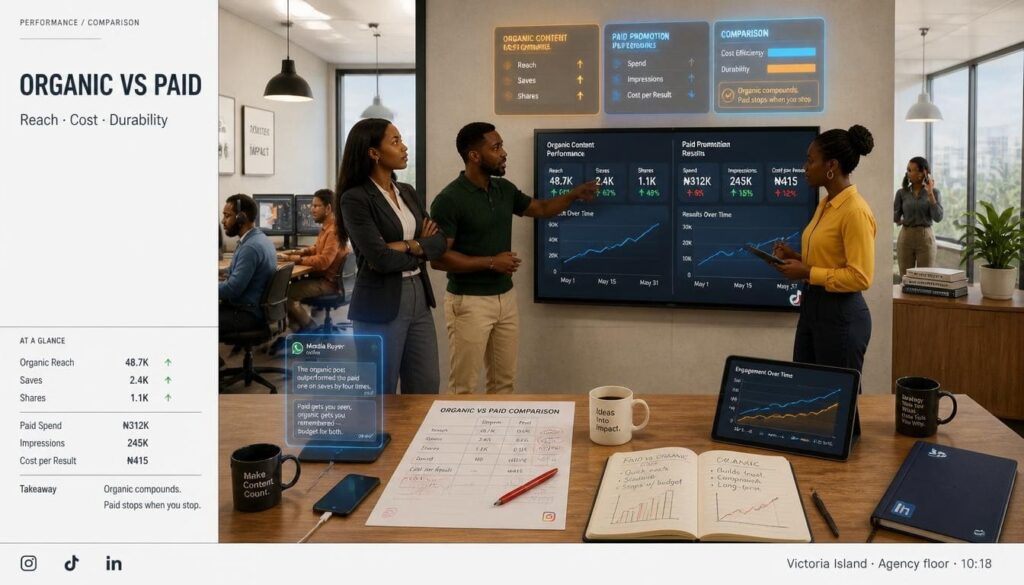
Organic content builds relationships with existing followers, while paid promotion brings new prospects into your ecosystem.
Think of paid boosts as the signpost on a busy street that directs foot traffic to your store, while organic content represents the neat product displays inside that keep shoppers browsing. Run paid promotions to attract fresh profile traffic, and maintain a steady stream of organic posts and daily stories to nurture those visitors into paying clients.
Organic posts allow for experimentation. Use unpromoted posts to test new video concepts, captions, visual layouts, and offer structures at zero cost. When an organic post achieves unusually high engagement, convert that specific post into a paid promotion campaign to multiply its reach.
Paid promotions drive audience traffic to your account, but organic stories build human connections. Share daily behind-the-scenes footage, staff interactions, package preparation steps, and live product demos on your profile stories. This daily transparency transforms casual ad viewers into loyal brand advocates.
Maintain visual consistency between your paid ads and your organic feed. If your promotional ad promises a premium shopping experience but your profile grid looks unorganized and outdated, incoming visitors experience immediate disconnect and leave without purchasing.
When Should You Boost Followers, Likes, Views Or Post Engagement?
Selecting the right performance metric depends entirely on your current operational stage:
- Boost Followers/Page Likes: Use this when launching a brand new page to establish base-level trust and social proof.
- Boost Views: Select this option for video content, product launches, or brand awareness campaigns where maximum eyeball reach is the priority.
- Boost Post Engagement (Likes & Comments): Deploy this strategy on high-converting sales posts to create active discussion, answer prospect questions in public view, and trigger social validation.
Early-stage brand accounts suffer from a social proof deficit. When a customer lands on a business profile with only twelve followers, doubt arises regarding operational legitimacy. Boosting page followers early creates a baseline social proof signal that calms buyer suspicion.
Video content benefits immensely from boosted views. Algorithms on visual platforms prioritize popular video content; raising view counts quickly pushes your content onto broader platform recommendation feeds, generating extra unpaid organic reach.
Post engagement boosts work best for competitive sales promotions. High comment volumes on a sales post create a bandwagon effect. When prospective buyers spot dozens of existing inquiries on a product post, their perception of product value increases, prompting them to place orders quickly.
Align your boosting choice with immediate revenue goals. Never buy views or engagement simply for vanity; ensure every metric boost serves a distinct purpose within your broader customer acquisition funnel.
How Can You Turn Social Media Followers Into Paying Customers?
Followers represent potential revenue, not actual cash flow. To convert passive profile viewers into paying customers, implement these steps:
- Include Clear Calls to Action (CTAs): Every post must tell the viewer exactly what to do next (e.g., “Tap the link in bio to order on WhatsApp,” or “Comment ‘PRICE’ for instant DM details”).
- Reduce Inquiry Friction: Keep communication direct. Avoid hiding base prices completely, as forced price requests often frustrate serious buyers.
- Offer Limited Incentives: Create urgency with time-bound bonuses, such as free delivery within local zones for the first ten orders or a bundled discount for immediate payment.
Follow up promptly on every inquiry. Buyers browse multiple commercial pages simultaneously; if your response takes four hours, the prospect has likely purchased from a responsive competitor. Fast response speeds close sales consistently.
Establish direct lead collection tools. Encourage followers to join a private WhatsApp broadcast list or email newsletter by offering exclusive discounts or helpful free guides. Direct contact lists protect your business access to clients if platform accounts face suspension or algorithm restrictions.
Use clear payment processes to close orders effortlessly. Provide multiple payment options; including local bank transfers, card links, and digital wallet options; to prevent transaction drop-offs at checkout points.
How to Set-Up A Realistic Social Media Boosting Budget
Promotional spending yields maximum returns only when backed by a structured workflow and deliberate promotion tactics. Strategy turns random promotional activity into a repeatable revenue generation model.
Building this foundation requires balancing three core operational pillars:
- Audience Alignment: Define your exact buyer demographics before spending money so your promotional offers reach users most likely to purchase.
- Content Mix Ratio: Structure your daily posting schedule to balance educational guides, social proof, and direct sales pitches.
- Budget Discipline: Set strict spending limits for each campaign to prevent runaway costs on underperforming ad sets.
- Performance Tracking: Monitor key engagement metrics weekly to identify which promotional formats deliver the highest return on investment.
- Iterative Refinement: Adjust your targeting parameters and creative angles regularly based on real-time audience response data.
Consistency forms the foundation of any successful online presence. Random posting schedules confuse platform algorithms and alienate prospective buyers who expect reliable brand communication. When you implement a structured growth plan, every piece of content works purposefully toward building your brand authority and driving steady conversions.
How Much Should A Small Business Spend On Social Media Boosting?
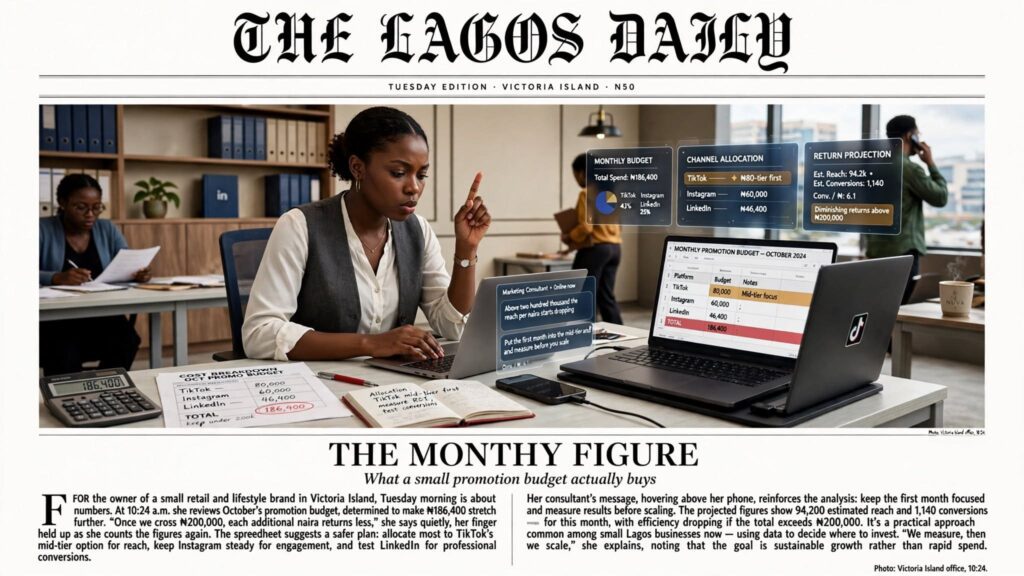
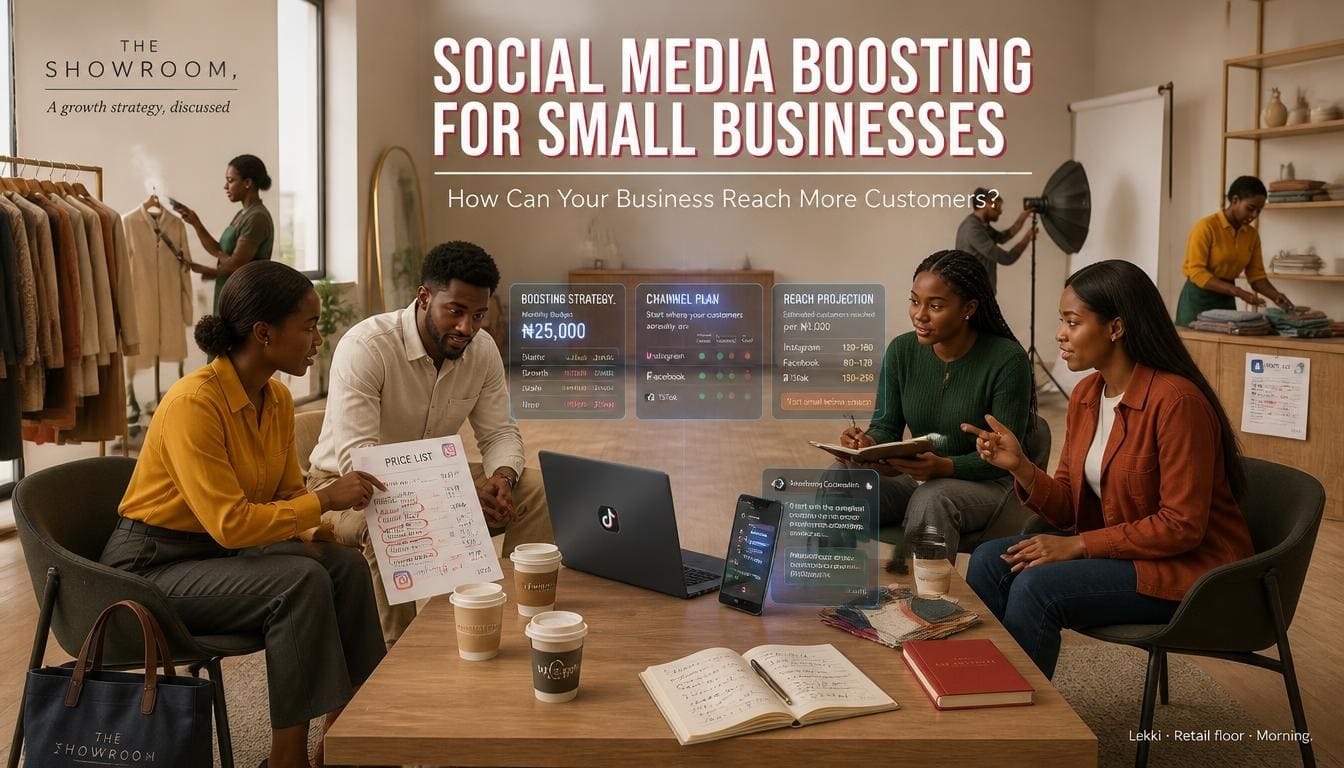
You do not need massive capital reserve funds to start paid promotions. A practical framework allocates 5% to 10% of your gross monthly business revenue toward marketing.
For an enterprise starting fresh, testing with small daily amounts; such as ₦3,000 to ₦5,000 per campaign; provides sufficient performance data without placing strain on operational cash flow. Treat early expenditure as market research to identify which offers and target settings convert best.
Marketing budgets must increase alongside revenue gains. If a ₦20,000 ad spend generates ₦150,000 in gross profit, reinvest a portion of those profits to scale future promotional campaigns. Reinvestment fuels accelerated business expansion.
Avoid spending operational capital meant for product stock, staff salaries, or shop rent on promotional campaigns. Marketing carries inherent testing risks; using essential operational funds creates financial vulnerability if a campaign underperforms.
Track key performance indicators continuously. Calculate your Customer Acquisition Cost (CAC) by dividing total promotional spend by the number of paying clients secured. Keeping your acquisition cost well below the average profit margin per product guarantees continuous profitability.
How Can You Start Promoting Your Page With A Small Budget?
To maximize limited funds, concentrate your budget on tight geographic and demographic parameters instead of broad nationwide campaigns. Target specific commercial zones or cities where your delivery logistics operate smoothly.
Run targeted promotions during peak activity periods, such as salary paydays or weekend shopping windows. Consistently test two different image designs or video concepts against each other with small amounts to identify the winner before committing larger funds.
Focus your limited funds on high-margin products. Promoting items with small profit margins yields weak net returns after ad costs are deducted. Promoting premium products or high-margin service packages gives your ad spend enough margin buffer to yield strong profitability.
Take advantage of platform ad scheduling features. Instead of running campaigns 24 hours a day, configure your ad schedule to run strictly during your active business hours when your staff can respond to inquiries immediately.
Utilize retargeting tools to reach warm prospects. Promoting offers to users who have already visited your profile, saved your posts, or interacted with previous ads costs significantly less than targeting cold audiences who have never encountered your brand before.
Should You Choose Social Media Ads Or An SMM Panel?
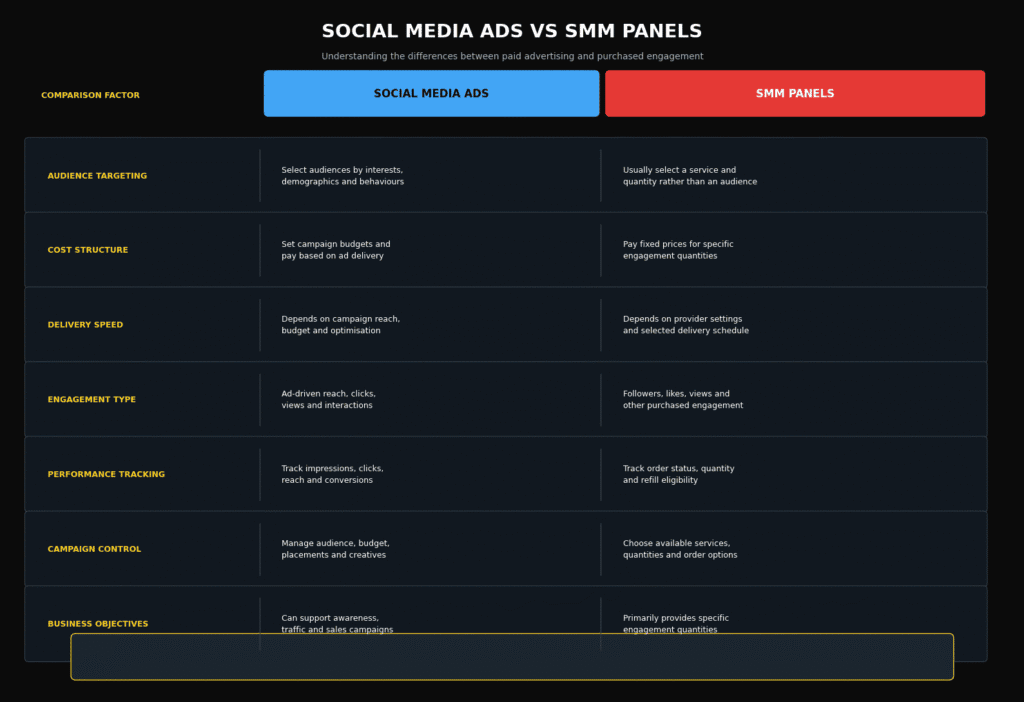
Choosing between native advertising channels and an SMM growth panel depends on your immediate operational goals.
| Factor | Native Platform Ads (Meta/TikTok Ads) | SMM Growth Platforms (e.g., Sizzle Social) |
| Primary Focus | Long-term conversion funnels, detailed interest targeting | Rapid social proof, fast follower foundation, profile authority |
| Complexity | High (Requires Ad Manager setup, pixel setup, testing) | Low (Simple dashboard order placement, link submission) |
| Delivery Speed | Variable (Depends on ad auction, optimization phase) | Immediate processing, scalable volume boosts |
| Ideal For | Direct website sales, lead generation forms | Account launches, establishing social proof, profile metrics |
Native platform ads excel at driving direct sales and capturing targeted customer leads through complex audience selection parameters. However, mastering native ad managers demands time, continuous testing, and ongoing budget adjustments to prevent ad spend waste.
SMM growth platforms provide rapid social proof for brand accounts facing credibility barriers. Newly opened pages often struggle to convert paid ad traffic because prospective clients spot low follower numbers and low engagement levels. Using growth platforms to establish a baseline foundation of social metrics eliminates this immediate conversion barrier.
Smart brands combine both methods strategically: using reliable platforms like Sizzle Social to establish account authority and visual credibility, while running targeted native ad campaigns to drive direct client transactions.
Evaluate your technical setup capacity before choosing tools. If you lack the technical skills to configure pixel tracking, custom conversion events, and ad manager dashboards, starting with simple metric boosts helps build profile authority while you learn complex advertising systems.
How Can You Compare Boosting Prices And Service Quality?
Selecting budget promotion options requires balancing affordable pricing with account safety and delivery quality.
Learn how to evaluate service options effectively with our guide on how to compare social media boosting services without guesswork.
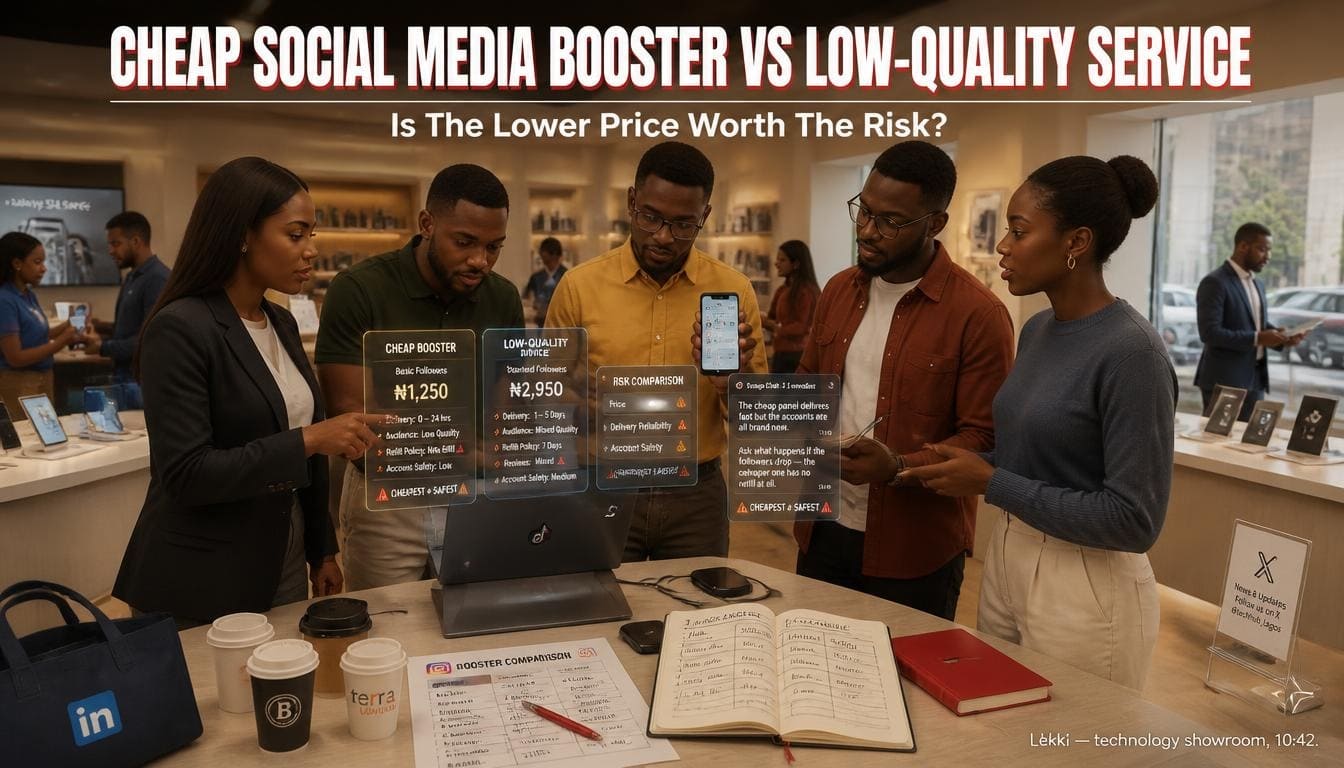
- Avoid Unrealistic Promises: Extremely cheap rates promising tens of thousands of instant results often use unstable bot profiles that drop off rapidly.
- Verify Platform Reputation: Choose established platforms that provide transparent service catalog breakdowns, clear refill terms, and accessible local support.
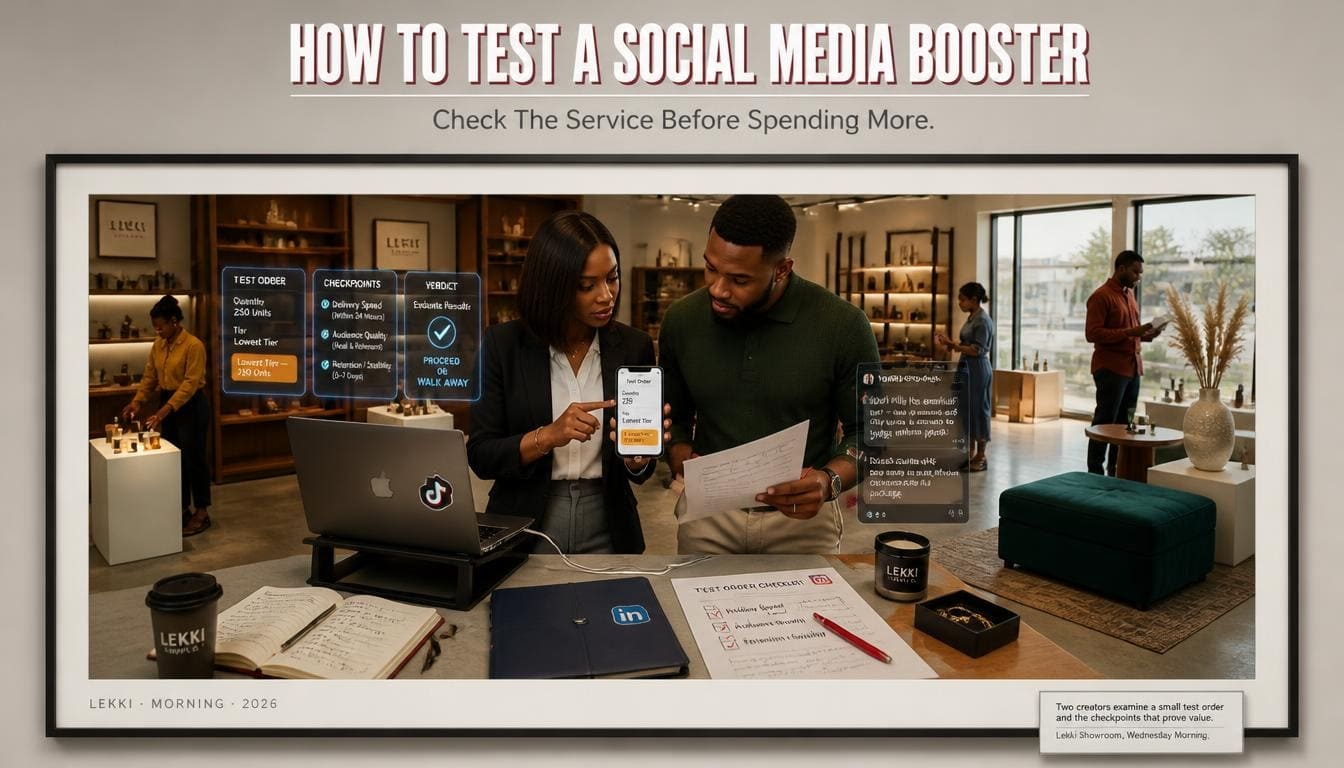
- Test with Small Orders: Always place a minimal test order to evaluate processing speed, retention quality, and platform responsiveness before scaling up your spend.
Look for transparent service descriptions. Top platforms state delivery speed, account retention rates, drop guarantee terms, and refill policies clearly across their service menus. Avoid providers that hide service parameters behind vague marketing promises.
Evaluate customer support availability. Reliable growth service platforms maintain accessible support systems; such as active WhatsApp channels, email ticketing desks, or live chat setups; to resolve processing delays or order inquiries promptly.
Compare pricing against industry averages. If a provider offers prices far below standard market rates, quality shortcuts are likely present. Investing slightly more in stable, high-retention services protects your account security and preserves visual credibility long-term.
Which Social Media Strategy Should Your Small Business Start With Today?
Building an effective online presence requires shifting from passive posting to deliberate audience distribution. Success does not demand massive marketing budgets or complex technical setups. It requires clarity on your core offer, selecting the right platform for your ideal buyer, maintaining a practical content mix, and using paid visibility tools strategically to accelerate discovery.
Start by preparing your business profile to meet standard conversion requirements. Pick your primary platform, allocate a manageable testing budget, and boost content that has already shown organic promise. By combining consistent content value with targeted promotion, your business moves past low-engagement plateaus and establishes a steady pipeline of active, paying clients.
Ready to scale your business profile with fast, reliable, and affordable growth services? Explore structured promotional tools tailored for local brands at Sizzle Social today.
Frequently Asked Questions
Paid promotion involves allocating a specific monetary budget to amplify the reach of your digital content beyond your current follower base. Algorithms naturally restrict the percentage of followers who see unpromoted posts. When you boost a post or launch a targeted campaign, the host platform displays your content to a defined audience based on parameters such as geographical location, age, gender, and specific interests. For a local enterprise, this system moves your message past passive followers and places it directly in front of active users searching for your specific solutions. Paid amplification acts as an engine for customer acquisition. Instead of relying on chance discovery, your brand controls who sees your offer, when they see it, and how often it appears in their main feed. This targeted approach prevents wasted marketing efforts by focusing exclusively on individuals with strong buyer intent. Traditional advertising methods like flyers or billboards lack accurate tracking mechanisms, whereas paid digital promotion allows owners to track every Naira spent against real buyer interactions.
Strategic visibility addresses several operational bottlenecks simultaneously. First, it accelerates discovery. Instead of spending months attempting to reach your first thousand target viewers organically, targeted promotion puts your brand in front of thousands of local prospects within hours, providing immediate market feedback on your product offerings and pricing strategy. Second, it establishes instant market presence. Local shoppers often evaluate brand credibility through online engagement levels and visual authority, and a well promoted page with steady activity signals reliability, reducing buyer hesitation. Finally, it creates a predictable channel for customer acquisition, allowing business owners to plan inventory and service delivery with greater confidence. Organic traffic fluctuates wildly based on platform algorithm shifts, whereas paid promotion gives you control over traffic volume. Furthermore, paid visibility helps clean out stagnant stock, since retail vendors holding seasonal inventory utilize targeted promotions to clear warehouse space before bringing in fresh merchandise. Paid outreach also strengthens brand recollection, because consumers rarely purchase an item upon first encounter and require repeated contact points before committing funds.
Launching a promotion without proper preparation wastes valuable capital. Before allocating funds to any campaign, confirm that your business page meets basic operational standards. Complete profile information is essential, so your bio must state clearly what you sell, your physical operational base, contact details, and precise ordering instructions. High quality core content matters too, since a visitor arriving from a boosted post will browse your profile, so ensure your feed contains at least 9 to 12 high resolution posts displaying products, client feedback, and operational details. You also need an active customer response channel with an efficient system to respond to inquiries immediately, because delayed responses destroy the value generated by boosted content. Clear offer definition is another requirement, since every campaign needs a singular focus such as a product discount, a service bundle, or a direct call to action. Proper visual branding is essential before spending marketing funds, because potential clients make quick judgments within seconds of landing on a commercial profile. Inventory organization must align with promotional campaigns, and your staff need full preparation before campaigns go live.
Your campaign objective dictates your return on investment. Early stage businesses often make the mistake of running broad awareness campaigns with limited funds. A small enterprise needs immediate liquidity to sustain operations, which makes revenue focused campaign structures the primary priority. Brand awareness campaigns distribute content across a wide audience spectrum to maximize views. While this builds name familiarity over extended periods, it rarely generates immediate cash flow, and for a small business operating on tight margins, spending funds purely on impressions often leads to financial strain without matching sales numbers. Lead generation campaigns focus on capturing prospective client contact details such as phone numbers, email addresses, or physical locations, and this objective suits service providers such as interior decorators, solar panel installers, or corporate event planners where buyers require detailed consultations before spending money. Direct sales campaigns target immediate commercial transactions, featuring clear pricing, crisp product imagery, and direct purchasing routes. Resource conscious commercial operations must prioritize direct sales and lead generation first, since generating immediate sales provides necessary capital to fund future marketing cycles.
The choice between these two visual platforms depends on your inventory type and target demographic. Instagram serves as a digital catalog. Users on Instagram expect clean visuals, curated brand feeds, and straightforward business interactions. It excels for fashion, beauty, interior decor, corporate services, and lifestyle goods where visual presentation drives purchasing decisions. Buyers on Instagram often possess higher purchasing power and display readiness to complete bank transfers directly inside chat windows. TikTok thrives on spontaneous, video first content. The platform algorithm favors raw creativity, humor, and authentic demonstrations over polished corporate graphics. If your products benefit from live video tutorials, behind the scenes footage, or trend driven storytelling, TikTok offers fast discovery, especially among younger demographics. Instagram offers stronger profile organization features, since highlights, pinned posts, and grid layouts allow small businesses to construct a permanent digital storefront. TikTok excels at rapid content dissemination, since a newly established account with zero followers can achieve thousands of organic video views if the content captures immediate audience interest. Combining both platforms strategically yields impressive outcomes.
Facebook remains an absolute powerhouse for specific market segments. It holds the largest demographic spread, making it ideal for targeting older age groups, decision makers, community based groups, and regional markets outside major urban centers. Businesses offering real estate, professional services, educational programs, household goods, and B2B solutions often find higher conversion rates and lower acquisition costs on Facebook compared to newer platforms. Furthermore, the Facebook advertising manager provides deep geographic and interest targeting controls. Facebook Groups offer unique community engagement opportunities for local vendors. Joining active community groups allows business owners to share value, answer queries, and post promotional offers directly to targeted local neighborhoods. This organic exposure works alongside paid Facebook page promotions to build local market dominance. The platform supports long form text content alongside images and videos, so while platforms like TikTok restrict your message to short visual clips, Facebook allows you to tell complete stories, explain complex service packages, and write comprehensive sales copy that addresses prospective buyer objections directly. Local enterprises targeting family decision makers must prioritize Facebook.
Social platforms attract attention, but WhatsApp closes transactions. In the local commercial landscape, consumers prefer direct, conversational commerce over complex website checkout forms. Integrating WhatsApp Business into your promotion funnel allows prospect traffic to move directly from an ad or boosted post into a private chat session. Using features like automated greeting messages, quick replies for common questions, product catalogs, and status updates turns routine inquiries into completed bank transfers. WhatsApp Business acts as your private sales office. Unlike public platform feeds where competitor comments can divert prospective buyers, WhatsApp chat sessions provide an exclusive, distraction free environment to address client concerns, share extra product photos, and negotiate deal terms. The WhatsApp Status feature serves as a free continuous promotional channel. Once prospective buyers save your business contact number during initial ad inquiries, they view your daily status updates indefinitely. Posting regular customer feedback, fresh stock arrivals, and temporary price reductions on your status yields consistent repeat sales without additional ad spend. Label organization features inside WhatsApp Business streamline customer tracking through colored labels.
Attempting to build a presence on four different platforms simultaneously leads to content exhaustion and fragmented budgets. Master one primary platform where your target customers spend most of their time. Build a stable audience, refine your content delivery, establish a conversion workflow, and achieve consistent revenue there first. Once that primary channel generates predictable returns, reinvest those profits to expand into secondary channels. Focusing on a single platform allows small business owners to master specific algorithm behavior, since each digital space operates under distinct rules and content styles that perform exceptionally on TikTok often fail on LinkedIn or Facebook. Resource concentration yields superior results. Dividing a small monthly promotional budget of ₦50,000 across three platforms leaves each channel underfunded, leading to weak algorithmic distribution, while allocating that entire budget to a single primary platform generates enough metric volume to trigger platform algorithms and yield solid sales. Single platform concentration also simplifies customer service operations, since managing incoming inquiries across multiple separate platform message boxes often results in missed messages and lost revenue.
A practical content plan balances commercial pitches with value driven posts. Divide your content structure into three primary pillars. Educate and solve problems should take about 40% of your content, sharing tips, usage guides, and industry insights that address your target customer’s pain points. Build social proof and trust should also take about 40%, posting customer reviews, unboxing videos, client transformations, order dispatch proof, and behind the scenes processes. Direct commercial offers should take the remaining 20%, featuring explicit sales pitches with clear pricing, discount deadlines, and precise call to action details. Consistency forms the foundation of any content plan. Random posting schedules confuse platform algorithms and cause existing followers to lose interest. Establish a realistic posting schedule such as three feed posts per week alongside daily status stories to maintain steady profile activity without burning out your production capacity. Batch content creation saves time and energy for small business owners. Dedicate one specific day every week to film product videos, photograph new inventory, write ad captions, and draft promotion graphics.
Never select posts for paid promotion at random. Look at your account performance metrics and boost content that has already demonstrated organic traction. Promote posts that feature real customer testimonials, clear product demonstrations, simple problem and solution videos, or irresistible limited time offers. If a post fails to generate organic comments or saves, adding a promotional budget rarely fixes its core message, so enhance what already works. User generated content makes excellent promotional material. Videos featuring real clients unboxing their orders or using your services convey immediate authenticity. Prospective buyers trust unscripted feedback from fellow consumers far more than polished corporate advertisements. High converting sales posts should clearly display pricing details. In local markets, hiding prices behind direct message only captions creates buyer friction and mistrust. Promotional posts that state prices clearly filter out non serious viewers and attract qualified prospects ready to make payments. Avoid boosting simple lifestyle quotes, generic stock photos, or non commercial announcements. Every Naira spent on paid promotion must target clear business objectives such as profile visits, chat inquiries, or website conversions.
Selecting the right performance metric depends entirely on your current operational stage. Boost followers or page likes when launching a brand new page to establish base level trust and social proof. Boost views for video content, product launches, or brand awareness campaigns where maximum eyeball reach is the priority. Boost post engagement through likes and comments on high converting sales posts to create active discussion, answer prospect questions in public view, and trigger social validation. Early stage brand accounts suffer from a social proof deficit. When a customer lands on a business profile with only twelve followers, doubt arises regarding operational legitimacy, so boosting page followers early creates a baseline social proof signal that calms buyer suspicion. Video content benefits immensely from boosted views, since algorithms on visual platforms prioritize popular video content, and raising view counts quickly pushes your content onto broader platform recommendation feeds. Post engagement boosts work best for competitive sales promotions. High comment volumes on a sales post create a bandwagon effect, and when prospective buyers spot dozens of existing inquiries on a product post, their perception of product value increases.
Followers represent potential revenue, not actual cash flow. To convert passive profile viewers into paying customers, implement several steps. Include clear calls to action in every post so the viewer knows exactly what to do next, such as tapping the link in bio to order on WhatsApp or commenting a specific word for instant message details. Reduce inquiry friction by keeping communication direct, and avoid hiding base prices completely, since forced price requests often frustrate serious buyers. Offer limited incentives by creating urgency with time bound bonuses, such as free delivery within local zones for the first ten orders or a bundled discount for immediate payment. Follow up promptly on every inquiry, because buyers browse multiple commercial pages simultaneously, and if your response takes four hours, the prospect has likely purchased from a responsive competitor. Establish direct lead collection tools. Encourage followers to join a private WhatsApp broadcast list or email newsletter by offering exclusive discounts or helpful free guides. Direct contact lists protect your business access to clients if platform accounts face suspension.
You do not need massive capital reserve funds to start paid promotions. A practical framework allocates 5% to 10% of your gross monthly business revenue toward marketing. For an enterprise starting fresh, testing with small daily amounts such as ₦3,000 to ₦5,000 per campaign provides sufficient performance data without placing strain on operational cash flow. Treat early expenditure as market research to identify which offers and target settings convert best. Marketing budgets must increase alongside revenue gains. If a ₦20,000 ad spend generates ₦150,000 in gross profit, reinvest a portion of those profits to scale future promotional campaigns, since reinvestment fuels accelerated business expansion. Avoid spending operational capital meant for product stock, staff salaries, or shop rent on promotional campaigns. Marketing carries inherent testing risks, and using essential operational funds creates financial vulnerability if a campaign underperforms. Track key performance indicators continuously. Calculate your Customer Acquisition Cost by dividing total promotional spend by the number of paying clients secured. Keeping your acquisition cost well below the average profit margin per product guarantees continuous profitability.
To maximize limited funds, concentrate your budget on tight geographic and demographic parameters instead of broad nationwide campaigns. Target specific commercial zones or cities where your delivery logistics operate smoothly. Run targeted promotions during peak activity periods such as salary paydays or weekend shopping windows. Consistently test two different image designs or video concepts against each other with small amounts to identify the winner before committing larger funds. Focus your limited funds on high margin products. Promoting items with small profit margins yields weak net returns after ad costs are deducted, while promoting premium products or high margin service packages gives your ad spend enough margin buffer to yield strong profitability. Take advantage of platform ad scheduling features. Instead of running campaigns 24 hours a day, configure your ad schedule to run strictly during your active business hours when your staff can respond to inquiries immediately. Utilize retargeting tools to reach warm prospects. Promoting offers to users who have already visited your profile, saved your posts, or interacted with previous ads costs significantly less than targeting cold audiences who have never encountered your brand before.
Choosing between native advertising channels and an SMM growth panel depends on your immediate operational goals. Native platform ads excel at driving direct sales and capturing targeted customer leads through complex audience selection parameters. However, mastering native ad managers demands time, continuous testing, and ongoing budget adjustments to prevent ad spend waste. SMM growth platforms provide rapid social proof for brand accounts facing credibility barriers. Newly opened pages often struggle to convert paid ad traffic because prospective clients spot low follower numbers and low engagement levels. Using growth platforms to establish a baseline foundation of social metrics eliminates this immediate conversion barrier. Smart brands combine both methods strategically: using reliable platforms to establish account authority and visual credibility, while running targeted native ad campaigns to drive direct client transactions. Evaluate your technical setup capacity before choosing tools. If you lack the technical skills to configure pixel tracking, custom conversion events, and ad manager dashboards, starting with simple metric boosts helps build profile authority while you learn complex advertising systems.