

An online presence requires early proof of attention before casual visitors choose to interact with a profile. Many account owners seek shortcuts to build social proof without spending months waiting for organic reach to take root. That search often leads directly to a free X followers bot promising instant metric increases overnight. However, shortcuts online come with unseen operational mechanics and severe safety trade-offs. Understanding how automated follower scripts function, why metrics disappear, and how to protect login credentials helps account owners make informed choices for long-term account safety.
Evaluating these operational layers ensures account owners make informed decisions that protect profile safety, preserve digital assets, and support sustainable online growth over time. The structural realities of automated social proof systems involve complex interactions between scripts, servers, and platform security algorithms. Understanding these backend mechanisms requires examining the direct technical pathways through which metrics are generated, dispatched, and eventually removed by platform audits.
Free X Followers Bot: How These Tools Work

Automated follower scripts rely on basic network operations to inject numbers into a target handle. Account owners who study these technical mechanics avoid common security traps and manage growth expectations far better. The core operations of automated metric growth depend on continuous network requests that attempt to simulate genuine user engagement while operating entirely through programmatic routines.
| Growth Parameter | Free X Followers Bot Tools | Organic Platform Growth |
| Delivery Mechanism | Automated script injection | Natural content discovery |
| Account Credibility | Empty avatars, zero activity | Authentic profiles, active users |
| Metric Retention | Low retention, frequent purges | High retention, stable connection |
| Account Safety Risk | Potential shadowbans, password theft | Zero platform penalty risk |
| Engagement Potential | Zero replies, likes, or retweets | Genuine interactions and sales |
Digital distribution platforms rely on structured backend tasks to process metric delivery. When an account owner submits a profile handle to a script, central task queues parse the request, verify public profile visibility, and trigger automated scripts across connected server nodes. These routines communicate with public endpoints to send follow requests in rapid succession, resulting in sudden, artificial surges on public follower counters.
The mechanics governing these scripts rely heavily on distributed proxy networks and automated browser drivers. Scripts route HTTP requests through rotating IP addresses to bypass basic rate-limiting defenses enforced by platform servers. By scattering follow commands across thousands of distinct IP ranges, the bot infrastructure delays automated flag triggers. However, the underlying pattern remains inherently mechanical. Follow requests execute at mathematical intervals, lacking the varied temporal spacing characteristic of human browsing behavior.
Backend architecture for these systems often relies on lightweight server environments designed to handle high concurrency. Task queues store incoming profile URLs, grouping them into batch payloads that get dispatched to available worker threads. Each worker thread manages hundreds of headless browser instances or direct API calls simultaneously. This technical design prioritizes volume and speed over account longevity, meaning the automated accounts executing the follow actions rarely feature complete profiles, authentic histories, or verified contact information.
The reliance on automated scripts introduces secondary technical challenges for target profiles, particularly regarding algorithmic classification. Modern social media distribution engines rely on clean, predictable signals to determine content relevance and profile quality. Artificial metrics introduce noise into these data pipelines, confusing automated recommendation systems:
- Distorted Audience Vectors: Automated scripts populate follower lists with accounts lacking real interest profiles, breaking topical classification models.
- Depressed Interaction Ratios: Unresponsive metric entries lower post reach expectations by skewing impression-to-engagement percentages downwards.
- Corrupted Graph Relationships: Connections to flagged bot clusters signal low profile quality directly to network assessment tools.
- Throttled Recommendation Feeds: Algorithmic filters lower visibility on user timelines when account interaction patterns match automated growth signatures.
- Compromised Data Analytics: Internal dashboard metrics become unreliable, obscuring genuine audience response data needed for strategic planning.
By analyzing how these automated distribution engines operate, profile managers can easily distinguish between artificial metric injections and genuine user acquisitions. Understanding the backend architecture clarifies why short-term numeric gains consistently fail to yield real digital influence or sustained audience reach.
What a Free X Followers Bot Is and How It Claims to Generate Followers

A free X followers bot is an automated software script or third-party web tool designed to boost profile follower metrics without requiring financial payment. These platforms market themselves as zero-cost acceleration toolkits that connect profiles to vast digital networks. Their promotional pages promise rapid account visibility, claims of viral authority, and instant credibility for brand-new handles.
Behind the flashy claims, these services operate on simple automated loops. They collect public profile links, queue the requests inside central distribution scripts, and dispatch batch commands across networks of automated accounts. The central goal is simple: deliver a rapid, visual numeric boost to a profile header to create an immediate illusion of popularity.
These platforms frequently promote their services using claims of sophisticated AI algorithms or proprietary network access. In technical reality, most free tools run on recycled database tables populated with mass-registered accounts. When a new submission enters the queue, the script cycles through these static databases to issue follow actions until task counters reach target thresholds.
The infrastructure behind these tools relies on automated account creation pipelines that register thousands of dummy profiles daily. These registration routines utilize temporary email addresses, automated CAPTCHA solvers, and phone verification bypass services. Once created, these burner accounts sit idle in central databases until a user submits a handle to a free follower dashboard.
Because maintaining these account farms requires constant server resources, free tool operators rarely invest in high-quality profile setup. The accounts used in these networks feature generated bio text, stolen profile pictures, or completely blank profile elements. They lack natural activity histories, genuine interactions, or established network connections within specific topical communities.
Marketing materials for free tools often hide these technical limitations behind vague terminology like “organic growth loops” or “viral expansion algorithms.” In practice, no real human sees the target profile during the delivery process. The entire sequence, from URL submission to follower counter increment, occurs entirely within automated server loops operating without human oversight or genuine interest.
How Free Twitter Followers Bots Use Automation, Exchanges, and Third-Party Services
Third-party platforms utilize five primary methods to deliver metrics to target profiles:
- Scripted Bot Networks: Databases of thousands of automated accounts managed by single central servers that execute follow commands simultaneously.
- Follow-for-Follow Credit Exchanges: Networks where users earn credits by manually following other handles, then spend those credits to request followers for their own pages.
- API Scraping and Automation: Automated routines that abuse public platform interfaces to send direct connection signals at scale.
- Browser Extension Hijacking: Malicious browser add-ons that quietly force logged-in user accounts to follow third-party target handles without user knowledge.
- OAuth Access Token Pooling: Systems that collect authorization tokens from apps granted permissions by users, misusing those credentials to execute background follow commands across the pool.
These methods depend heavily on constant automation. Once a user submits a public handle, the backend system triggers hundreds of connection requests within minutes, artificially inflating the target account’s follower total.
Scripted bot networks represent the most common delivery vehicle due to their extremely low operational cost. Operators maintain large server instances running automated headless browsers that simulate login events and button clicks. These scripts run continuously, processing incoming submission queues by iterating through list arrays of stored credentials to issue follow commands in bulk.
Follow-for-follow credit exchanges introduce a human element, yet fail to generate meaningful audience engagement. Participants in these networks log into mutual distribution dashboards, performing repetitive follow actions on assigned accounts to accumulate virtual tokens. Once accumulated, users spend these tokens to place their own handles into the queue. Because users perform these actions solely to earn system credits, they rarely read, like, or share content produced by the pages they follow.
API scraping and automation tools exploit platform endpoints, attempting to replicate legitimate client behavior while avoiding API rate limits. Developers reverse-engineer public application interfaces, capturing mobile endpoint traffic to construct custom client headers. These custom programs issue rapid registration, follow, and profile update commands directly to platform servers, bypassing standard user interface overhead entirely.
Browser extension hijacking represents a more predatory operational model. Malicious developers release seemingly harmless extension utilities, such as ad blockers, custom site themes, or video downloaders. Once installed, these extensions inject background scripts into active browser sessions. When an infected user opens a social platform, the extension uses their authentic session cookies to issue unauthorized follow commands to clients who paid for follower growth.
Why Followers From Free X Bot Tools May Disappear or Fail to Engage
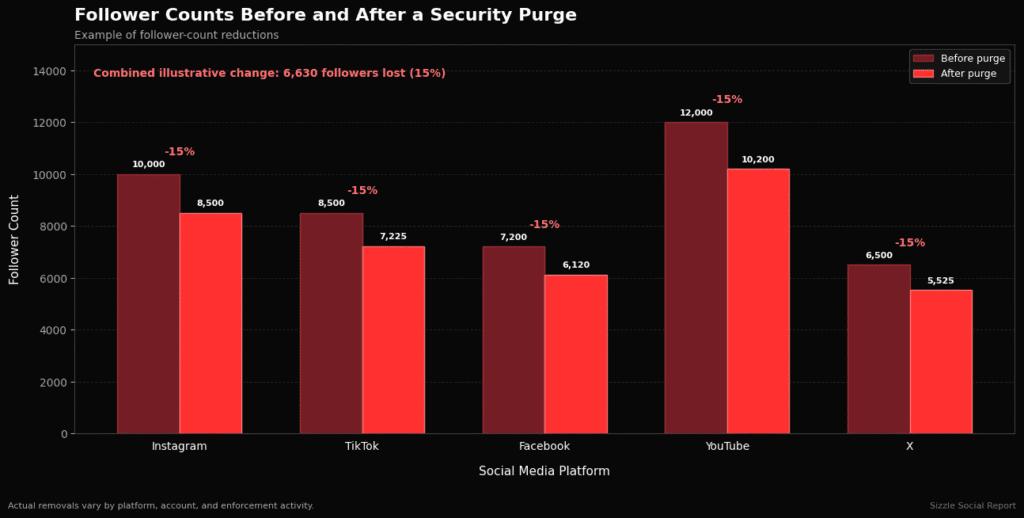
Followers delivered via automated scripts rarely remain on a profile over extended periods. Platform security protocols conduct regular routine purges to identify and delete automated accounts from the global network. When those automated profiles get suspended, the follower count on target profiles drops instantly.
Furthermore, these automated profiles possess no real human operator behind them. They do not read posts, view shared videos, click website links, or participate in comment sections. A profile displaying thousands of followers but zero post likes signals artificial manipulation immediately to visitors, damaging authentic brand credibility.
Metric drops represent a natural outcome of automated network cleanups. Security routines track behavioral signals, such as identical IP subnets, rapid follow actions, and missing user bio data, to identify bot clusters. When these clusters are flagged, thousands of connected profiles are deleted simultaneously, causing target profiles to experience steep metric declines overnight.
Automated cleanup sweeps run continuously across modern social platforms, utilizing machine learning models trained on millions of account behavior vectors. These detection systems evaluate account attributes holistically, analyzing creation timestamps, graphic asset duplication, network connectivity graphs, and interaction cadence. When an account cluster displays high statistical variance from baseline human behavior, automated systems restrict or terminate the entire group.
When platform security terminates a bot cluster, every follow relationship established by those accounts gets removed from the network graph. Target profiles that received metric injections from the terminated cluster experience immediate numerical losses. These metric drops often occur in large, sudden blocks, causing account follower counters to plunge by hundreds or thousands of units within minutes.
Engagement failures extend beyond missing likes and retweets; they fundamentally ruin account distribution efficiency. Social media algorithms rely on initial post performance signals to determine wider timeline distribution. When an account publishes new content, algorithms display the post to a test sample of existing followers. If those followers consist primarily of automated scripts that never view or click content, the post receives zero engagement signals, causing distribution algorithms to stop showing the content to wider audiences.
Free X Followers Bots vs Organic Growth: Differences in Audience Quality and Sustainability
Comparing automated follower tools with organic reach highlights clear operational differences. Organic growth relies on high-value posts, community discussions, and topical conversations. Real audience members follow a profile because they care about the content, products, or opinions shared.
Automated bots deliver empty visual metrics without any corresponding human interest. According to a Pew Research Center study on social media usage, user engagement relies heavily on authentic platform activity rather than superficial metrics. While an automated tool delivers artificial numbers within hours, organic growth builds a loyal, long-term audience capable of generating sales, retweets, and true community influence.
Sustained brand growth requires converting initial profile impressions into active audience participation. While free follower bots attempt to fabricate initial scale, they leave accounts structurally weaker due to poor engagement ratios. Pairing legitimate social proof tools with active community management guarantees that visual authority aligns with actual audience interest.
Building an organic digital presence requires consistent investment in content quality, network interactions, and community participation. When a profile grows organically, every new follower represents a conscious decision made by a real human being who found value in a post, thread, or shared opinion. These genuine connections form the foundation of sustainable digital reach, driving actual website traffic, product sales, and brand advocacy over time.
Strategic audience development focuses on creating sustainable feedback loops between content creation and community response. The following core pillars define the key operational differences between real community development and artificial script injections:
- Monetization Viability: Authentic audiences contain real consumers who convert into paid customers, whereas bot networks yield zero commercial value.
- Algorithmic Favorability: Consistent human interactions train recommendation algorithms to boost content visibility on public feeds and discovery pages.
- Brand Protection: Real community growth avoids association with spam networks, preserving long-term reputation and brand safety.
- Feedback Quality: Genuine followers provide constructive comments, product feedback, and topical insights that guide content optimization strategies.
- Network Stability: Human follower networks remain stable through platform updates, avoiding the sudden metric collapses caused by bot purges.
Organic growth strategies build cumulative momentum over extended periods. While early progression may seem slow compared to overnight metric tools, the long-term compounding effect creates resilient social media assets. A profile backed by a dedicated core audience maintains strong distribution efficiency regardless of platform policy shifts or feature updates.
Conversely, reliance on artificial growth utilities creates a treadmill of metric maintenance. Account owners who use free bots must constantly find new tools to replace followers lost during automated purges. This perpetual cycle consumes valuable time and energy while exposing profiles to escalating security risks and platform penalties, ultimately delaying true online success.
Risks of Using Free X Followers Bots and Warning Signs to Watch For

Using unverified automated tools exposes an account to technical vulnerabilities, security breaches, and platform enforcement actions. Identifying danger signals protects account owners from permanent loss of digital assets.
Security threats linked to zero-cost growth tools extend far beyond vanity metric drops. Unverified web scripts frequently host malicious payload packages designed to intercept session cookies, harvest browser data, and exploit administrative rights. Protecting digital assets requires evaluating external tools against strict technical security standards.
Operating external utilities without adequate security verification opens multiple attack vectors into personal and corporate networks. Unscrupulous developers deploy free growth tools specifically as lead-generation mechanisms for malicious campaigns. Once a user enters an unencrypted web environment or executes an unverified script, sensitive operational data becomes vulnerable to exfiltration.
Risks involved in third-party automation software often manifest at the application layer. Web scripts execute client-side code capable of reading browser memory, inspecting local storage objects, and capturing active session tokens. If an account owner accesses a free follower dashboard while logged into sensitive web applications, malicious scripts can steal session data, granting attackers access without requiring account passwords.
Understanding these security vectors requires monitoring operational environments for potential compromise signals. Proactive security management involves establishing strict parameters regarding tool integration, authorization permissions, and credential handling. Evaluating external tools against established cybersecurity frameworks ensures that social media growth initiatives do not compromise organizational security infrastructure.
Can a Free X Followers Bot Steal Your Account or Expose Your Personal Information?
Handing account credentials to unverified third-party websites creates severe cybersecurity hazards. Legitimate promotional methods operating via platforms require only a public profile link or username to deliver social proof safely.
When a free tool demands direct login passwords or full authorization access, it gains administrative control over the account. Rogue platforms exploit this access to post unauthorized spam links, harvest private direct messages, or lock out original account owners entirely. Protecting sensitive security credentials remains the single most important rule of account management.
Building on these security implications, here is what to consider:
- Deceptive Fronts: Credential theft operations frequently masquerade as automated account utilities.
- Malicious Takeovers: Once rogue administrators capture plain-text passwords or session tokens, they update registered email addresses, activate two-factor authentication under their own hardware keys, and demand ransom payments or sell hijacked accounts on secondary black markets.
- Harvesting Methods: The mechanisms used to harvest user credentials range from simple phishing forms to sophisticated session hijacking routines.
- Phishing Tactics: Phishing pages mirror official platform login interfaces precisely, tricking users into entering usernames, passwords, and two-factor authentication codes.
- Unauthorized Access: Once submitted, these sensitive inputs transmit directly to attacker-controlled databases, allowing immediate unauthorized access.
- Session Token Validation: When a user logs into a social platform, the server returns an encrypted session token stored in browser cookies, which validates the user’s identity during subsequent requests.
- Cookie Theft: Malicious growth tools operating through custom browser extensions or compromised web scripts can steal these active session cookies directly from browser storage.
- Security Bypass: Using stolen session tokens, attackers bypass password prompts and two-factor authentication requirements entirely, gaining immediate access to the account.
Warning Signs of Follower Bot Scams, Phishing Pages, and Password Requests

Account owners should watch for specific red flags when evaluating online follower growth platforms:
- Mandatory Password Fields: Forms demanding account passwords under the guise of “account verification.”
- Survey and Task Walls: Websites requiring users to complete endless paid surveys or download suspicious software files before delivery.
- Unrealistic Claims: Promises of hundreds of thousands of active, genuine followers completely free of charge.
- Excessive OAuth Permissions: Apps asking for rights to read direct messages, update account profiles, or post on the user’s behalf.
Recognizing these red flags prevents account compromise and protects personal information from malicious actors.
Phishing websites designed to steal credentials exhibit noticeable technical anomalies under scrutiny. Attackers frequently host fake follower panels on newly registered, low-reputation domain names or free hosting subdomains. These sites feature poor interface design, broken footer links, generic privacy statements, and suspicious URL structures meant to impersonate official platform login flows.
Task walls and offer portals represent another fraudulent operational model. These platforms claim that follower delivery requires completing external promotional tasks, such as installing mobile software, registering for subscription services, or answering survey questionnaires. In reality, affiliate networks pay tool operators commissions for every completed task, while the user receives zero actual followers upon completion.
Excessive application permissions present severe security risks during OAuth authorization prompts. Legitimate third-party integrations require minimal access permissions necessary for their stated functionality, such as basic profile reading. Fraudulent platforms request broad write and administrative privileges, including permissions to post content, update account configurations, view contact lists, and manage direct messages.
Evaluating web application encryption protocols provides another essential security filter. Fraudulent growth portals sometimes operate across unencrypted endpoints, exposing transmitted login data to interception via basic man-in-the-middle attacks on public Wi-Fi networks. Verifying SSL certificates, inspecting URL domains, and auditing permission requests protect accounts from unauthorized compromise.
Can X Detect Bot Followers, Automated Activity, and Platform Manipulation?
Platform security systems utilize advanced pattern recognition algorithms to detect artificial growth activity. Security routines track sudden, unnatural spikes in account followers, abnormal API interaction rates, and connections originating from known bot server IP addresses.
When security systems detect these artificial patterns, target accounts face automatic platform flags. Repeated association with low-quality bot networks damages profile trust scores, limits post visibility on user timelines, and triggers mandatory security verifications.
Building on these security mechanisms, the details are outlined below:
- Real-Time Security Architecture: Modern platform detection systems utilize multi-layered architectures to analyze incoming account activity in real time.
- Behavioral Profiling via Machine Learning: Machine learning models construct baseline behavioral profiles for authentic users by comparing incoming connection events against established human norms.
- Automated Auditing: When accounts exhibit rapid, repetitive, or mathematically precise interaction patterns, automated monitoring systems flag the profiles for secondary security audits.
- Network-Level Bot Cluster Identification: Network-level analysis tracks shared infrastructure footprints to identify bot clusters.
- IP Reputation Monitoring: Detection routines analyze IP address reputation scores, monitoring connection requests from commercial data center hosting providers instead of residential internet service providers.
- Automated Network Blocking: When hundreds of accounts perform simultaneous actions from single data center IP ranges, security engines automatically block the network addresses and restrict associated profile entities.
- Client-Level Behavioral Analysis: Behavioral analysis tracks user interface interactions at the client level.
- Human Browsing Characteristics: Authentic human browsing involves irregular timing intervals, varied scroll speeds, natural cursor trajectories, and mixed activity sequences across different platform pages.
Why Using Free Follower Bots May Lead to Spam, Account Restrictions, or Suspensions

Platform policies explicitly prohibit artificial engagement manipulation and automated follow schemes. Accounts using free follower tools risk severe penalties, including:
- Temporary Account Suspensions: Read-only locks requiring email or phone number verification to unlock.
- Search and Timeline Shadowbans: Complete removal of profile posts from public search results and hashtag feeds.
- Permanent Account Termination: Absolute bans for repeated violations of platform manipulation rules.
Relying on low-quality automated hacks risks the complete loss of an established social footprint. Safe options provide controlled, password-free growth services designed to preserve account safety without violating fundamental security protocols.
Enforcement actions follow progressive escalation pathways based on the severity and frequency of detected policy violations. Initial detection events often trigger soft restrictions, such as rate limits or temporary read-only modes. During a read-only lock, account owners cannot publish posts, send direct messages, or follow new profiles until completing identity verification challenges, such as CAPTCHAs or SMS verification.
Continued participation in artificial growth networks leads to algorithmic visibility penalties, commonly called shadowbans. When a profile receives a shadowban, platform algorithms suppress its content across global search results, hashtag feeds, and public timeline recommendations. The account owner receives no explicit notification of this status, yet post impression metrics fall dramatically as content becomes visible only to direct profile visitors.
Severe or repeated platform manipulation violations result in permanent account termination. When an account gets permanently suspended, the owner loses complete access to the profile handle, content archive, historical analytics, and contact network. Re-establishing a presence after permanent termination proves difficult, as platform security systems employ hardware fingerprinting and identity tracking to block newly registered accounts linked to suspended users.
Commercial brands and public figures face severe collateral consequences from platform enforcement actions. Account suspensions disrupt active marketing campaigns, damage professional partnerships, and erode public trust. Rebuilding digital authority after a public account suspension requires extensive time, financial resources, and public relations efforts, making zero-cost automation utilities an extremely dangerous operational choice.
How to Protect Your X Account After Using a Free Followers Bot

Remediating security vulnerabilities immediately after using an unverified bot platform limits potential damage to profile standing and personal data.
Executing immediate corrective containment measures minimizes structural damage to hijacked digital assets. When an account connects to an unverified growth tool, backend session tokens remain active until revoked manually. Securing profile integrity requires revoking app access, resetting credentials, and purging low-quality connections systematically.
Remediation requires a structured, multi-step recovery plan designed to eliminate unauthorized access paths and clean corrupted profile data. Account owners must assume that any third-party interface used during an unverified growth attempt may have compromised session integrity. Taking swift administrative action limits exposure windows and prevents bad actors from misusing profile authorization rights.
Systematic cleanup procedures help restore account authority scores within platform security engines over time. While algorithm recovery requires consistent, authentic account activity over several weeks, securing credentials and purging malicious app connections provides immediate protection against ongoing credential abuse.
How to Revoke Third-Party App Access and Remove Unfamiliar Connections
If a free follower platform requested account access permissions, revoking those tokens immediately closes backdoor access:
- Open profile Settings and Privacy.
- Navigate to Security and Account Access, then select Apps and Sessions.
- Choose Connected Apps to review all external tools with account access.
- Locate unfamiliar tools or follower bot applications.
- Click Revoke App Permissions to disconnect access instantly.
Revoking permissions invalidates API tokens held by external servers, preventing rogue platforms from executing unauthorized background commands, reading private inbox logs, or publishing spam content on your behalf.
Managing application authorizations requires ongoing security audits to ensure rogue integrations do not retain access rights. When a user grants access to an external utility, the platform issues an OAuth token that acts as a digital key. This key allows the external application to interact with the profile according to granted permission scopes without requiring the primary account password.
If an external application gets compromised or operates maliciously, possessing an active OAuth token allows attackers to perform account actions indefinitely. Revoking app permissions invalidates these tokens immediately on platform authentication servers. Any attempt by the revoked tool to execute background commands using old tokens results in instant authorization rejection.
After revoking suspicious applications, account managers must review connected sessions listed under security settings. Terminating active web and mobile sessions ensures that unauthorized devices currently logged into the profile get logged out immediately. Forcing full re-authentication across all connected devices guarantees that only authorized users possess active platform sessions.
Establishing a strict quarterly audit cadence for connected applications minimizes long-term security exposure. Profiles should retain permissions only for active, enterprise-grade management utilities that adhere to strict data security standards and publish clear privacy guidelines. Removing legacy or unused app connections reduces attack surfaces significantly over time.
What to Do if Your X Account Starts Posting Spam or Showing Suspicious Activity

When an account posts unauthorized links or sends automated direct messages to contacts, take emergency recovery measures immediately:
- Change Password Immediately: Update the account password to a strong, unique combination of letters, numbers, and symbols.
- Terminate Active Sessions: Log out all other active sessions via the security settings menu.
- Enable Two-Factor Authentication (2FA): Activate app-based or security key 2FA to prevent unauthorized logins.
- Delete Unauthorized Posts: Remove all spam posts, retweets, and direct messages sent during the breach.
- Notify Network Contacts: Inform close connections that your profile experienced a temporary security incident to prevent them from clicking malicious links.
Immediate incident containment prevents secondary security breaches across your personal and professional networks.
Active spamming indicates that unauthorized parties hold valid password credentials or active session tokens for your profile. Initiating a password reset invalidates all active session cookies across global platform servers instantly. When creating new passwords, use unique string combinations generated by secure password managers, avoiding reused passwords across multiple digital services.
Enabling two-factor authentication adds a critical security layer against unauthorized access attempts. Prefer hardware security keys or authenticator application frameworks over SMS-based verification methods, as SMS channels remain vulnerable to SIM-swapping exploits. Requiring a second verification factor ensures that attackers cannot log in even if they capture account passwords through future phishing attempts.
Cleaning unauthorized content prevents automated safety filters from applying further penalties to the account. Scroll through post archives, retweet histories, and direct message threads to locate and delete all content published during the compromise window. Promptly removing malicious links limits harm to followers and signals active profile remediation to platform security monitoring tools.
Communicating transparently with affected contacts mitigates reputational damage caused by automated spam distribution. If compromised scripts sent phishing links to direct message contacts, publish a brief public statement confirming the incident and advising contacts not to open links received during the compromise period. Proactive communication preserves professional trust and prevents network partners from falling victim to secondary phishing campaigns.
How to Identify and Remove Bot Followers From Your X Account
Cleaning up automated profiles restores healthy engagement ratios and improves overall account authority.
Review the follower list for profiles featuring default avatars, randomized alphanumeric usernames, zero posts, and foreign location tags. Use the platform’s native “Remove This Follower” or “Block” features to remove suspicious accounts systematically over time.
Manual audience cleanups prevent platform algorithms from flagging your account for maintaining abnormal engagement ratios. Removing inactive bot accounts increases overall account quality scores, ensuring future organic posts reach active user feeds far more effectively.
Identifying low-quality follower profiles requires systematic visual and data inspection. High-risk automated accounts display recognizable structural traits:
- Default Profile Imagery: Accounts using generic default avatars or mass-scraped stock photographs.
- Alphanumeric User Handles: Usernames composed of random strings of letters and numbers generated by automated scripts.
- Extreme Following-to-Follower Ratios: Accounts following thousands of profiles while maintaining single-digit follower counts.
- Empty Activity Archives: Profiles with zero published posts, retweets, or likes despite existing for months.
- Repetitive Bio Text: Generic, duplicated biography statements copied directly across hundreds of network accounts.
Removing bot followers using native platform controls restores clean account engagement data. Utilizing the “Remove This Follower” feature silently disconnects the target account without notifying the user or triggering public block lists. For large volumes of automated followers, pacing removals over several days prevents account actions from triggering rate limits enforced by platform security systems.
Removing fake followers lowers overall follower metrics, yet improves account health metrics significantly. Algorithmic distribution frameworks evaluate post reach based on interaction percentages among existing followers. Clearing non-responsive bot accounts raises baseline engagement ratios, signaling to recommendation algorithms that published content deserves wider timeline distribution.
Steps to Take if Your X Account Is Compromised or Restricted After Using a Bot
If the platform restricts or suspends an account following automated bot activity, follow standard recovery steps. Submit an official appeal ticket through the platform help center, stating that unauthorized third-party apps have been revoked and password credentials updated. Demonstrating full compliance with platform safety guidelines increases the likelihood of full account restoration.
During the appeal submission process, provide clear details showing that suspicious account activity was linked to compromised app access tokens that have since been disconnected. Taking full responsibility and demonstrating secure account hygiene helps platform support teams process reinstatement requests efficiently.
Constructing a clear appeal ticket requires a professional tone and factual detail. Avoid emotional language, focusing instead on documenting technical corrective steps taken to secure the profile environment. State clearly that all unverified third-party app connections have been revoked, passwords updated, and multi-factor authentication enabled to prevent future policy breaches.
Support teams evaluate appeal submissions by checking recent account security logs. Demonstrating that suspicious activity ceased immediately following password resets and OAuth revocations supports claims that policy violations resulted from unauthorized third-party app access rather than intentional platform manipulation. Providing verification details promptly helps clear automated account flags.
If initial appeal requests receive automated rejection responses, submit a follow-up ticket requesting human agent review. Include specific ticket reference numbers, summarizing corrective security actions implemented on the profile. Persistent, professional communication demonstrates genuine commitment to platform safety standards, improving reinstatement chances for compromised profiles.
Grow Your X Audience Without Unnecessary Bot Risks
Free follower tools promise quick shortcuts, but deliver security risks, metric purges, and account restrictions. Relying on password-harvesting scripts and low-quality bot networks compromises long-term digital authority.
Building a lasting social footprint requires high-quality content creation, consistent community engagement, and safe promotional practices. Protect your credentials, avoid suspicious free hacks, and choose secure growth strategies that support sustainable online authority.
Frequently Asked Questions
A free X followers bot is an automated software script or third-party web tool designed to boost profile follower metrics without requiring financial payment. These platforms market themselves as zero-cost acceleration toolkits that connect profiles to vast digital networks. Their promotional pages promise rapid account visibility, claims of viral authority, and instant credibility for brand-new handles. Behind the flashy claims, these services operate on simple automated loops. They collect public profile links, queue the requests inside central distribution scripts, and dispatch batch commands across networks of automated accounts. The central goal is simple: deliver a rapid visual numeric boost to a profile header to create an immediate illusion of popularity. These platforms frequently promote their services using claims of sophisticated AI algorithms or proprietary network access. In technical reality, most free tools run on recycled database tables populated with mass-registered accounts. When a new submission enters the queue, the script cycles through these static databases to issue follow actions until task counters reach target thresholds. In practice, no real human sees the target profile during the delivery process.
Automated follower scripts rely on basic network operations to inject numbers into a target handle. Digital distribution platforms rely on structured backend tasks to process metric delivery. When an account owner submits a profile handle to a script, central task queues parse the request, verify public profile visibility, and trigger automated scripts across connected server nodes. These routines communicate with public endpoints to send follow requests in rapid succession, resulting in sudden artificial surges on public follower counters. The mechanics governing these scripts rely heavily on distributed proxy networks and automated browser drivers. Scripts route HTTP requests through rotating IP addresses to bypass basic rate-limiting defenses enforced by platform servers. By scattering follow commands across thousands of distinct IP ranges, the bot infrastructure delays automated flag triggers. However, the underlying pattern remains inherently mechanical. Follow requests execute at mathematical intervals, lacking the varied temporal spacing characteristic of human browsing behavior. Backend architecture for these systems often relies on lightweight server environments designed to handle high concurrency. Task queues store incoming profile URLs, grouping them into batch payloads dispatched to available worker threads.
Third-party platforms utilize five primary methods to deliver metrics to target profiles. Scripted bot networks involve databases of thousands of automated accounts managed by single central servers that execute follow commands simultaneously. Follow-for-follow credit exchanges are networks where users earn credits by manually following other handles, then spend those credits to request followers for their own pages. API scraping and automation involves automated routines that abuse public platform interfaces to send direct connection signals at scale. Browser extension hijacking involves malicious browser add-ons that quietly force logged-in user accounts to follow third-party target handles without user knowledge. OAuth access token pooling involves systems that collect authorization tokens from apps granted permissions by users, misusing those credentials to execute background follow commands across the pool. These methods depend heavily on constant automation. Scripted bot networks represent the most common delivery vehicle due to their extremely low operational cost. Operators maintain large server instances running automated headless browsers that simulate login events and button clicks. Follow-for-follow credit exchanges introduce a human element, yet fail to generate meaningful audience engagement because participants rarely read, like, or share content
Followers delivered via automated scripts rarely remain on a profile over extended periods. Platform security protocols conduct regular routine purges to identify and delete automated accounts from the global network. When those automated profiles get suspended, the follower count on target profiles drops instantly. Furthermore, these automated profiles possess no real human operator behind them. They do not read posts, view shared videos, click website links, or participate in comment sections. A profile displaying thousands of followers but zero post likes signals artificial manipulation immediately to visitors, damaging authentic brand credibility. Metric drops represent a natural outcome of automated network cleanups. Security routines track behavioral signals, such as identical IP subnets, rapid follow actions, and missing user bio data, to identify bot clusters. When these clusters are flagged, thousands of connected profiles are deleted simultaneously, causing target profiles to experience steep metric declines overnight. Engagement failures extend beyond missing likes and retweets; they fundamentally ruin account distribution efficiency. When an account publishes new content, algorithms display the post to a test sample of existing followers. If those followers consist primarily of automated scripts that never view or click content, the post receives zero engagement signals, causing distribution algorithms to stop showing the content to wider audiences.
Comparing automated follower tools with organic reach highlights clear operational differences. Organic growth relies on high-value posts, community discussions, and topical conversations. Real audience members follow a profile because they care about the content, products, or opinions shared. Automated bots deliver empty visual metrics without any corresponding human interest. According to a Pew Research Center study on social media usage, user engagement relies heavily on authentic platform activity rather than superficial metrics. While an automated tool delivers artificial numbers within hours, organic growth builds a loyal long-term audience capable of generating sales, retweets, and true community influence. Strategic audience development focuses on creating sustainable feedback loops between content creation and community response. Authentic audiences contain real consumers who convert into paid customers, whereas bot networks yield zero commercial value. Consistent human interactions train recommendation algorithms to boost content visibility. Real community growth avoids association with spam networks, preserving long-term reputation and brand safety. Genuine followers provide constructive comments and topical insights, and human follower networks remain stable through platform updates. Organic growth strategies build cumulative momentum over extended periods, creating resilient social media assets.
Using unverified automated tools exposes an account to technical vulnerabilities, security breaches, and platform enforcement actions. Security threats linked to zero-cost growth tools extend far beyond vanity metric drops. Unverified web scripts frequently host malicious payload packages designed to intercept session cookies, harvest browser data, and exploit administrative rights. Web scripts execute client-side code capable of reading browser memory, inspecting local storage objects, and capturing active session tokens. If an account owner accesses a free follower dashboard while logged into sensitive web applications, malicious scripts can steal session data, granting attackers access without requiring account passwords. Credential theft operations frequently masquerade as automated account utilities. Once rogue administrators capture plain-text passwords or session tokens, they update registered email addresses, activate two-factor authentication under their own hardware keys, and demand ransom payments or sell hijacked accounts on secondary black markets. Session hijacking presents an even more technical threat. When a user logs into a social platform, the server returns an encrypted session token stored in browser cookies. Malicious growth tools operating through custom browser extensions or compromised web scripts can steal these active session cookies directly from browser storage.
Handing account credentials to unverified third-party websites creates severe cybersecurity hazards. Legitimate promotional methods operating via platforms require only a public profile link or username to deliver social proof safely. When a free tool demands direct login passwords or full authorization access, it gains administrative control over the account. Rogue platforms exploit this access to post unauthorized spam links, harvest private direct messages, or lock out original account owners entirely. Protecting sensitive security credentials remains the single most important rule of account management. The mechanisms used to harvest user credentials range from simple phishing forms to sophisticated session hijacking routines. Phishing pages mirror official platform login interfaces precisely, tricking users into entering usernames, passwords, and two-factor authentication codes. Once attackers control an account, they exploit its established network trust. Compromised accounts send direct messages containing malicious link payloads to existing contact lists, exploiting existing relationships to expand the infection vector. Furthermore, exfiltrated private direct messages often contain sensitive corporate data, personal identity information, or confidential media, which bad actors leverage for blackmail or corporate espionage operations.
Account owners should watch for specific red flags when evaluating online follower growth platforms. Mandatory password fields are forms demanding account passwords under the guise of account verification. Survey and task walls are websites requiring users to complete endless paid surveys or download suspicious software files before delivery. Unrealistic claims involve promises of hundreds of thousands of active genuine followers completely free of charge. Excessive OAuth permissions are apps asking for rights to read direct messages, update account profiles, or post on the user’s behalf. Recognizing these red flags prevents account compromise and protects personal information. Phishing websites designed to steal credentials exhibit noticeable technical anomalies under scrutiny. Attackers frequently host fake follower panels on newly registered low-reputation domain names or free hosting subdomains. These sites feature poor interface design, broken footer links, generic privacy statements, and suspicious URL structures meant to impersonate official platform login flows. Task walls and offer portals represent another fraudulent operational model. These platforms claim that follower delivery requires completing external promotional tasks, such as installing mobile software, registering for subscription services, or answering survey questionnaires. In reality, affiliate networks pay tool operators commissions for every completed task, while the user receives zero actual followers.
Platform security systems utilize advanced pattern recognition algorithms to detect artificial growth activity. Security routines track sudden unnatural spikes in account followers, abnormal API interaction rates, and connections originating from known bot server IP addresses. When security systems detect these artificial patterns, target accounts face automatic platform flags. Repeated association with low-quality bot networks damages profile trust scores, limits post visibility on user timelines, and triggers mandatory security verifications. Modern platform detection systems utilize multi-layered security architectures to analyze incoming account activity in real time. Machine learning models construct baseline behavioral profiles for authentic users, comparing incoming connection events against established human norms. Network-level analysis identifies bot clusters by tracking shared infrastructure footprints. Detection routines analyze IP address reputation scores, monitoring connection requests originating from commercial data center hosting providers rather than residential internet service providers. Behavioral analysis tracks user interface interactions at the client level, since authentic human browsing involves irregular timing intervals, varied scroll speeds, natural cursor trajectories, and mixed activity sequences. Graph analysis evaluates account connection topologies to spot artificial growth networks that form artificial star topologies lacking topical density.
Platform policies explicitly prohibit artificial engagement manipulation and automated follow schemes. Accounts using free follower tools risk severe penalties. Temporary account suspensions involve read-only locks requiring email or phone number verification to unlock. Search and timeline shadowbans cause complete removal of profile posts from public search results and hashtag feeds. Permanent account termination means absolute bans for repeated violations of platform manipulation rules. Enforcement actions follow progressive escalation pathways based on the severity and frequency of detected policy violations. Initial detection events often trigger soft restrictions, such as rate limits or temporary read-only modes. Continued participation in artificial growth networks leads to algorithmic visibility penalties, commonly called shadowbans. When a profile receives a shadowban, platform algorithms suppress its content across global search results, hashtag feeds, and public timeline recommendations. Severe or repeated platform manipulation violations result in permanent account termination. When an account gets permanently suspended, the owner loses complete access to the profile handle, content archive, historical analytics, and contact network. Commercial brands and public figures face severe collateral consequences from platform enforcement actions, including disrupted marketing campaigns and eroded public trust.
If a free follower platform requested account access permissions, revoking those tokens immediately closes backdoor access. Open profile Settings and Privacy, navigate to Security and Account Access, then select Apps and Sessions. Choose Connected Apps to review all external tools with account access, locate unfamiliar tools or follower bot applications, and click Revoke App Permissions to disconnect access instantly. Revoking permissions invalidates API tokens held by external servers, preventing rogue platforms from executing unauthorized background commands, reading private inbox logs, or publishing spam content on your behalf. Managing application authorizations requires ongoing security audits to ensure rogue integrations do not retain access rights. When a user grants access to an external utility, the platform issues an OAuth token that acts as a digital key. If an external application gets compromised or operates maliciously, possessing an active OAuth token allows attackers to perform account actions indefinitely. Revoking app permissions invalidates these tokens immediately on platform authentication servers. After revoking suspicious applications, review connected sessions listed under security settings. Terminating active web and mobile sessions ensures that unauthorized devices currently logged into the profile get logged out immediately.
When an account posts unauthorized links or sends automated direct messages to contacts, take emergency recovery measures immediately. Change your password immediately to a strong unique combination of letters, numbers, and symbols. Terminate active sessions by logging out all other active sessions via the security settings menu. Enable two-factor authentication using app-based or security key 2FA to prevent unauthorized logins. Delete unauthorized posts, including all spam posts, retweets, and direct messages sent during the breach. Notify network contacts so close connections know your profile experienced a temporary security incident and do not click malicious links. Immediate incident containment prevents secondary security breaches across your personal and professional networks. Active spamming indicates that unauthorized parties hold valid password credentials or active session tokens for your profile. Initiating a password reset invalidates all active session cookies across global platform servers instantly. When creating new passwords, use unique string combinations generated by secure password managers, avoiding reused passwords across multiple digital services. Enabling two-factor authentication adds a critical security layer against unauthorized access attempts.
Cleaning up automated profiles restores healthy engagement ratios and improves overall account authority. Review the follower list for profiles featuring default avatars, randomized alphanumeric usernames, zero posts, and foreign location tags. Use the platform’s native Remove This Follower or Block features to remove suspicious accounts systematically over time. Manual audience cleanups prevent platform algorithms from flagging your account for maintaining abnormal engagement ratios. Identifying low-quality follower profiles requires systematic visual and data inspection. High-risk automated accounts display recognizable structural traits. Default profile imagery includes accounts using generic default avatars or mass-scraped stock photographs. Alphanumeric user handles are usernames composed of random strings of letters and numbers generated by automated scripts. Extreme following-to-follower ratios involve accounts following thousands of profiles while maintaining single-digit follower counts. Empty activity archives are profiles with zero published posts, retweets, or likes despite existing for months. Repetitive bio text includes generic duplicated biography statements copied directly across hundreds of network accounts. Removing bot followers using native platform controls restores clean account engagement data. For large volumes, pacing removals over several days prevents rate limits.
If the platform restricts or suspends an account following automated bot activity, follow standard recovery steps. Submit an official appeal ticket through the platform help center, stating that unauthorized third-party apps have been revoked and password credentials updated. Demonstrating full compliance with platform safety guidelines increases the likelihood of full account restoration. During the appeal submission process, provide clear details showing that suspicious account activity was linked to compromised app access tokens that have since been disconnected. Constructing a clear appeal ticket requires professional tone and factual detail. Avoid emotional language, focusing instead on documenting technical corrective steps taken to secure the profile environment. State clearly that all unverified third-party app connections have been revoked, passwords updated, and multi-factor authentication enabled to prevent future policy breaches. Support teams evaluate appeal submissions by checking recent account security logs. Demonstrating that suspicious activity ceased immediately following password resets and OAuth revocations supports claims that policy violations resulted from unauthorized third-party app access rather than intentional platform manipulation. If initial appeal requests receive automated rejection responses, submit a follow-up ticket requesting human agent review.
Free follower tools promise quick shortcuts, but deliver security risks, metric purges, and account restrictions. Relying on password-harvesting scripts and low-quality bot networks compromises long-term digital authority. Building a lasting social footprint requires high-quality content creation, consistent community engagement, and safe promotional practices. Protect your credentials, avoid suspicious free hacks, and choose secure growth strategies that support sustainable online authority. Legitimate promotional methods operating via platforms require only a public profile link or username to deliver social proof safely. Safe options provide controlled password-free growth services designed to preserve account safety without violating fundamental security protocols. Growing without bot risks means prioritizing content quality and community participation over artificial metrics. Publish valuable posts, participate in industry conversations, and engage directly with your audience. When using promotional support, choose verified platforms that never request passwords and deliver metrics gradually. Pair paid visibility with authentic content so that incoming visitors convert into genuine followers. Avoid any tool demanding login credentials, promising unrealistic free volume, or requiring survey completions. This balanced approach protects your account from restrictions while building a resilient audience that generates real business results over time.